https://doi.org/10.22267/rtend.26272.298
Entrepreneurship
Effects of corruption on emerging entrepreneurship among college students
Efectos de la corrupción en el emprendimiento naciente en estudiantes universitarios
Efeitos da corrupção no empreendedorismo incipiente entre estudantes universitários
By: Cesar Ignacio León Quillas 1; Edwin Arango Espinal2; Carlos Hernán Suárez Rodríguez 3; Esteban Largo Ávila 4
1PhD in Business Economics. Professor at Universidad del Valle. ORCID: 0000-0003-4144-919X. E-mail: cesar.leon@correounivalle.edu.co, Caicedonia- Colombia.
2 PhD in Administration, Universidad del Valle, Professor and director of the Caicedonia regional campus Universidad del Valle. ORCID: 0000-0002-2231-3513. E-mail: edwin.arango@correounivalle.edu.co, Caicedonia.- Colombia.
3 Master in Integrated Quality Management Systems. Professor at Universidad del Valle, Sede Regional Caicedonia. ORCID: 0000-0002-1304-3646. E-mail: carlos.hernan.suarez@correounivalle.edu.co, Caicedonia.- Colombia.
4 PhD in Engineering – Energy Systems. Professor at Universidad del Valle, Sede Regional Caicedonia. ORCID: 0000-0001-6047-1523. E-mail: esteban.largo@correounivalle.edu.co, Caicedonia- Colombia.
Received: January 19, 2026 Accepted: June 15, 2026
DOI: https://doi.org/10.22267/rtend.26272.298
How to cite this article: León, C., Arango, E., Suárez, C. & Largo, E. (2026). Effects of corruption on emerging entrepreneurship among college students. Tendencias, 27(2), 88-118. https://doi.org/10.22267/rtend.26272.298

Abstract
Introduction: In emerging economies, corruption can act as either a barrier or a facilitator of entrepreneurship. Understanding this relationship is crucial in contexts characterized by institutional weakness. Objective: To analyze the association between nascent entrepreneurship and exposure to bribe requests among college students in southwestern Colombia. Methodology: Quantitative cross-sectional study with a survey administered to 391 students between 2022 and 2023. Linear probability and probit models were estimated to calculate marginal effects. Results: Exposure to bribery is associated with a higher likelihood of being a nascent entrepreneur (13.93 p.p., expanding to 23.38 p.p.) among those with family business backgrounds. The relationship varies according to university valuation, negative among those who perceive a high contribution, and positive among those who perceive academic deficiencies. Discussion: The findings show the coexistence of grease in the wheels and sand in the wheels effects, suggesting that the association depends on the individual’s educational profile. Conclusions: Corruption distorts entrepreneurial incentives; reducing bureaucratic barriers and strengthening institutional ethics in higher education are recommended.
Keywords: corruption; nascent entrepreneurship; college students; institutions; bribery.
JEL: D73; I23; J24; L26; O17.
Resumen
Introducción: En economías emergentes, la corrupción puede actuar como barrera o facilitadora del emprendimiento. Comprender esta relación resulta crucial en contextos caracterizados por debilidad institucional. Objetivo: Analizar la asociación entre el emprendimiento naciente y la exposición a solicitudes de soborno en estudiantes universitarios del suroccidente colombiano. Metodología: Estudio cuantitativo transversal con encuesta aplicada a 391 estudiantes entre 2022 y 2023. Se estimaron modelos de probabilidad lineal y probit para calcular efectos marginales. Resultados: La exposición a sobornos se asocia con mayor probabilidad de ser emprendedor naciente (13,93 p.p., ampliándose a 23,38 p.p.) con antecedentes familiares empresariales. La relación varía según la valoración universitaria, negativa en quienes perciben alto aporte, y positiva en quienes perciben deficiencias académicas. Discusión: Los hallazgos evidencian la coexistencia de los efectos grease in the wheels y sand in the wheels, sugiriendo que la asociación depende del perfil formativo del individuo. Conclusiones: La corrupción distorsiona los incentivos empresariales; se recomienda reducir barreras burocráticas y fortalecer la ética institucional en la educación superior.
Palabras clave: corrupción; emprendimiento naciente; estudiantes universitarios; instituciones; sobornos.
JEL: D73; I23; J24; L26; O17.
Resumo
Introdução: Nas economias emergentes, a corrupção pode atuar como barreira ou facilitadora do empreendedorismo. Compreender essa relação é fundamental em contextos caracterizados pela fragilidade institucional. Objetivo: Analisar a associação entre o empreendedorismo incipiente e a exposição a solicitações de suborno entre estudantes universitários do sudoeste da Colômbia. Metodologia: Estudo quantitativo transversal com pesquisa aplicada a 391 estudantes entre 2022 e 2023. Foram estimados modelos de probabilidade linear e probit para calcular os efeitos marginais. Resultados: A exposição a subornos está associada a uma maior probabilidade de ser um empreendedor incipiente (13,93 p.p., ampliando-se para 23,38 p.p.) com antecedentes familiares empresariais. A relação varia de acordo com a avaliação da universidade: negativa entre aqueles que percebem um alto contributo e positiva entre aqueles que percebem deficiências acadêmicas. Discussão: Os resultados evidenciam a coexistência dos efeitos “grease in the wheels” e “sand in the wheels”, sugerindo que a associação depende do perfil formativo do indivíduo. Conclusões: A corrupção distorce os incentivos empresariais; recomenda-se reduzir as barreiras burocráticas e fortalecer a ética institucional no ensino superior.
Palavras-chave: corrupção; empreendedorismo incipiente; estudantes universitários; instituições; subornos.
JEL: D73; I23; J24; L26; O17.
Introduction
Nascent entrepreneurship is a fundamental engine for economic development, innovation, and social mobility, especially in emerging economies (Acs et al., 2008; Wennekers et al., 2005; Urbano et al., 2019). However, its consolidation is frequently hindered by institutional weaknesses, among which corruption stands out (Anokhin & Schulze, 2009; Baumol, 1990). Within the academic literature, there is an ongoing debate about the role of corruption in firm creation; while its impact on market dynamics is recognized, acting either as an obstacle or as a facilitator in the face of excessive bureaucracy (Dreher & Gassebner, 2013; Méon & Weill, 2010), there is a significant gap in understanding how empirical, direct exposure to corrupt practices affects entrepreneurial intentions at the microeconomic level. A large portion of prior studies focus on aggregate macroeconomic data (Aparicio et al., 2016), leaving relegated the analysis of how individuals, particularly young and university populations, adjust their firm-creation decisions when directly confronted with bribe demands; therefore, the present study addresses this gap in the literature by empirically examining the association between exposure to corruption and nascent entrepreneurship in a university population.
This phenomenon takes on particular relevance in the socioeconomic context of southwestern Colombia. This region is characterized by profound structural challenges, marked by high youth unemployment rates, significant inequality gaps, and a strong prevalence of the informal economy. In an environment of this nature, entrepreneurship often transcends the simple pursuit of market opportunities to become a subsistence strategy or necessity-driven entrepreneurship in the face of formal labor market barriers (Amorós et al., 2019; Global Entrepreneurship Monitor [GEM], 2022). Consequently, institutional failures and the normalization of corruption strongly permeate the decisions of future professionals in the region, who must assess whether the economic ecosystem provides the minimum guarantees needed to initiate an independent economic activity (Álvarez & Urbano, 2011; Webb et al., 2020).
Corruption
Corruption is commonly defined as the use of a legitimately attained position of power to obtain personal benefits instead of fulfilling expected purposes (Charoensukmongkol & Sexton, 2011; Cleary, 2007). More recent definitions extend this concept toward its microeconomic manifestations, understanding corruption as the set of illicit transactions among which bribery occupies a central place through which public or private agents alter the outcome of formal processes in exchange for particular benefits (Olken & Pande, 2012; Rose & Palifka, 2016). Although there is evidence regarding its negative incidence on economic growth, the quality of public policies, and income inequality, there is still no consensus in the literature on whether its effects on entrepreneurship are positive or negative.
From a microeconomic perspective, corruption operates as a market with supply and demand in which bribery represents the negotiated price for the expedited resolution of a procedure, involving a corrupting agent, a corrupted agent, and institutional conditions that normalize these transactions as an alternative path (Tomaszewski, 2018). At the aggregate level, the main instruments to measure it are Transparency International’s Corruption Perceptions Index (CPI) and the World Bank’s Worldwide Governance Indicators (World Bank Group, 2018), both widely used in the literature to capture everything from small bribes to state capture by particular interests; however, Olken (2009) warns that corruption perceptions do not always reflect actual corruption.
Institutions
From an economic perspective, institutions are the formal and informal rules that shape human interaction with the purpose of reducing uncertainty and transaction costs (North, 2010). Williamson (2000) distinguishes between informal institutions customs, values, and slowly changing cultural norms and formal institutions property rights, legal frameworks, and fiscal policies the latter classified by Acemoglu and Robinson (2005) as extractive, when they concentrate privileges in small groups, or inclusive, when they incentivize citizen participation in wealth creation. For the purposes of this study, corruption is conceived as an informal institution that manifests through culturally normalized practices such as bribery, which individuals incorporate into their cost-benefit calculations when deciding whether to start a business, especially in contexts where formal institutions are perceived as inefficient or arbitrary.
Entrepreneurship
Entrepreneurship is defined as the attempt to start a new business, self-employment, or the expansion of an existing firm (GEM, 2016). Likewise, it is conceived as the initiation of any economic activity from which a result is expected, operating as a fundamental engine for market development through continuous processes of innovation (Schumpeter, 1950). This activity is intrinsically linked to leadership in executing productive projects (Knight, 1971) and to individuals’ ability to identify market imbalances by combining capital and labor to generate and distribute wealth (Acs & Amorós, 2008; Kirzner, 1973).
The emergence of entrepreneurship responds to multiple determinants; at the individual level, the perception of feasibility and the attractiveness of the activity stand out (Heuer & Liñán, 2013; Müller, 2008; Shapero & Sokol, 1982), along with family background (McGarry, 2000; Schölin et al., 2016), educational level (Ismail et al., 2009; Mazzarol et al., 1999), personality traits (Sahin et al., 2019), and the construction of social capital (Dastourian et al., 2017). However, empirical evidence indicates that exogenous and institutional factors play an equally determinant role; an ecosystem that guarantees the protection of property rights, political stability, an efficient banking system, and competitive markets generates the incentives necessary for the development of entrepreneurial activity (Anokhin & Schulze, 2009; Gohmann, 2012; Nyström, 2008).
In its evolution, the firm-creation process goes through different phases. The present research focuses specifically on nascent entrepreneurship, which groups individuals who, although they do not yet have an operational business, have already begun to actively invest time and resources such as training, seeking financing, or planning to materialize an independent economic activity (Stam et al., 2008). This conceptualization has been reaffirmed by recent studies using the GEM methodology, which identify the nascent entrepreneur as one who has taken concrete firm-creation actions in the last twelve months without having paid salaries for more than three months (Bosma et al., 2008; GEM, 2022; Kelley et al., 2020).
Additionally, entrepreneurship is classified according to its motivation, by opportunity or by necessity. The former arises from perceiving market niches with profitability potential, associated with high-institutional-quality environments (Anokhin & Schulze, 2009; Estrin et al., 2013; Hessels et al., 2008; Nikolaev et al., 2018), and favors the creation of large firms (Carter et al., 2003). In contrast, necessity entrepreneurship emerges as a subsistence strategy in the face of the impossibility of accessing the formal labor market (Acs, 2006), tends to be individual, and its macroeconomic impact is modest due to low employment generation (Block & Wagner, 2010).
Entrepreneurship and corruption
The relationship between corruption and entrepreneurial activity is ambivalent; on the one hand, the execution of corrupt acts often involves certain characteristics inherent to entrepreneurial spirit, such as creativity in designing strategies to obtain favors or illicit gains (Tomaszewski, 2018). On the other hand, the literature documents divergent effects of this phenomenon on the business fabric.
Several studies point to a negative effect, arguing that institutional weakness reflected in the lack of corruption control and the deterioration of the rule of law discourages the creation of opportunity-driven ventures (Aparicio et al., 2016; Boudreaux et al., 2018; Dutta & Sobel, 2016; Saavedra & Texis, 2019). Specifically in the Latin American context, where excessive regulations and high tax burdens converge, the normalization of bribery raises the costs of formal operation, forcing entrepreneurs to migrate toward informality, reducing employment generation, and transforming opportunity-driven projects into survival and necessity activities (Acs & Virgill, 2010; Álvarez & Urbano, 2011; De Soto, 1989).
In contrast, another line of research suggests that, in environments with inefficient formal institutions, corruption can exert a positive effect by acting as a mechanism to circumvent bureaucratic barriers (Hashi & Krasniqi, 2011; Krasniqi & Desai, 2016; Tonoyan et al., 2010; Xheneti & Bartlett, 2012). In these contexts, bribery is perceived as a tool that speeds up business opening and operation (Traikova et al., 2017). Studies in university populations show that, when assimilating corruption as a natural component of the ecosystem, entrepreneurial intention increases (Ceresia & Mendola, 2019). Furthermore, given the perception that academic merit does not guarantee access to formal employment, since access to jobs is also permeated by corrupt practices, individuals quickly opt for self-employment (Neneh, 2014). This explains why some countries with high levels of corruption paradoxically show higher rates of entrepreneurship (Avnimelech et al., 2014), since entrepreneurs develop adaptive skills to operate in such ecosystems (Harbi & Anderson, 2010).
The literature review reveals that most of the available empirical evidence is built on aggregate data at the country level or from already-established firms, leaving a gap in the analysis of how individual, direct exposure to bribery affects the earliest phase of the entrepreneurial process. Nascent entrepreneurship constitutes precisely the moment when institutional barriers, including corruption, can be most determinant, because the individual does not yet have the resources or networks needed to absorb the costs of informality. From the Latin American context, and particularly from southwestern Colombia, this question takes on special relevance given the socioeconomic profile of university students, who in many cases combine conditions of economic precariousness with high exposure to corrupt practices in their daily lives.
From this standpoint, the objective of this research is to empirically analyze the association between nascent entrepreneurship and direct exposure to corruption, understood specifically as the request for bribes by public officials. The focus on nascent entrepreneurship a stage in which the individual has initiated concrete actions to create a business but does not yet have an operational venture responds to the fact that it is precisely at this stage where institutional frictions such as corruption can be most determinant for the decision to move forward or abandon the entrepreneurial process. Unlike previous studies focused on aggregate macroeconomic data or on already-established firms, this work provides microeconomic evidence from a university population in southwestern Colombia, a context characterized by high rates of informality and normalization of corrupt practices, which allows for contrasting whether individual exposure to bribery is differentially associated with entrepreneurial intention according to the individual’s human capital profile.
For this purpose, a survey was administered to students at Universidad del Valle, a public higher education institution with an 81-year academic history, with direct presence in municipalities of the Valle del Cauca department (Universidad del Valle, 2023), and an enrollment of just over 33,000 active students, predominantly of low socioeconomic status (Universidad del Valle, 2021). The study contrasts two hypotheses: H1, according to which exposure to corruption is positively associated with nascent entrepreneurship; and H2, which posits that this association is moderated by formative human capital variables, family entrepreneurship backgrounds, and the perceived contribution of the university, such that its direction and intensity vary according to the individual’s profile.
For the empirical analysis, cross-sectional data were used from a survey conducted between September 2022 and January 2023, through which a sample of 391 observations was obtained, involving students from the main campus in Cali and from the rest of the campuses belonging to the regionalization system. Finally, this article is structured as follows: following this introduction, the second section presents a review of the theoretical framework on the relationship between corruption, institutions, and entrepreneurship; the third section details the methodology used for the empirical analysis; the fourth section presents the results obtained; and, finally, the conclusions of the research are presented.
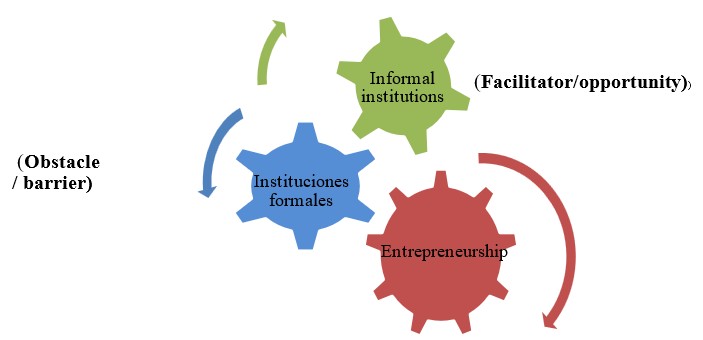
Figure 1 illustrates the conceptual framework guiding the empirical analysis of corruption, operationalized as direct exposure to bribery, which acts as the independent variable, whose association with nascent entrepreneurship can be positive (grease in the wheels effect) or negative (sand in the wheels effect) depending on the institutional environment and the individual’s human capital profile, represented in the moderating variables included in the model.
Figure 1
Relationship between entrepreneurship and corruption
Source: Own elaboration.
Methodology
The research adopts a quantitative cross-sectional design based on primary data collected through a survey. Information collection took place between September 2022 and January 2023, in compliance with the ethical principles applicable to research involving human subjects. Participation was voluntary, and students were informed in advance about the objectives of the study, the confidential treatment of responses, and the possibility of withdrawing at any time. Likewise, the questionnaire guaranteed the anonymity of participants in order to reduce social desirability bias, particularly relevant when addressing sensitive topics such as corruption. The target population consisted of the 34,000 active undergraduate students of Universidad del Valle, a public higher education institution located in southwestern Colombia with a presence in nine municipalities (Universidad del Valle, 2021). The instrument was distributed via institutional email and a digital Google Forms questionnaire to students at the Cali campus and at the regional campuses, using a simple random sampling procedure; a pilot test with 20 participants was conducted to verify question comprehension. In total, 391 valid responses were obtained, a figure that exceeds the minimum of 380 observations required for a 95% confidence level and a margin of error of ±5%. The questionnaire consisted of 20 items grouped into five dimensions: sociodemographic profile, employment status, entrepreneurial background, institutional perception, and exposure to corruption.
The central variables of the study were operationalized through direct dichotomous questions. The dependent variable, called nascent entrepreneurship, identifies whether the respondent has taken concrete actions aimed at starting a venture during the last 12 months, following guidelines adapted from the GEM 2016 methodology. The main independent variable, in turn, corresponds to exposure to corruption and was constructed from the question of whether any public official requested a bribe to carry out a procedure, taking as reference the Latinobarómetro indicators (2018) and the literature on direct bribery experiences (Traikova et al., 2017).
Additionally, the model incorporates interaction variables associated with family entrepreneurship background, employment status, and perception of the university’s contribution, as well as sociodemographic and economic control variables such as age, income, marital status, school background, socioeconomic stratum, gender, risk perception, and campus of study. The base categories used for the categorical variables were: income between 0 and 1 Colombian minimum wage, training chain, stratum 1, and regional campuses. The complete description of the variables included in the analysis is presented in Table 1.
Table 1
Description of variables
Clasification |
Variable |
Description and categories |
A. Dependent variable |
||
Binary (0/1) |
Nascent entrepreneur |
1 = The individual has taken some action to start an entrepreneurial activity; 0 = Otherwise. |
B. Independent variable |
||
Binary (0/1) |
Exposure to bribe request |
1 = The individual reported having received a bribe request from a public oficial; 0 = Otherwise. The variable captures direct exposure to the request, not necessarily the effective payment of the bribe. |
C. Interaction variables |
||
Binary (0/1) |
Family entrepreneurship background |
1 = There is a family entrepreneurship background; 0 = No. |
Binary (0/1) |
Studies and works |
1 = The individual works and studies simultaneosly; 0 = Studies only. |
Binary (0/1) |
University contribution to profesional career |
1 = Perception of high contribution (a lot); 0 = Perception of low contribution (little). |
D. Control variables |
||
Continuous |
Age |
Age in completed years at the time of the survey. |
Age² |
Square of the respondent’s age. Included to capture nonlinear life-cycle effects. |
|
Ordinal categorical |
Monthly income |
Category 1: Less than $1.000.000 COP |
Category 2: Between $1.000.000 and $2.000.000 COP |
||
Category 3: More than $3.000.000 COP (reference category ommitted in estimation) |
||
Ordinal categorical |
Socioeconomic stratum |
Stratum 1 (low-low level) |
Stratum 2 (low level) |
||
Stratum 3 or higher (reference category ommitted in estimation) |
||
Ordinal categorical |
School background |
Training chain |
Rural education |
||
Formal education (reference category ommitted in estimation) |
||
Technical education |
||
Binary (0/1) |
Marital status |
1 = Married(a); 0 = Single (a). |
Woman |
1 = Woman; 0 = Man. |
|
Risk aversión |
1 = Risk-averse; 0 = Willing to take risks. |
|
Campus |
1 = Cali campus (main campus); 0 = Regional campuses. |
|
Source: Own elaboration based on GEM data(2022).
The socioeconomic stratum variable was defined according to the official classification of the National Administrative Department of Statistics (DANE), used in Colombia, which stratifies households on a scale from 1 (low-low) to 6 (high). The measurement of nascent entrepreneurship was carried out following the methodological guidelines of the Global Entrepreneurship Monitor (GEM, 2022), while exposure to bribe requests was operationalized based on indicators adapted from the Latinobarómetro. The other variables considered in the study were constructed from the information obtained through the administered survey.
Regarding the treatment of missing data, a missing values analysis was carried out prior to estimation. Observations with incomplete data on the model’s key variables were excluded through listwise deletion, retaining only cases with complete information on all variables included in the econometric specification. This procedure ensures the internal consistency of the estimates and is the standard approach in cross-sectional models with categorical variables.
Econometric model
To estimate the association between exposure to corruption and the probability of being a nascent entrepreneur, Linear Probability Models (LPM) are employed; the choice of this approach over nonlinear alternatives such as logit or probit models is grounded in the fact that LPM coefficients directly represent the change in the conditional probability of the dependent variable given a one-unit change in the independent variables, without the need to calculate additional marginal effects (Angrist & Pischke, 2008). When the interest lies in quantifying the average partial effect of an explanatory variable, LPM results tend to converge with those of nonlinear alternatives (Wooldridge, 2010), which reinforces its relevance in this context, since although the LPM presents heteroskedasticity by construction and can generate predicted probabilities outside the [0,1] interval, both limitations are statistically manageable; the first is corrected through robust standard errors employed in all specifications of the study, and the second constitutes a minor problem in large samples when the interest is focused on the average effect (Aldrich & Nelson, 1984). To verify the robustness of the findings, probit models were estimated as a complement, confirming that the direction, magnitude, and statistical significance of the associations are consistent between both approaches. Given the cross-sectional design of the study, the estimated coefficients reflect statistical associations between variables and do not allow for establishing causal relationships in a strict sense.
The base specification of the model adopts the following functional form (Equation 1):
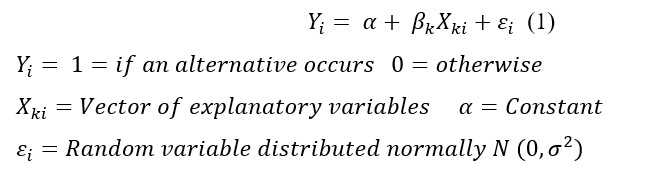
Under this framework, the predicted values of Y measure the probability that individual i is a nascent entrepreneur, conditional on the vector X and holding the rest of the variables constant; the partial effect of each independent variable on that probability is given by:
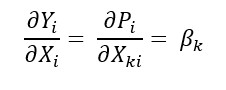
Estimations were performed using Stata 16 software, reporting three levels of statistical significance: 1%, 5%, and 10%.
The base specification without interactions adopts the following form (Equation 2):

Where NE is Nascent Entrepreneur, FB is Family entrepreneurship background, BR is Exposure to bribe request, SW is Studies and works, W is Woman, UC is University Contribution, Age is Age, INC is Family income, Age2 is Age squared, SB is School background, RI is Risk, ST is Socioeconomic Stratum, MS is Marital Status, and CAM is Campus of study.
To test H2, the interaction term between exposure to bribery and the valuation of the university’s contribution was incorporated (Equation 3), which allows for estimating whether the effect of corruption on entrepreneurship varies according to the individual’s perception of their education:

Similarly, Equation 4 introduces the interaction between exposure to bribery and family background in entrepreneurship, capturing whether inherited social capital moderates the effect of corruption on the decision to become an entrepreneur:

Results
Table 2 presents the descriptive statistics of the variables included in the analysis, allowing for the characterization of the sample profile before proceeding with the econometric estimation. The results show that 63.84% of respondents are classified as nascent entrepreneurs, while 34.87% reported having received bribe requests from public officials. In sociodemographic terms, the sample shows an average age of 25 years and a majority participation of women (55.89%). Likewise, close to 70% of students report family entrepreneurship backgrounds, and 66.15% simultaneously combine study and work.
Table 2
Descriptive results
Variable |
Obs |
Mean |
Std. Dev. |
Min |
Max |
Nascent Entrepreneurship |
391 |
0,6384 |
0,481 |
0 |
1 |
Bribery |
391 |
0,3487 |
0,4771 |
0 |
1 |
Woman |
391 |
0,5589 |
0,4971 |
0 |
1 |
Age |
391 |
25,13 |
5,89 |
17 |
58 |
Age squared |
391 |
666,42 |
378 |
289 |
3364 |
Marital status |
391 |
0,146 |
0,3537 |
0 |
1 |
Risk |
391 |
0,574 |
0,495 |
0 |
1 |
Family Entrepreneurship background |
391 |
0,707 |
0,4554 |
0 |
1 |
Employment status |
391 |
0,6615 |
0,4737 |
0 |
1 |
University contribution |
391 |
0,7410 |
0,4386 |
0 |
1 |
Income |
391 |
Percentage |
Cumulative |
||
0 to 1 Colombian mínimum wage (2022) |
47,44% |
47,44% |
|||
1 to 2 Colombian mínimum wages (2022) |
34,36% |
81,80% |
|||
More than 2 Colombian mínimum wages (2022) |
18,21% |
100,0% |
|||
School background |
391 |
Percentage |
Cumulative |
||
Training chain |
8,46% |
8,46% |
|||
Rural education |
4,36% |
12,82% |
|||
Formal education |
45,13% |
57,95% |
|||
Technical education |
42,05% |
100,00% |
|||
Socioeconomic stratum |
391 |
Percentage |
Cumulative |
||
Stratum 1 |
26,15% |
26,15% |
|||
Stratum 2 |
45,13% |
71,28% |
|||
Stratum 3 or higher |
28,72% |
100,00% |
|||
Campus |
391 |
Percentage |
Cumulative |
||
Cali |
51,54% |
51,54% |
|||
Regional campuses |
48,46% |
100,00% |
|||
Source: Own elaboration.
Regarding socioeconomic stratum, this is the scale used in the Colombian measurement system, where stratum 1 indicates the population with high poverty levels, and strata 3 through 6 indicate the population with low or no poverty. At the socioeconomic level, stratum 2 predominates (45.13%), and 47.44% of respondents report family income equivalent to one minimum wage or less, reflecting the characteristic socioeconomic profile of Universidad del Valle. Regarding educational background, most students come from formal and technical education institutions. The distribution between the Cali campus and the regional campuses is relatively balanced, with a slightly higher participation of students from Cali (51.54%). These descriptive results show a predominantly young population, with low to medium income, and a significant orientation toward entrepreneurship.
To assess the empirical relationship between nascent entrepreneurship and exposure to corruption, Table 3 presents the first estimations of LPM 1, which assesses the unconditional effect of bribery, revealing that direct exposure to this practice increases the probability of being a nascent entrepreneur by 14.86%, showing high statistical significance. Subsequently, when incorporating the set of socioeconomic and demographic control variables in the LPM 2 specification, the magnitude of the effect shows high consistency, where students who have been exposed to a bribe are 13.93% more likely to be nascent entrepreneurs compared to those who have not been exposed to such a practice.
Regarding the control variables introduced in the LPM 2 model, the data show that, at a younger age, students are less likely to engage in entrepreneurship. Likewise, risk-averse individuals show a 9.2% lower probability of being nascent entrepreneurs. On the other hand, students who study and work simultaneously show a 15.33% higher probability of starting a business compared to those who only study. Geographic location was also determinant, as studying at the capital city campus (Cali) increases the probability of being an entrepreneur by 16.7% compared to the regional campuses (Tuluá, Palmira, Buga, among others). Variables such as gender, marital status, school background, and family background were not significant in this general model, a finding that contrasts with studies such as that of Costa and Pita (2020), which do identify gender differences in entrepreneurship.
Table 3
Results with linear probability models without interaction and probit
|
LPM 1 |
LPM 2 |
PROBIT |
Nascent Entrepreneurship |
Coefficients |
Coefficients |
Marginal effects |
Exposure to bribe request |
0,14867*** |
0,13932*** |
0,14543*** |
|
(0,04897) |
(0,05046) |
(0,05094) |
Gender |
|
0,05735 |
0,05064 |
|
|
(0,04990) |
(0,04959) |
Age |
|
-0,04080** |
-0,04524* |
|
|
(0,01930) |
(0,02455) |
Age2 |
|
0,0006379** |
0,000726* |
|
|
(0,0002684) |
(0,0003962) |
Risk |
|
-0,09217* |
-0,09401** |
|
|
(0,05004) |
(0,04748) |
Marital status |
|
0,072164 |
0,07139 |
|
|
(0,07056) |
(0,07072) |
Family Entrepreneurship background |
|
-0,02293 |
-0,0227 |
|
|
(0,05386) |
(0,05143) |
Studies and works |
|
0,15033*** |
0,14342*** |
|
|
(0,05460) |
(0,04938) |
University contribution |
|
-0,09893* |
-0,10251 |
|
|
(0,05479) |
(0,05424) |
Income |
|
|
|
1 to 2 million pesos |
|
0,10340* |
0,10125* |
|
|
(0,05415) |
(0,05185) |
2 million or more |
|
-0,05618 |
-0,05811 |
|
|
(0,07215) |
(0,07025) |
School background |
|
|
|
Rural education |
|
-0,01382 |
-0.01734 |
|
|
(0,13101) |
(0,13088) |
Formal education |
|
-0,11352 |
-0,1171 |
|
|
(0,0878) |
(0,08413) |
Technical education |
|
-0,10573 |
-0,10908 |
|
|
(0,08145) |
(0,08257) |
Socioeconomic stratum |
|
|
|
Stratum 2 |
|
-0,033570 |
-0,03251 |
|
|
(0,05892) |
(0,05788) |
Stratum 3 or higher |
|
-0,03171 |
-0,03877 |
|
|
(0,067355) |
(0,06485) |
Campus |
|
0,16750*** |
0,16462*** |
|
|
(0,049935) |
(0,04635) |
Constant |
0,5866 *** |
1,19967*** |
|
|
(0,0309) |
(0,32876) |
|
Prob > F |
0,01 |
0,0000 |
|
R – squared |
0,0217 |
0,1246 |
|
Note: Robust standard errors in parentheses, *** p < 0.01; ** p < 0.05; * p < 0.10.
Reference categories omitted in estimation: Income = 0 to 1 Colombian minimum wage; School background = Training chain; Socioeconomic stratum = Stratum 1.
Source: Own elaboration.
To delve deeper into the underlying dynamics, Table 4 details the LPM 4 model, which incorporates the interaction between bribery payment and family entrepreneurship background. The results of this estimation indicate that the effect of bribery exposure among individuals without family background is not statistically significant. However, for those individuals who have been exposed to a bribe and who also have a family entrepreneurship background, the probability of being a nascent entrepreneur increases by 23.38%. This evidences an additional positive variation of 9.45% driven by the moderating effect relative to the base model (LPM 3), where the control variables in this model remain statistically consistent with previous estimates.
Table 4
Results with the interaction of family entrepreneurship background with nascent Entrepreneurship.
LPM 3 |
LPM 4 |
PROBIT |
|
Nascent Entrepreneurship |
Coefficients |
Coefficients |
Marginal effects |
Exposure to bribery |
0,13932*** |
-0,0366166 |
-0,02894 |
|
(0,05046) |
(0,09627) |
(0,100059) |
Family Entrepreneurship background |
-0,02293 |
-0,094026 |
-0,09129 |
|
(0,05386) |
((0,0660636) |
(0,06157) |
Brubert x Family background |
|
0,23386** |
0,2294** |
|
|
(0,10813) |
(0,11241) |
Gender |
0,05735 |
0,055434 |
|
|
(0,04990) |
(0,04970) |
|
Age |
-0,04080** |
-0,04014** |
|
|
(0,01930) |
(0,019343) |
|
Age2 |
0,0006379** |
0,000635** |
|
|
(0,0002684) |
(0,00026) |
|
Risk |
-0,09217* |
-0,08955* |
|
|
(0,05004) |
(0,05000) |
|
Marital status |
0,072164 |
0,06799 |
|
|
(0,07056) |
(0,07011) |
|
Studies and works |
0,15033*** |
0,15596*** |
|
|
(0,05460) |
(0,05456) |
|
University contribution |
-0,09893* |
-0,10678* |
|
|
(0,05479) |
(0,05522) |
|
Income |
|
|
|
1 to 2 million pesos |
0,10340* |
0,10053* |
|
|
(0,05415) |
(0,054133) |
|
2 million or more |
-0,05618 |
-0,05263 |
|
|
(0,07215) |
(0,07194) |
|
School background |
|
|
|
Rural education |
-0,01382 |
0,02195 |
|
|
(0,13101) |
(0,13484) |
|
Formal education |
-0,11352 |
-0,01145 |
|
|
(0,0878) |
(0,08218) |
|
Technical education |
-0,10573 |
-0,10044 |
|
|
(0,08145) |
(0,08122) |
|
Socioeconomic stratum |
|
|
|
Stratum 2 |
-0,033570 |
-0,027648 |
|
|
(0,05892) |
(0,05896) |
|
Stratum 3 or higher |
-0,03171 |
-0,03249 |
|
|
(0,067355) |
(0,067596) |
|
Campus |
0,16750*** |
0,17262*** |
|
|
(0,049935) |
(0,05007) |
|
Constant |
1,19967*** |
1,228578*** |
|
|
(0,32876) |
(0,33045) |
|
Prob > F |
0,0000 |
0,0000 |
|
R – squared |
0,1246 |
0,1344 |
|
Note: Robust standard errors in parentheses, ** p < 0,05 *** p < 0,01 * p < 0,1
Reference categories omitted in estimation: Income = 0 to 1 Colombian minimum wage; School background = Training chain; Socioeconomic stratum = Stratum 1
Source: Universidad del Valle (2023).
Finally, Table 5 presents the LPM 6 model, which assesses the interaction between exposure to bribery and the perceived level of the university’s contribution to professional training. It was found that students who think the university has contributed little to their training and who have simultaneously been exposed to some form of bribery show a 28.49% higher probability of being nascent entrepreneurs. In contrast, those who consider that the university has contributed a great deal to their professional training, and who have been exposed to a bribe, show a 20.66% lower probability of starting a business compared to the previous group. As a robustness analysis, complementary probit models were estimated, whose average marginal effects are consistent in direction, magnitude, and statistical significance with the LPM coefficients, which strengthens confidence in the reported findings.
Table 5
Results with the interaction of university contribution with nascent Entrepreneurship.
LPM 5 |
LPM 6 |
PROBIT |
|
Nascent Entrepreneurship |
Coefficients |
Coefficients |
Marginal effects |
Exposure to bribe request |
0,13932*** |
0,28490*** |
0,2855*** |
|
(0,05046) |
(0,07850) |
(0,07611) |
University contribution |
-0,09893* |
-0,02543 |
-0,02606 |
|
(0,05479) |
(0,072375) |
(0,06858) |
Bribery * University contribution |
|
-0,20661** |
-0,20447** |
|
|
(0,100575) |
(0,09797) |
Woman |
0,05735 |
0,05213 |
|
|
(0,04990) |
(0,05017) |
|
Age |
-0,04080** |
-0,04187** |
|
|
(0,01930) |
(0,01927) |
|
Age2 |
0,0006379** |
0,000641** |
|
|
(0,0002684) |
(0,000262) |
|
Risk |
-0,09217* |
-0,08697* |
|
|
(0,05004) |
(0,04977) |
|
Marital status |
0,072164 |
0,08036 |
|
|
(0,07056) |
(0,07083) |
|
Studies and works |
0,15033*** |
0,15503*** |
|
|
(0,05460) |
(0,05433) |
|
Family Entrepreneurship background |
-0,02293 |
-0,01437 |
|
|
(0,05386) |
(0,05383) |
|
Income |
|
|
|
1 to 2 million pesos |
0,10340* |
0,10749** |
|
|
(0,05415) |
(0,05418) |
|
2 million or more |
-0,05618 |
-0,03454 |
|
|
(0,07215) |
(0,072492) |
|
School background |
|
|
|
Rural education |
-0,01382 |
-0,01798 |
|
|
(0,13101) |
(0,13125) |
|
Formal education |
-0,11352 |
-0,11888 |
|
|
(0,0878) |
(0,08370) |
|
Technical education |
-0,10573 |
-0,10834 |
|
|
(0,08145) |
(0,08235) |
|
Socioeconomic stratum |
|
|
|
Stratum 2 |
-0,033570 |
-0,0267 |
|
|
(0,05892) |
(0,05917) |
|
Stratum 3 or higher |
-0,03171 |
-0,03457 |
|
|
(0,067355) |
(0,06761) |
|
Campus |
0,16750*** |
0,17308*** |
|
|
(0,049935) |
(0,04962) |
|
Constant |
1,19967*** |
1,15364*** |
|
|
(0,32876) |
(0,33014) |
|
Prob > F |
0,0000 |
0,0000 |
|
R – squared |
0,1246 |
0,1323 |
|
Robust standard errors in paernthesis, ** p < 0,05 *** p < 0,01 * p < 0,1
Reference categories (base variable): Income = 0 to 1 Colombian mínimum wage; School background = Training chain; Socioeconomic stratum = Stratum 1
Source: Universidad del Valle (2023).
The probit model was estimated using the same specification used in the LPM 6 model, incorporating an identical set of control variables. For reasons of expository parsimony, only the average marginal effects of the variables of theoretical interest are presented. The control variables showed coefficients with direction, magnitude, and levels of statistical significance consistent with those obtained in the LPM specifications, which provides additional evidence on the robustness and stability of the results.
Discussions
The results obtained allow for testing the two working hypotheses proposed in this study. Regarding H1, the base model confirms a positive and statistically significant association between having been exposed to a bribe and the probability of being a nascent entrepreneur, with an increase of 13.93 percentage points relative to those who did not report having been exposed to bribery. This finding is consistent with the work of Traikova et al. (2017) and Krasniqi and Desai (2016), who document that, in economies with high bureaucracy and weak institutional quality, bribery operates as a functional substitute for formal market access mechanisms. In the same vein, Ceresia and Mendola (2019) and Neneh (2014) show that university students who assimilate corruption as a natural component of the ecosystem tend to perceive it as a tool that reduces bureaucratic barriers, frequently leading to necessity-driven entrepreneurship. However, this result diverges from the findings of Aparicio et al. (2016) and Boudreaux et al. (2018), who, working with aggregate macroeconomic data, predominantly identify a negative effect of corruption on opportunity-driven entrepreneurship. This divergence is theoretically relevant and suggests that the direction of the effect depends both on the level of analysis (micro versus macro) and on the type of entrepreneurship considered, an aspect anticipated by Dreher and Gassebner (2013) when distinguishing differential effects of corruption depending on the regulatory environment and firm size.
Regarding H2, the interaction models confirm that the association between corruption and nascent entrepreneurship is not homogeneous, but rather that its direction and intensity vary according to the individual’s human capital profile. In particular, for students with family entrepreneurship backgrounds, exposure to bribe requests increases the probability of starting a business by up to 23.38 percentage points. This result suggests that inherited social capital, expressed through support networks, tacit knowledge, and greater risk tolerance, can amplify the effect of corruption in contexts characterized by low institutional quality. The finding is consistent with that reported by Schölin et al. (2016), although it incorporates a previously little-explored institutional dimension by showing that corruption can enhance the effect of family capital when formal barriers are perceived as difficult to overcome.
On the other hand, the interaction between exposure to bribe requests and the perception of the university’s contribution reveals the coexistence of differentiated mechanisms within the same population. Students who perceive a low contribution from the university to their education tend to conceive entrepreneurship as an alternative to a labor market they consider restrictive or difficult to access, which is associated with a facilitating effect of bribery (grease in the wheels). In contrast, those who positively value their university education tend to perceive corruption as an unacceptable barrier to business development, evidencing a deterrent effect (sand in the wheels).
The coexistence of these opposing effects supports the arguments of Hanoteau et al. (2014) and Zhou and Peng (2012), who maintain that the impact of corruption on entrepreneurship depends on the intrinsic characteristics of the economic agent. Likewise, the results constitute a novel empirical contribution by demonstrating that these mechanisms can operate even within relatively homogeneous population groups, such as university students.
From a theoretical perspective, this study provides microeconomic evidence that complements and nuances the findings of the literature based on aggregate data, since the distinction between individual-level effects and country-level effects is not trivial; while national corruption indices capture generalized perceptions, direct experience with bribery activates decision-making mechanisms that differ qualitatively depending on available human capital. In terms of methodology, the use of interaction models surpasses simple linear estimations and allows for capturing the heterogeneity of effects that previous studies could not detect. From a public policy perspective, the findings indicate that reducing bureaucratic barriers and simplifying procedures are priorities for eliminating the structural incentives that turn bribery into a facilitating mechanism for entrepreneurship. At the same time, higher education institutions play a determinant role; integrating into their curricula the development of institutional resilience and business ethics skills can strengthen the perception of educational value and reduce the propensity to accept corruption as a pathway to entrepreneurship.
Conclusions
This research provides empirical evidence on the association between direct exposure to corruption and nascent entrepreneurship in the specific context of southwestern Colombia, based on primary data collected from students at Universidad del Valle. Its findings are not intended to be generalized to Latin America as a whole, given the localized nature of the sample and the cross-sectional design of the study; rather, they contribute to filling a gap in the region’s microeconomic literature, where most available evidence comes from aggregate country-level indices. Unlike other studies, this approach captures the direct experiences of young university students with bribery, making visible how individual perceptions and vulnerabilities generate entrepreneurial dynamics that remain hidden in macroeconomic data.
The results suggest that, in the context analyzed, exposure to bribe requests is positively associated with the probability of being a nascent entrepreneur, with an estimated increase of 13.93 percentage points relative to those who did not report this type of experience. This finding is consistent with the hypothesis that, in environments characterized by high levels of bureaucracy and institutional weakness, bribery can be perceived as a mechanism that reduces the frictions associated with starting an economic activity.
Likewise, the interaction models show that this association is not homogeneous, but varies according to certain individual characteristics. In particular, family entrepreneurship backgrounds amplify the observed effect up to 23.38 percentage points, while the valuation of the university’s contribution moderates the association in opposite directions depending on the student’s profile. These results suggest that social and educational capital play a relevant role in how individuals interpret and respond to institutional environments characterized by the presence of corrupt practices.
However, these associations should be interpreted with caution, given that the cross-sectional design of the study does not allow for establishing causal relationships nor for ruling out the existence of unobserved factors that simultaneously influence both exposure to corruption and the decision to start a business.
From a public policy perspective, the findings point to the need to reduce bureaucratic barriers and simplify administrative procedures linked to firm creation, in order to eliminate the structural incentives that can turn bribery into a mechanism perceived as a facilitator of entrepreneurship. Likewise, higher education institutions have a strategic role; strengthening the perception of educational value and integrating into curricula the development of business ethics skills, institutional resilience, and knowledge of the legal framework can help students perceive legality as a viable path to entrepreneurship without resorting to informality or corrupt practices as a subsistence strategy.
The results of this study should be interpreted in light of its limitations: its cross-sectional design prevents establishing causality and does not allow tracking the entrepreneur’s trajectory from intention to business consolidation, which restricts the ability to distinguish whether corruption precedes or accompanies the decision to start a business. Likewise, the sample is restricted to students from a single institution in southwestern Colombia, which limits the extrapolation of the findings to other regional, institutional, or national contexts, and the measurement of exposure to corruption through self-report is susceptible to social desirability bias, which can lead to underestimating the actual prevalence of the phenomenon. These limitations directly point toward future research lines, where longitudinal studies are needed to track the transition from nascent entrepreneurship to established entrepreneurship, differentiating whether the initial motivation was opportunity- or necessity-driven, and whether corruption operated as a catalyst or barrier at each stage. Second, the use of behavioral economics methodologies such as discrete choice experiments or trust games would allow capturing actual disposition toward bribery without relying on self-report. And third, replicating the study in other public universities in emerging economies with different levels of subnational institutional quality would enrich the understanding of the identified mechanisms and validate the robustness of the findings in comparable contexts.
Ethical Considerations
This research was conducted following the ethical principles applicable to studies with human participants in educational contexts. Information collection was carried out through a digital survey, with strictly voluntary and anonymous participation. No sensitive data or personally identifying information was collected, and no living resources, biological agents, or procedures that could pose any risk to the life, health, environment, or fundamental rights of the participants were used.
Conflict of interest
All authors made significant contributions to this paper and declare that they have no conflicts of interest related to this article.
Author Contribution Statement
Cesar Ignacio León Quillas: methodology, Software, data curation, validation.
Edwin Arango Espinal: conceptualization, methodology, research, data curation, writing – original draft, writing: review and editing.
Carlos Hernán Suárez Rodríguez: formal analysis, data curation, visualization, supervision, project management.
Esteban Largo Ávila: research, validation, writing – original draft, writing: review and editing.
Source of funding
This article did not receive funding from any source.
References
(1)Acemoglu, D. & Robinson, J. A. (2005). Institutions as a fundamental cause of long-run growth. En P. Aghion & S. N. Durlauf (Eds.), Handbook of Economic Growth (Vol. 1, pp. 385-472). Elsevier. https://doi.org/10.1016/S1574-0684(05)01006-3
(2)Acs, Z. & Virgill, N. (2010). Entrepreneurship in developing countries. Foundations and Trends in Entrepreneurship, 6(1), 1-68. http://dx.doi.org/10.1561/0300000031
(3)Acs, Z. (2006). How is entrepreneurship good for economic growth? Innovations, 1(1), 97-107. https://doi.org/10.1162/itgg.2006.1.1.97
(4)Acs, Z. J. & Amorós, J. E. (2008). Entrepreneurship and competitiveness dynamics in Latin America. Small business economics, 31(3), 305-322. https://doi.org/10.1007/s11187-008-9133-y
(5)Aldrich, J. H. & Nelson, F. D. (1984). Linear probability, logit, and probit models (No. 45). Sage. https://doi.org/10.4135/9781412984744
(6)Álvarez, C. & Urbano, D. (2011). Factores del entorno y actividad emprendedora en América Latina. Academia Revista Latinoamericana de Administración, (48), 31-46. https://www.redalyc.org/articulo.oa?id=71617238004
(7)Amorós, J. E., Ciravegna, L., Mandakovic, V. & Stenholm, P. (2019). Necessity or opportunity? The effects of state fragility and economic development on entrepreneurial efforts. Entrepreneurship Theory and Practice, 43(4), 725-750. https://doi.org/10.1177/1042258717736857
(8)Angrist, J. D. & Pischke, J. S. (2008). Mostly harmless econometrics: An empiricist’s companion. Princeton University Press.
(9)Anokhin, S. & Schulze, W. S. (2009). Entrepreneurship, innovation, and corruption. J. Bus. Ventur, 24(5), 465-476. https://doi.org/10.1016/j.jbusvent.2008.06.001
(10)Aparicio, S., Urbano, D. & Audretsch, D. (2016). Institutional factors, opportunity entrepreneurship and economic growth: panel data evidence. Technological forecasting and social change, 102, 45-61. https://doi.org/10.1016/j.techfore.2015.04.006
(11)Avnimelech, G., Zelekha, Y. & Sharabi, E. (2014). The effect of corruption on entrepreneurship in developed vs non-developed countries. International Journal of Entrepreneurial Behavior & Research, 20(3), 237-262. https://doi.org/10.1108/IJEBR-10-2012-0121
(12)Baumol, W. J. (1990). Entrepreneurship: Productive, unproductive, and destructive. Journal of Political Economy, 98(5), 893-921. https://doi.org/10.1086/261712
(13)Block, J. H. & Wagner, M. (2010). Necessity and opportunity entrepreneurs in Germany: characteristics and earnings differentials. Schmalenbach Business Review, 62(2), 154–174. https://doi.org/10.1007/BF03396803
(14)Bosma, N., Jones, K., Autio, E. & Levie, J. (2008). Global Entrepreneurship Monitor 2007 Executive Report. Global Entrepreneurship Research Association (GERA). https://www.gemconsortium.org/report/gem-2007-global-report
(15)Boudreaux, C. J., Nikolaev, B. & Holcombe, R. G. (2018). Corruption and destructive entrepreneurship. Small Business Economics, 51(1), 181-202. https://doi.org/10.1007/s11187-017-9927-x
(16)Carter, N. M., Gartner, W. B., Shaver, K. G. & Gatewood, E. J. (2003). The career reasons of nascent entrepreneurs. Journal of Business Venturing, 18(1), 13-39. https://doi.org/10.1016/S0883-9026(02)00078-2
(17)Ceresia, F. & Mendola, C. (2019). Entrepreneurial self-identity, perceived corruption, exogenous and endogenous obstacles as antecedents of entrepreneurial intention in Italy. Social Sciences, 8(2), 54. https://doi.org/10.3390/socsci8020054
(18)Charoensukmongkol, P. & Sexton, S. (2011). The effect of corruption on exports and imports in Latin America and the Caribbean. Latin American Business Review, 12(2), 83–98. https://doi.org/10.1080/10978526.2011.592800
(19)Cleary, M. R. (2007). Democracy and the culture of skepticism: Political trust in Argentina and Mexico. Russell Sage Foundation.
(20)Corporación Latinobarómetro. (2018). Informe Latinobarómetro 2018. Corporación Latinobarómetro.
(21)Costa, J. & Pita, M. (2020). Appraising entrepreneurship in Qatar under a gender perspective. International Journal of Gender and Entrepreneurship, 12(3), 233-251. https://doi.org/10.1108/IJGE-10-2019-0146
(22)Dastourian, B., Kawamorita Kesim, H., Seyyed Amiri, N. & Moradi, S. (2017). Women entrepreneurship: effect of social capital, innovation and market knowledge. AD-Minister, (30), 115–130. https://doi.org/10.17230/ad-minister.30.6
(23)De Soto, H. (1989). The other path. New York: Basic books. https://www.india-seminar.com/2003/531/531%20books.htm
(24)Dreher, A. & Gassebner, M. (2013). Greasing the wheels? The impact of regulations and corruption on firm entry. Public Choice, 155(3-4), 413-432. https://doi.org/10.1007/s11127-011-9871-2
(25)Dutta, N. & Sobel, R. (2016). Does corruption ever help entrepreneurship? Small Business Economics, 47(1), 179-199. https://doi.org/10.1007/s11187-016-9728-7
(26)Estrin, S., Korosteleva, J. & Mickiewicz, T. (2013). Which institutions encourage entrepreneurial growth aspirations? Journal of Business Venturing, 28(4), 564-580. https://doi.org/10.1016/j.jbusvent.2012.05.001
(27)Global Entrepreneurship Monitor (GEM). (2016). Global Report 2016/17. Global Entrepreneurship Research Association. https://www.gemconsortium.org/report/gem-2016-2017-global-report
(28)Global Entrepreneurship Monitor (GEM). (2022). GEM 2021/2022 Global Report: Opportunity Amid Disruption. London: GEM.
(29)Gohmann, S. F. (2012). Institutions, latent entrepreneurship, and selfemployment: an international comparison. Entrepreneurship Theory and Practice, 36(2), 295–321. https://doi.org/10.1111/j.1540-6520.2010.00406.x
(30)Hanoteau, J. & Vial, V. (2014). Grease or sand the wheel? The effect of individual bribes on the drivers of aggregate productivity growth. Journal of Indonesian Economy and Business: JIEB, 29(1), 1. https://doi.org/10.22146/jieb.6186
(31)Harbi, S. & Anderson, A. R. (2010). Institutions and the shaping of different forms of entrepreneurship. Journal of Socioeconomics, 39(3), 436–44. https://doi.org/10.1016/j.socec.2010.02.011
(32)Hashi, I., & Krasniqi, B. A. (2011). Entrepreneurship and SME growth: evidence from advanced and laggard transition economies. International Journal of Entrepreneurial Behavior & Research, 17(5), 456-487. https://doi.org/10.1108/13552551111158817
(33)Hessels, J., Van Gelderen, M. & Thurik, R. (2008). Entrepreneurial aspirations, motivations, and their drivers. Small business economics, 31(3), 323-339. https://doi.org/10.1007/s11187-008-9134-x
(34)Heuer, A. & Liñán, F. (2013). Testing alternative measures of subjective norms in entrepreneurial intention models. International Journal of Entrepreneurship and Small Business, 19(1), 35-50. https://doi.org/10.1504/IJESB.2013.054310
(35)Ismail, M., Khalid, S. A., Othman, M., Jusoff, H. K., Rahman, N. A., Kassim, K. M., & Zain, R. S. (2009). Entrepreneurial intention among Malaysian undergraduates. International Journal of business and Management, 4(10), 54-60. https://doi.org/10.5539/ijbm.v4n10p54
(36)Kelley, D., Singer, S. & Herrington, M. (2020). Global Entrepreneurship Monitor 2019/2020 Global Report. Global Entrepreneurship Research Association. https://www.gemconsortium.org/report/gem-2019-2020-global-report
(37)Kirzner, I. M. (1973). Competition and Entrepreneurship. University of Chicago Press. https://ssrn.com/abstract=1496174
(38)Knight, F. H. (1921). Risk, uncertainty and profit. Houghton Mifflin. https://acortar.link/rRZwEt
(39)Krasniqi, B. A. & Desai, S. (2016). Institutional drivers of high-growth firms: Country-level evidence from 26 transition economies. Small Business Economics, 47(4), 1075-1094. https://doi.org/10.1007/s11187-016-9736-7
(40)Mazzarol, T., Volery, T., Doss, N. & Thein, V. (1999). Factors influencing small business start‐ups: a comparison with previous research. International Journal of Entrepreneurial Behavior & Research, 5(2), 48-63. https://doi.org/10.1108/13552559910274499
(41)McGarry, K. (2000). Testing parental altruism: Implications of a dynamic model (No. w7593). National Bureau of Economic Research. https://doi.org/10.3386/w7593
(42)Méon, P. G. & Weill, L. (2010). Is corruption an efficient grease? World Development, 38(3), 244-259. https://doi.org/10.1016/j.worlddev.2009.06.004
(43)Müller, S. (2008). Encouraging Future Entrepreneurs: The Effect of Entrepreneurship Course Characteristics on Entrepreneurial Intention [Tesis doctoral, University of St. Gallen]. Repositorio Institucional Alexandria. https://www.alexandria.unisg.ch/publications/61106
(44)Neneh, B. N. (2014). An assessment of entrepreneurial intention among university students in Cameroon. Mediterranean Journal of Social Sciences, 5(20), 542–552. https://doi.org/10.5901/mjss.2014.v5n20p542
(45)Nikolaev, B., Boudreaux, C. J. & Palich, L. E. (2018). Cross-country determinants of early-stage necessity and opportunity-motivated entrepreneurship: accounting for model uncertainty. Journal of Small Business Management, 56(s1), 243-280. https://doi.org/10.1111/jsbm.12400
(46)North, D. (2010). Instituciones cambio institucional y desempeño económico. Fondo de Cultura Económica. https://acortar.link/fJp4ve
(47)Nyström, K. (2008). The institutions of economic freedom and entrepreneurship: evidence from panel data. Public Choice, 136, 269–282. https://doi.org/10.1007/s11127-008-9295-9
(48)Olken, B. A. & Pande, R. (2012). Corruption in developing countries. Annual Review of Economics, 4(1), 479–509. https://doi.org/10.1146/annurev-economics-080511-110917
(49)Olken, B. A. (2009). Corruption perceptions vs. corruption reality. Journal of Public Economics, 93(7–8), 950–964. https://doi.org/10.1016/j.jpubeco.2009.03.001
(50) Rose, S. & Palifka, B. J. (2016). Corruption and government: Causes, consequences, and reform (2nd ed.). Cambridge University Press. https://doi.org/10.1017/CBO9781139962933
(51)Saavedra, R. & Texis, M. (2019). El factor institucional en el emprendimiento por oportunidad de América Latina y el Caribe. Innovar, 29(73), 99–112. https://doi.org/10.15446/innovar.v29n73.78025
(52)Sahin, F., Karadağ, H. & Tuncer, B. (2019). Big five personality traits, entrepreneurial self-efficacy, and entrepreneurial intention: a configurational approach. International Journal of Entrepreneurial Behaviour and Research, 25(6), 1188–1211. https://doi.org/10.1108/IJEBR-07-2018-0466
(53)Schölin, T., Broomé, P. & Ohlsson, H. (2016). Self-employment: The significance of families for professional intentions choice of company type. Int J Entrepreneur Behav Res, 22(3), 329–345. https://doi.org/10.1108/IJEBR-02-2015-0044
(54)Schumpeter, J. A. (1950). Capitalism, Socialism and Democracy. Harper and Row. http://debracollege.dspaces.org/bitstream/123456789/441/1/schumpeter-joseph-a-capitalism-socialism-and-democracy.pdf
(55)Shapero, A. & Sokol, L. (1982). The social dimensions of entrepreneurship. En C. A. Kent, D. L. Sexton, & K. H. Vesper (Eds.), Encyclopedia of entrepreneurship (pp. 72–90). Englewood Cliffs, NJ: Prentice Hall.
(56)Stam, E., Audretsch, D. & Meijaard, J. (2008). Renascent entrepreneurship. Journal of Evolutionary Economics, 18, 493–507. https://doi.org/10.1007/s00191-008-0095-7
(57)Tomaszewski, M. (2018). Corruption-a dark side of entrepreneurship. Corruption and innovations. Prague Economic Papers, 27(3), 251–269. https://doi.org/10.18267/j.pep.647
(58)Tonoyan, V., Strohmeyer, R., Habib, M. & Perlitz, M. (2010). Corruption and entrepreneurship: How formal and informal institutions shape small firm behavior in transition and mature market economies. Entrepreneurship theory and practice, 34(5), 803-832. https://doi.org/10.1111/j.1540-6520.2009.00374.x
(59)Traikova, D., Manolova, T. S., Möllers, J. & Buchenrieder, G. (2017). Corruption perceptions and entrepreneurial intentions in a transitional context – the case of rural bulgaria. Journal of Developmental Entrepreneurship, 22(3), 1–21. https://doi.org/10.1142/S1084946717500182
(60)Universidad del Valle. (2021). Así avanza la matrícula en Univalle. https://www.univalle.edu.co/lo-que-pasa-en-la-u/asi-avanza-la-matricula-en-univalle
(61)Universidad del Valle. (2023). Dirección de regionalización Universidad del Valle. http://regionalizacion.univalle.edu.co
(62)Urbano, D., Aparicio, S. & Audretsch, D. (2019). Twenty-five years of research on institutions, entrepreneurship, and economic growth: What has been learned? Small Business Economics, 53(1), 21-49. https://doi.org/10.1007/s11187-018-0038-0
(63)Webb, J. W., Khoury, T. A. & Hitt, M. A. (2020). The influence of formal and informal institutional voids on entrepreneurship. Entrepreneurship Theory and Practice, 44(3), 504-526. https://doi.org/10.1177/1042258719830310
(64)Wennekers, S., Van Wennekers, A., Thurik, R. & Reynolds, P. (2005). Nascent entrepreneurship and the level of economic development. Small business economics, 24(3), 293-309. https://doi.org/10.1007/s11187-005-1994-8
(65)Williamson, O. E. (2000). The new institutional economics: taking stock, looking ahead. Journal of Economic Literature, 38(3), 595–613. https://doi.org/10.1257/jel.38.3.595
(66)Wooldridge, J. M. (2010). Econometric analysis of cross section and panel data (2nd ed.). MIT Press. https://mitpress.mit.edu/9780262232586/econometric-analysis-of-cross-section-and-panel-data/
(67)World Bank Group. (2018). Worldwide Governance Indicators (WGI) 2018. World Bank Group. https://www.worldbank.org/en/publication/worldwide-governance-indicators
(68)Xheneti, M. & Bartlett, W. (2012). Institutional constraints and SME growth in post-communist Albania. Journal of Small Business and Enterprise Development, 19(4), 607–626. https://doi.org/10.1108/14626001211277424
(69) Zhou, J. Q. & Peng, M. W. (2012). Does bribery help or hurt firm growth around the world? Asia Pacific Journal of Management, 29(4), 907-921. https://doi.org/10.1007/s10490-011-9274-4