https://doi.org/10.22267/rtend.26272.306
Canvas model in sterile textiles: a systematic review of global trends and opportunities in Latin America (2015-2025)
Modelo Canvas en textiles estériles: una revisión sistemática de las tendencias globales y oportunidades en Latinoamérica (2015-2025)
Modelo Canvas no setor de têxteis esterilizados: uma revisão sistemática das tendências globais e oportunidades na América Latina (2015-2025
By: Paola Andrea Zambrano Roa 1; Daniel Alfonso Mendoza Casseres1; Hugo Gaspar Hernández Palma1
1Master’s Degree in Administration, Corporación Universitaria Latinoamericana. ORCID: 0009-0002-5121-5899. E-mail: pazambranor@ul.edu.co. Bogotá- Colombia.
2 Master’s Degree in Industrial Engineering. Professor, Industrial Engineering Program, Universidad del Atlántico. ORCID: 0000-0001-5514-750X. E-mail: danielmendoza@mail.uniatlantico.edu.co. Bogotá- Colombia.
2 Master’s Degree in Project Management and Leadership. Professor, Business Administration Program, Universidad del Atlántico. ORCID: 0000-0002-3873-0530. E-mail: hugohernandezp@mail.uniatlantico.edu.co. Bogotá- Colombia.
Received: January 21, 2026 Accepted: June 1, 2026
DOI: https://doi.org/10.22267/rtend.26272.306
How to cite this article: Zambrano, P., Mendoza, D. & Hernández, H. (2026). Canvas model in sterile textiles: a systematic review of global trends and opportunities in Latin America (2015-2025). Tendencias, 27(2), 316-342. https://doi.org/10.22267/rtend.26272.306

Abstract
Introduction: Sterile surgical textiles are critical supplies for hospital biosafety and the continuity of surgical procedures. In the Colombian Caribbean, their supply depends largely on suppliers located in other regions, which increases logistics costs and delivery times. Objective: To design and validate a business model for the local production of sterile surgical textiles in the department of Atlántico. Methodology: A mixed exploratory-descriptive and cross-sectional approach was used. The literature review followed the PRISMA 2020 methodology using Scopus, WOS, and institutional reports (2015–2025). Sixty documents were analyzed, and surveys were administered to 15 experts in the health sector, supplemented by descriptive analysis and thematic coding. The model was structured using Canvas, TAM-SAM-SOM, Design Thinking, and Lean Startup. Results: Eighty percent of the experts considered the presence of regional suppliers to be viable. The model projected a reduction in logistics costs of between 15% and 20%, an IRR of 35%, and an ROI of 33.5% by the third year. Discussion: The findings suggest that local production strengthens availability, reduces logistical vulnerabilities, and improves the resilience of the hospital supply chain. Conclusions: Local production is a viable alternative for strengthening hospital supply and regional operational sustainability.
Keywords: biosecurity; supply chain; medical devices; business innovation; local production.
JEL: I11; L21; L67; M11; O33.
Resumen
Introducción: Los textiles quirúrgicos estériles son insumos críticos para la bioseguridad hospitalaria y la continuidad de los procedimientos quirúrgicos. En el Caribe colombiano, su abastecimiento depende en gran parte de proveedores ubicados en otras regiones, lo que incrementa costos logísticos y tiempos de entrega. Objetivo: Diseñar y validar un modelo de negocio para la producción local de textiles quirúrgicos estériles en el departamento del Atlántico. Metodología: Se empleó un enfoque mixto exploratorio-descriptivo y transversal. La revisión documental siguió la metodología PRISMA 2020 mediante Scopus, WOS e informes institucionales (2015-2025). Se analizaron 60 documentos y se aplicaron encuestas a 15 expertos del sector salud, complementadas con análisis descriptivo y codificación temática. El modelo se estructuró mediante Canvas, TAM-SAM-SOM, Design Thinking y Lean Startup. Resultados: El 80% de los expertos consideró viable la presencia de proveedores regionales. El modelo proyectó una reducción de costos logísticos entre 15% y 20%, una TIR del 35% y un ROI del 33,5% al tercer año. Discusión: Los hallazgos sugieren que la proximidad productiva fortalece la disponibilidad, reduce vulnerabilidades logísticas y mejora la resiliencia de la cadena de suministro hospitalaria. Conclusiones: La producción local constituye una alternativa viable para fortalecer el abastecimiento hospitalario y la sostenibilidad operativa regional.
Palabras clave: bioseguridad; cadena de suministro; dispositivos médicos; innovación empresarial; producción local.
JEL: I11; L21; L67; M11; O33.
Resumo
Introdução: Os tecidos cirúrgicos esterilizados são suprimentos essenciais para a biossegurança hospitalar e a continuidade dos procedimentos cirúrgicos. No Caribe colombiano, seu abastecimento depende em grande parte de fornecedores localizados em outras regiões, o que aumenta os custos logísticos e os prazos de entrega. Objetivo: Conceber e validar um modelo de negócios para a produção local de tecidos cirúrgicos esterilizados no departamento do Atlântico. Metodologia: Utilizou-se uma abordagem mista, exploratória-descritiva e transversal. A revisão da literatura seguiu a metodologia PRISMA 2020, utilizando as bases de dados Scopus, WOS e relatórios institucionais (2015–2025). Foram analisados 60 documentos, e foram aplicados questionários a 15 especialistas do setor da saúde, complementados por análise descritiva e codificação temática. O modelo foi estruturado utilizando Canvas, TAM-SAM-SOM, Design Thinking e Lean Startup. Resultados: Oitenta por cento dos especialistas consideraram viável a presença de fornecedores regionais. O modelo projetou uma redução nos custos logísticos entre 15% e 20%, uma TIR de 35% e um ROI de 33,5% até o terceiro ano. Discussão: Os resultados sugerem que a produção local fortalece a disponibilidade, reduz as vulnerabilidades logísticas e melhora a resiliência da cadeia de suprimentos hospitalar. Conclusões: A produção local é uma alternativa viável para fortalecer o abastecimento hospitalar e a sustentabilidade operacional regional.
Palavras-chave: biossegurança; cadeia de suprimentos; dispositivos médicos; inovação empresarial; produção local.
JEL: I11; L21; L67; M11; O33.
Introduction
In the second half of the twentieth century, nonwoven materials experienced global expansion, leading medical materials to move beyond a merely auxiliary role in hospital services. Today, items such as gowns, drapes, and sterile packs constitute a critical barrier between patients, healthcare personnel, and clinical contaminants during surgical procedures (Association for the Advancement of Medical Instrumentation [AAMI], 2023; British Standards Institution, 2021; Instituto Nacional de Salud [INS], 2024; International Organization for Standardization [ISO], 2016). Their importance lies not only in the provision of disposable or consumable supplies, but also in infection prevention, continuity of care, and strengthening the actual capacities of healthcare systems to respond to scenarios of logistical or epidemiological pressure. (Allegranzi et al., 2018; World Health Organization [WHO], 2022; Shishoo, 2012).
The medical textiles market has experienced sustained growth driven by three key factors: 1) the increase in surgical procedures, 2) the adoption of more stringent biosafety standards, and 3) the gradual replacement of reusable textiles with high-performance disposable alternatives (Grand View Research, n. d.; SkyQuest Technology, 2025). According to international market projections reported by Grand View Research (2023) and Fortune Business Insights (2026), the sector is expected to continue expanding over the next decade, driven in part by the growing demand for materials with enhanced barrier properties, traceability, and ergonomic adaptation to clinical practice.
However, in emerging economies, the main vulnerability does not necessarily lie in the final price of products, but rather in transit times, intermediation costs, inventory availability, and the capacity to respond to transportation disruptions (Inter-American Development Bank [IDB], 2025; Economic Commission for Latin America and the Caribbean [ECLAC], 2023). As noted by Karanam et al. (2025), recent disruptions in global supply chains have increased operating costs in sensitive sectors, including healthcare. In this context, nearshoring has become increasingly important as a strategy to reduce dependence on long distance supply networks, shorten delivery times, and strengthen the resilience of essential services (Ivanov et al., 2023; Stringer & Ramírez, 2023).
Colombia, is not exempt from this dynamic. Although the country has established production and commercial hubs (Development Bank of Latin America and the Caribbean [CAF], 2022; International Labour Organization [ILO], 2023), it continues to depend on the distribution of medical supplies to the Caribbean region from suppliers located in Bogotá, Medellín, and Cali. Such conditions generate delays of up to fifteen days and additional logistics costs that affect the performance of healthcare institutions. In a context where Barranquilla and Cartagena concentrate medium-and high-complexity hospital services, the distance between healthcare providers and supply centers affects not only institutional budgets but also limits the capacity to respond to surgical emergencies and immediate replenishment needs (Consultorsalud, 2025; López et al., 2023).
Thus, a scenario emerges in which local production of surgical textiles becomes a desirable option from both industrial and healthcare management perspective (National Business Association of Colombia [ANDI], 2024; Basque Trade and Investment, 2022; ProColombia, 2024). However, it is important to recognize that identifying the existence of regional demand, while necessary, it is not sufficient, since a manufacturing facility for this type of product must comply with regulatory standards, maintain competitive costs, meet clinical requirements, and develop a differentiated value proposition (Inter-American Coalition for Regulatory Convergence for the Medical Technology Sector, n.d.; ISO, 2016). To achieve this, it is first necessary to structure a business proposal around customer segments, key activities, resources, partners, cost structure, and revenue streams (Osterwalder & Pigneur, 2010; Teece, 2010); this is where the Canvas model becomes relevant. By integrating market analysis, technical validation, and financial evaluation, this model is particularly useful in highly regulated sectors.
The literature on medical textiles has made significant progress in the study of materials, sterilization standards, and the performance of surgical barriers. Nevertheless, studies establishing a connection between these technical components and business models for local production in Latin America remain limited. This represents a relevant gap, as the sustainability of a production unit depends not only on the quality of its materials (García et al., 2019), but also on its effective integration into a specific value chain characterized by particular costs, buyers, regulatory constraints, and logistical conditions (Beltran et al., 2025; Reim et al., 2015; Tukker, 2015).
Methodology
Given the nature of the problem addressed in this study which requires a review of recent literature on surgical textiles, supply chains, and business models, as well as a comparison of this information with the perceptions of stakeholders involved in hospital supply systems chains in the Colombian Caribbean this study adopted a mixed-methods approach with an exploratory-descriptive scope and a cross-sectional design. The combination of documentary and empirical sources made it possible to examine the phenomenon from a broader perspective than that offered by the use of a single method (Creswell, 2014; Hernández & Mendoza, 2018).
The literature review was conducted in accordance with the general guidelines of PRISMA 2020 to ensure a transparent process for the identification, screening, and selection of studies relevant to the research topic (Page et al., 2021). The search focused on the 2015-2025 period, as this interval encompasses two key developments relevant to the study: 1) the consolidation of disposable medical textiles as a biosafety standard, and 2) the reconfiguration of supply chains following recent logistical crises. To this end, the Scopus and Web of Science (WOS) databases were consulted. In addition, technical and institutional reports from health agencies, regulatory bodies, and sector-specific sources were included as supplementary materials, provided they contained verifiable data regarding the medical textiles market, costs regulation, supply, or production.
The study employed search terms in both Spanish and English related to medical textiles, sterile surgical garments, nonwovens, the Canvas model, medical devices, supply chains, nearshoring, biosafety, and regional manufacturing; filters were applied based on publication date, document type, and thematic relevance. In this regard, no country-based search restrictions were applied during the initial phase, as the researchers sought to identify global trends. However, during the final review process, priority was given to studies considered most useful for interpreting emerging markets, Latin America, and the Colombian case. Documents were not excluded based on access modality, provided they offered sufficient accessible information regarding their methodology, results, and sector-specific data.
Accordingly, the following inclusion criteria were established: a) publications from 2015 to 2025; b) scientific articles, review papers, book chapters, academic books, and technical reports containing direct information on medical textiles, medical devices, supply chains, business models, health regulations, or financial feasibility; c) documents written in Spanish, English, or Portuguese; and d) studies providing data applicable to the analysis of production, supply systems, biosafety, or market conditions. The exclusion criteria included texts focused exclusively on fashion, general apparel, or non-medical textiles; documents unrelated to surgical supplies or medical devices; publications lacking minimum methodological information; commercial reports without technical support; duplicate records; and sources whose content did not contribute to the objectives of the study.
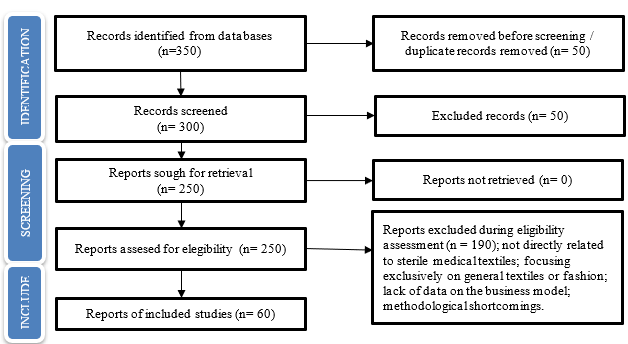
The selection process began with 350 records. After removing 50 duplicate records, 300 documents were screened based on their titles and abstracts. During this stage, 50 documents were excluded due to low thematic relevance. The remaining 250 documents underwent a more detailed review, resulting in the final selection of 60 documents and reports. The 190 documents excluded during the eligibility stage were grouped into four main categories: lack of a direct relationship with sterile medical textiles, an exclusive focus on general textiles or fashion, insufficient data on supply chains or business models, and methodological limitations that prevented adequate support for the analysis. This screening process, illustrated in Figure 1, made it possible to retain a manageable documentary base aligned with the objective of designing and validating a business model for local production.
Figure 1
Identification of studies through databases and registries
Five groups of variables were extracted from each document included in the study: market characteristics, biosafety standards, cost structure, logistical conditions, and business model elements. Based on this matrix, global trends were identified, and the initial assumptions for the analysis were subsequently developed. The information collected from documentary sources was not intended to replace empirical work, but rather to serve as a starting point for formulating questions related to availability, costs, acceptance of local suppliers, and minimum purchasing conditions established by Health Services Provider Institution (IPS).
The empirical component of this study was conducted in medium- and high-complexity healthcare institutions located in the city of Barranquilla and its metropolitan area. Using a non-probabilistic convenience sampling approach, fifteen experts were selected based on their specialized knowledge of the technical and/or institutional sectors relevant to this study (Denzin & Lincoln, 2005). The experts included in the sample comprised professionals involved in procurement, logistics, medical management, surgical nursing, and hospital supply management. The purpose of the selection process was not to achieve statistical representation of all Health Services Provider Institutions (IPS) in the Caribbean region, but rather to gather expert perspectives on real supply challenges and the conditions influencing the acceptance of a potential new supplier.
The data collection instruments consisted of a Likert scale questionnaire and semi-structured interviews. The questionnaire served as the basis for the descriptive statistical analysis and for assessing the relative importance of dimensions such as cost, delivery time, certifications, inventory availability, package flexibility, and trust in regional suppliers. The interviews provided insights into purchasing motivations, adoption barriers, and expectations regarding sterile surgical textiles. Guiding questions included: What problems does sourcing from other regions currently create? What conditions would a local supplier need to meet to be considered? How important are certifications relative to price? Which product characteristics affect the work of surgical staff? and What risks does the institution perceive in changing suppliers?
For the survey data, frequencies and percentages were calculated, while the interview data were analyzed using content analysis with thematic coding of responses related to costs, delivery conditions, quality, biosafety, flexibility, and institutional trust. By integrating these finding with the documentary evidence, dependence on a single source of information was reduced, thereby strengthening the internal consistency of the proposed model (Flick, 2018).
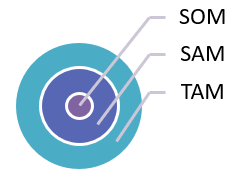
The Business Model Canvas was selected as the framework for the business model developed in this study, incorporating the value proposition, customer segments, channels, key resources, key activities, revenue streams, and cost structure (Osterwalder & Pigneur, 2010; Teece, 2010). In addition, a strategic market-sizing analysis for sterile surgical packs was conducted using the Total Addressable Market (TAM), Serviceable Available Market (SAM), and Serviceable Obtainable Market (SOM) framework (Figure 2). In this context, the TAM was estimated based on the total number of annual surgical procedures nationwide and the potential consumption of sterile surgical textile packs; the SAM was defined according to the potential demand of authorized healthcare institutions in the Colombian Caribbean region with the capacity to perform major surgical procedures; and the SOM was determined by considering the portion of the regional market that could realistically be captured during the initial stages of operation, taking into account projected production capacity, gradual market entry, potential commercial agreements with healthcare institutions, and the expected level of market penetration (Mazzarol & Reboud, 2020).
Figure 2
Model TAM, SAM and SOM
Source: own elaboration based on PRISMA (Page et al., 2021).
Cash flow projections based on a medium-term horizon served as the foundation for the financial evaluation, incorporating into the analysis the initial investment, operating costs, the break-even point, Net Present Value (NPV), Internal Rate of Return (IRR), and Return on Investment (ROI), in accordance with the criteria typically used to assess the viability of investment projects (Brealey et al., 2023). Under this approach, financial analysis moves beyond the presentation of isolated figures and enables an assessment of whether the proposed venture is sustainable from a broader economic perspective.
Model validation was carried out through a process of triangulation involving documentary evidence, expert consultation, and strategic-financial modeling. Consequently, the validation phase extended beyond the construction of a descriptive Business Model Canvas. The literature reviews initially identified key factors affecting this type of proposal, including market conditions, biosafety requirements, logistical barriers, and regulatory constraints. The responses provided by the 15 experts made it possible to contrast these assumptions with the actual experiences of medium and high-complexity healthcare institutions. This, in turn, is linked to the final development of the model using the Canvas, TAM-SAM-SOM, Design Thinking, and Lean Startup frameworks, with the aim of assessing whether the initiative could be sustained not only as a generally viable idea but also as a truly viable alternative to meet the needs of the regional hospital supply chain.
Clinical needs regarding more specific product attributes were addressed by Design Thinking, focusing on ease of opening, thermal comfort, adaptation to specific specialties, traceability, and confidence in the sterility of the surgical pack (Brown, 2009; Panke, 2019; Plattner et al., 2015; Roberts et al., 2016). In this sense, the tool ceases to be solely focused on generating ideas and instead functions as a means of interpreting what users truly require within the hospital context. The logic of iterative validation, meanwhile, was provided by the Lean Startup methodology, based on the minimum viable product, early feedback, and the refinement of hypotheses before moving toward larger-scale production (Blank, 2020; Ries, 2011; Shepherd & Gruber, 2021). This, in turn, was linked to the final integration of the model through the combined use of the Business Model Canvas, the TAM-SAM-SOM framework Design Thinking and Lean Startup, with the aim of assessing whether the initiative could be sustained not only as a promising business concept but also as a genuinely viable solution to the needs of the regional hospital supply chain.
Design Thinking was used to address clinical needs related to specific product attributes, including ease of opening, thermal comfort, adaptation to different medical specialties, traceability, and confidence in the sterility of surgical (Brown, 2009; Panke, 2019; Plattner et al., 2015; Roberts et al., 2016). In this context, the methodology moves beyond the mere generation of ideas and serves as a means of understanding the actual needs of users within the hospital environment. The logic of iterative validation was provided by the Lean Startup methodology, which emphasizes the development of a minimum viable product, the incorporation of early feedback, and the refinement of hypotheses before progressing to larger-scale production (Blank, 2020; Ries, 2011; Shepherd & Gruber, 2021).
The validation of the model was structured around four key questions: Is there a genuine institutional need? Does the product have the capacity to meet technical requirements? Does the regional market allow for the achievement of a minimum operation scale? And can the projected investment generate an adequate return under reasonable demand conditions? This approach enabled the proposal to move beyond a purely strategic formulation to be assessed as a model capable of demonstrating its technical, commercial, and financial viability within the regional hospital supply system.
Results
The findings of this study suggest that the viability of the proposed model cannot be explained by a single isolated variable; rather, it depends on a set of interrelated factors. These include logistics costs, inventory availability, confidence in regulatory compliance, customization capabilities, and the minimum scale required to sustain operations financially.
Accordingly, the acceptance or rejection of a potential local supplier currently absent from the regional market should not be viewed solely as a commercial decision, but rather as the outcome of a broader assessment of the supplier’s ability to meet the institutional needs of the healthcare sector. In this sense, local production should not be understood merely as the replacement of one supplier with another, but as the development of a reconfigured value chain for the hospital sector in the Colombian Caribbean.
The findings derived from the market analysis, operational assessment, and institutional validation were organized using the Business Model Canvas, resulting in a coherent business structure (Blank, 2020). The proposal was built around three core pillars: immediate availability, reduced logistics costs, and compliance with biosafety standards. These elements were designed to address the main challenges identified by the healthcare institutions consulted, particularly supply delays and transportation costs, which emerged as recurring barriers to more efficient surgical operations.
Table 1 presents the general structure of the developed model.
Table 1
Canvas Model for a Sterile Surgical Textile Plant in Atlántico
Block |
Strategic Summary |
Value Proposition |
Local supply of sterile surgical packs with immediate availability, compliance with INVIMA regulations and ISO 13485 standards, and an estimated reduction in logistics costs of 15%-20%. |
Customer Segments |
Medium- and high-complexity healthcare institutions (IPS) in the Colombian Caribbean, particularly those with a high volume of surgical procedures. |
Channels |
Direct sales through supply contracts, B2B commercial services, and scheduled replenishment based on institutional demand. |
Customer Relationships |
Technical support, post-sales follow-up, and customization of surgical packs according to medical specialty requirements. |
Revenue Streams |
Sales of sterile surgical packs, recurring supply contracts with healthcare institutions, and specialized contract manufacturing services. |
Key Activities |
Cutting, heat sealing, packaging, sterilization, quality control, and product traceability. |
Key Resources |
Certified production facility, technical personnel, SMS polypropylene suppliers, and a quality management system. |
Key Partners |
Raw material suppliers, sterilization laboratories, regional logistics operators, and clinical associations. |
Cost Structure |
Estimated initial investment of COP 3.5 billion, concentrated in infrastructure, machinery, certifications, raw materials, and operations. |
Source: Own elaboration.
Table 1 should not be viewed merely as an administrative description of the business; rather, it represents the strategic translation of a healthcare need into a concrete operational structure. From a business model perspective, the Canvas framework helps organize how value is created, delivered, and captured, particularly when the proposition depends not only on the direct sale of a product, but also on the interaction among the various actors involved in the supply and end-use process (Osterwalder & Pigneur, 2010; Teece, 2010). The value proposition addresses a supply-chain challenge that affects costs, replenishment times, and the responsiveness of healthcare institutions in the Colombian Caribbean. As such, the proposal extends beyond the mere manufacture of sterile surgical textiles and seeks to strengthen the efficiency and resilience of regional hospital supply systems.
This perspective further connects the model with contemporary approaches to supply chain resilience and production relocation. In this context, proximity to the point of consumption may serve as an effective strategy for reducing the operational vulnerabilities associated with the supply of critical inputs, provided that local production complies with the quality, certification, and traceability standards required for medical products of this nature (Ivanov et al., 2023; Stringer, 2023). Accordingly, the proposed competitive advantage extends beyond price considerations and is instead grounded in immediate availability, regulatory compliance, adaptation to clinical requirements, and lower exposure to logical disruptions.
This interpretation is further supported by the integrated reading of the Canvas model. The proposal’s primary competitive advantage is no longer based solely on price competition; rather, it is centered on reducing the logistical challenges currently faced by healthcare institutions in the Colombian Caribbean. In this regard, geographical proximity not only shortens response times but also facilitates closer communication with institutional buyers and enables surgical packs to be tailored to the specific needs of clinical personnel. In this respect, the proposal differs from centralized supply models, where national-scale operations may reduce unit costs but do not always guarantee the timely delivery or operational flexibility required by healthcare institutions.
The surveys and interviews conducted with 15 healthcare-sector experts also made it possible to identify the factors that most strongly influence institutions’ willingness to work with a regional supplier. Cost reduction emerged as an important consideration; however, it was not viewed in isolation. Rather, participants linked these potential savings to the availability of nearby inventory, the reduction of delays in surgical procedures, and the ability to maintain quality standards that can be verified throughout the procurement and supply process.
Table 2
Institutional perceptions of a local supplier of sterile surgical textiles
Thematic Category |
Frequency (%) |
Representative Participant Perceptions |
Availability and Delivery speed |
92% |
Immediate replenishment was considered crucial for addressing unplanned surgical procedures and preventing operational delays. |
Reduction of Operating Costs |
85% |
Freight costs associated with suppliers located in other regions of the country were identified as a factor that increases supply expenses. |
Quality and Regulatory Compliance |
78% |
Healthcare institutions would not accept lower prices if doing so compromised certifications, sterility, or product traceability. |
Flexibility and Personalized Service |
70% |
The customization of surgical packs according to medical specialty was valued as an advantage over standardized suppliers. |
Supply Sustainability and Resilience |
65% |
Local production was associated with lower exposure to transportation disruptions and logistics-related crises. |
Impact on Employment and the Regional Economy |
55% |
Some participants highlighted job creation and the strengthening of the Caribbean region’s industrial sector. |
Source: Own elaboration.
According to the results of the empirical consultation, 80% of the participating experts (12 out of the 15 consulted), expressed a willingness to consider a regional supplier had the capacity to guarantee certified quality, timely deliveries, and product traceability, according to the results of the empirical survey. This finding should not be interpreted as a statistically generalizable measure applicable to all healthcare institutions in the Colombian Caribbean; rather; it should be understood as an exploratory indicator of institutional acceptance within the group consulted. The significance of this finding lies in its ability to delimit the actual scope of the results, suggesting that local production may represent a viable alternative, although not automatically. Its viability remains contingent upon compliance with the technical, sanitary, and regulatory requirements associated with this type of medical supply.
This interpretation is further supported by the categories presented in Table 2. Availability and delivery speed received the highest frequency of responses (92%), followed by the reduction of operating costs (85%) and regulatory compliance (78%). These findings suggest that purchasing decisions are no longer determined solely by price. Rather, timely replenishment, confidence in product sterility, and the ability to customize surgical packs according to specific institutional needs are regarded as factors that carry weight comparable to the unit cost of the supply. This, in turn, highlights how the expected value of a local supplier extends beyond the possibility of lower prices and is increasingly associated with its capacity to ensure service continuity and strengthen the reliability of the regional hospital supply chain.
The TAM-SAM-SOM market sizing analysis provided a more concrete estimate of the market that the proposed venture could realistically serve, moving the assessment beyond an abstract notion of demand and toward more precise market parameters. The TAM was estimated based on the national demand for sterile surgical packs. The SAM was defined as the demand generated by medium- and high-complexity healthcare institutions in the Colombian Caribbean region. Finally, the SOM was projected as an initial market share consistent with the plant’s installed capacity, potential contractual agreements, and the expected gradual penetration of the regional market (Mazzarol & Reboud, 2020).
The need to capture the entire regional demand in order to begin operations is no longer the starting point of the model. Instead, the model is now based on securing a sufficient number of recurring contracts to sustain inventory levels, procure raw materials, and stabilize production processes. This, in turn, reflects a shift in the analysis from focusing solely on the potential size of the market to evaluating the realistic opportunities for market entry and long-term participation within the regional hospital supply chain.
The SAM was estimated at approximately 1.8 million units annually for the Colombian Caribbean region, while the SOM was projected to range between 15% and 35% of that regional demand, establishing an initial target of approximately 250,000 units per year. With this estimate, production capacity is no longer considered in isolation but is instead aligned with a more concrete level of institutional demand, thereby reducing the risk of overestimating initial investments. The viability of the model therefore no longer depends on immediate business expansion; rather, it is based on a gradual, validated market entry strategy adjusted to the actual response of healthcare institutions within the regional market.
Three complementary dimensions emerged from the integration of literature review, fieldwork, and financial modeling, bringing together the findings, global industry trends, the empirical assessment of the regional market, and the economic viability of proposed model. Table 3 summarizes these results and illustrates how each dimension contributes to the design of a local production proposal for sterile surgical textiles in the department of Atlántico. This integrated approach shifts the analysis from a presentation of isolated findings to a comprehensive assessment that connects market opportunities, operational capabilities, and financial sustainability.
Table 3
Summary of Research Findings
Analysis Dimension |
Category |
Key Findings |
A. Systematic Review |
Global Trend |
The biomedical textiles market continues to show sustained growth, with projected compound annual growth rates (CAGR) of approximately 5.9 through 2032. |
A. Systematic Review |
Standards and Protocols |
The adoption of quality management systems, such as ISO 13485, and the use of disposable SMS textiles are associated with reduced risks of contamination and healthcare-associated infections. |
A. Systematic Review |
Global Logistics |
Nearshoring has emerged as a key strategy for reducing supply chain vulnerabilities, particularly in sensitive sectors such as healthcare. |
B. Fieldwork |
Local Acceptance |
Eighty percent of the experts consulted (12 out of 15 participants) expressed interest in regional suppliers, provided that they guarantee quality, certification, and timely delivery. |
B. Fieldwork |
Pain Points |
An unmet need was identified regarding thermoregulation, ergonomics, and the adaptation of sterile gowns to actual operating room conditions. |
B. Fieldwork |
Availability |
Ninety-two percent of the experts considered immediate availability a decisive factor when evaluating a potential transition to a local supplier. |
C. Financial Modeling |
Investment and Return |
The model projects an initial investment of approximately COP 3.5 billion and an ROI of 33.5% by the third year of operation. |
C. Financial Modeling |
Profitability |
The estimated IRR is 35%, suggesting a viable business opportunity under conditions of stable demand, timely certification, and effective cost control. |
C. Financial Modeling |
Break-even Point |
The break-even point is expected to be reached during the second year, with an initial market capture of approximately 14% of regional demand, equivalent to around 250,000 units annually. |
C. Financial Modeling |
Cost Efficiency |
A direct reduction of between 15% and 20% in supply costs for local healthcare institutions is projected, mainly due to reduced intermediation and lower transportation expenses. |
Source: Own elaboration.
The viability of the proposed model does not depend on a single isolated indicator; rather, it is understood as the outcome of the convergence of three key factors; a favorable global market trend, a regional need for timely and reliable supply, and a positive financial outlook under controlled assumptions. In this context, local production is no longer viewed merely as an immediate business opportunity but as a gradual strategic initiative. Initially, it is intended to address critical supply-chain challenges and, subsequently, to contribute to the consolidation of a more stable and resilient regional industrial capacity.
The financial projections developed under these assumptions indicate an initial investment of approximately COP 3.5 billion, primarily allocated to infrastructure, machinery, certifications, raw materials, and operational activities. Under the base-case scenario, the model projects a break-even point by the second year, an estimated IRR of 35%, and an ROI of 33.5% by the third year. This figures should not be interpreted as definitive operating results; rather, they represent preliminary feasibility estimates subject to verification. Their realization depends on three key conditions: the timely acquisition of certifications, a stable supply of SMS polypropylene, and the successful establishment of recurring contracts with medium- and high-complexity healthcare institutions.
The analysis of the business model also highlighted a series of risks that should be considered before implementation. The proposed operation cannot be regarded as immune to exchange-rate volatility and international market fluctuations, given its dependence polypropylene as a key raw material. In addition, regulatory compliance entails substantial initial costs and implementation periods that may affect cash flow during the early stages of operation. Furthermore, the model must contend with competition from well-established national suppliers. As a result, geographical proximity alone cannot serve as the proposal’s primary competitive advantage; rather, it must be consistently supported by verifiable indicators of product quality, timely delivery, and measurable cost savings for healthcare institutions.
The analysis ultimately showed that the proposed business model is supported by the interplay of four key factors: institutional acceptance, cost reduction, immediate availability, and financial viability. Taken together, the findings confirm that local production of sterile surgical textiles in the department of Atlántico addresses a genuine need within the Colombian Caribbean region. The successful implementation of this initiative depends not only on recognizing that opportunity but also on pursuing a gradual, regulatory-compliant strategy that is closely aligned with the operational requirements of healthcare institutions.
Discussions
The findings of this study suggest that the local production of sterile surgical textiles should be understood as a response to a specific supply chain challenge, rather than as an isolated manufacturing opportunity. In the Colombian Caribbean, the discussion extends beyond the mere geographical distance between healthcare institutions and major supply centers to focus on how that distance contributes to longer replenishment times, higher transportation costs, and greater dependence on suppliers located outside the region. In this context, geographical proximity acquires strategic value, as it can help reduce operational vulnerabilities within a sector where the continuity of supply directly impacts surgical scheduling and patient safety (Ivanov et al., 2023; Stringer & Ramírez, 2023).
Institutional acceptance of a local supplier ceases to be determined solely by the possibility of offering a lower price, and instead comes to depend on a broader constellation of factors, as the results confirm. Immediate availability, the reduction of logistics costs, and regulatory compliance are the central factors in decision-making, as shown by the frequency with which these factors were cited in the expert survey. This is linked, in turn, to the literature on business models in regulated sectors, where value creation ceases to be limited to the product itself and instead comes to include the reliability of the system that delivers it, adaptability, and the reduction of uncertainties for the institutional buyer (Osterwalder & Pigneur, 2010; Teece, 2010).
The Canvas tool integrates a healthcare need into specific business components (value proposition, customer segments, resources, key activities, partners, cost structure, and revenue streams) by allowing that need to be translated from a mere operational problem into a foundation for coordinated business decision-making. Consequently, the business proposal ceases to consist merely of producing surgical gowns, drapes, or surgical packs, and instead becomes the design of an offering capable of responding to the real-world conditions of healthcare facilities, particularly in terms of availability, traceability, certification, scheduled restocking, and adaptations according to medical specialty.
The relationship between biosafety and user-centered design is also worth highlighting. Textiles are no longer evaluated by clinical staff solely for their microbiological barrier properties; they are also assessed based on their performance under actual conditions of use, ease of handling and opening, thermal comfort, mobility, and suitability for specific procedures. The relevance of Design Thinking in this context is supported by Altman et al. (2018), Brown (2009), and Roberts et al. (2016), who argue that this methodology enables the connection between the product’s technical requirements and the user’s real world experiences within the operating room. This is also aligned with the Lean Startup approach, which seeks to reduce the risks of early-stage investments by proposing cycles of validation, testing, and refinement before scaling production (Felin et al., 2020; Ries, 2011; Shepherd & Gruber, 2021).
Financial indicators may appear favorable; however, this does not necessarily imply that the project’s risks have been eliminated. Implementation, should therefore be conceived as a gradual process that takes into account the initial investment, dependence on specific raw materials, health certification requirements, and the need to sustain recurring contractual agreements, thereby ruling out any immediate, large-scale market entry. In this way, the model’s viability is no longer assessed solely through IRR or projected ROI estimates, it is also evaluated in terms of its ability to sustain quality, operational stability, and institutional trust over time. As noted earlier, The TAM-SAM-SOM market-sizing framework makes it possible to propose a gradual market-entry strategy without assuming that the plant must capture the entire regional demand from the outset.
Conclusions
A business model focused on the local production of sterile surgical textiles in the Atlántico department served as the foundation for the design and exploratory validation of this study. The identified opportunity is no longer viewed solely as a consequence of the global growth of the medical textiles market; it is also understood as a response to a specific regional need: reducing dependence on suppliers located in other parts of the country, shortening restocking times, and strengthening the continuity of hospital supply in the Colombian Caribbean. The proposal is therefore no longer viewed merely as a production opportunity; rather, it is conceived as a strategic response to the current limitations of regional supply chains.
The Canvas model structured the value proposition around three core components: immediate availability, regulatory compliance, and reduced logistics costs. The experts consulted for this study endorsed this approach, as 80% indicated that the entry of a local supplier into the market would be desirable provided that assurances regarding quality, certification, and timely deliveries were offered, In this regard, the most frequently cited categories were rapid restocking, reduced freight costs, and confidence in health certifications, all of which are closely linked to the model’s capacity to maintain efficient logistics operations and demonstrable technical compliance.
Thus, during its initial stages, it is not necessary to capture the entire regional market; rather, the objective is to attain a moderate initial market penetration equivalent to approximately 250,000 units per year within the framework of an estimated serviceable available market (SAM) of 1.8 million units for the Colombian Caribbean. The project also contemplates an estimated investment of approximately 3.5 billion pesos, with a projected IRR of 35% and a projected ROI of 33.5% for the third year. These estimates should not be regarded as definitive; instead, they should be interpreted as indicators supporting to the project’s feasibility under conditions of cost control, timely certification, and stability in the supply of raw materials, while recognizing the critical need to secure recurring contracts with medium- and high-complexity healthcare providers.
The technical performance of medical textiles, the strategic management of business models, and the logistical realities of healthcare institutions are typically examined as separated dimensions; however, these perspectives should be integrated so that local production is no longer viewed merely as an industrial alternative, but rather as a potential strategy for regional healthcare resilience. In turn, productive proximity must be reflected in verifiable indicators related to traceability, timely response capacity, and financial sustainability, thereby generating genuine operational capacity for the hospital system based on territorial advantages.
Finally, future research should expand empirical validation by involving a large number of healthcare providers in the Colombian Caribbean, conduct financial sensitivity analyses, perform life-cycle environmental assessments of disposable surgical textiles, and examine digital traceability systems that strengthen sterility control. This would enable the proposal to move beyond the pre-feasibility phase and evolve into a technically more robust model capable of guiding investment, certification, and regional production decisions.
Ethical considerations
This study did not require approval from an ethics or bioethics committee, as it did not involve any living organisms, agents, biological samples, or personal data that posed a risk to life, the environment, or human rights.
Conflict of interest
All authors made significant contributions to this paper and declare that they have no conflicts of interest related to this article.
Author contribution statement
Paola Andrea Zambrano Roa: Conceptualization, Methodology, Writing – Original draft.
Daniel Alfonso Mendoza Casseres: Software, Validation, Formal Analysis.
Hugo Gaspar Hernández Palma: Data Curation, Writing: review and Editing
Source of funding
This research was funded by Corporación Universitaria Latinoamericana and Universidad del Atlántico as part of the research project “Modelo de negocios para una empresa industrial en la fabricación de ropa de único uso estéril ubicada en el distrito de Barranquilla”.
References
(1)Allegranzi, B., Aiken, A. M., Zeynep Kubilay, N., Nthumba, P., Barasa, J., Okumu, G., Mugarura, R., Elobu, A., Jombwe, J., Maimbo, M., Musowoya, J., Gayet-Ageron, A., & Berenholtz, S. M. (2018). A multimodal infection control and patient safety intervention to reduce surgical site infections in Africa: A multicentre, before–after, cohort study. The Lancet Infectious Diseases, 18(5), 507–515. https://doi.org/10.1016/S1473-3099(18)30107-5
(2)Altman, M., Huang, T. T. K. & Breland, J. Y. (2018). Design thinking in health care. Preventing Chronic Disease, 15, Article 180128. https://doi.org/10.5888/pcd15.180128
(3)Association for the Advancement of Medical Instrumentation. (2023). ANSI/AAMI ST79:2023: Comprehensive guide to steam sterilization and sterility assurance in health care facilities. AAMI. https://array.aami.org/doi/book/10.2345/9781570208720
(4)Basque Trade & Investment. (2022, 28 de octubre). El mercado de dispositivos médicos en Colombia: Oportunidades en un sistema de salud en transformación. https://basquetrade.spri.eus/el-mercado-de-dispositivos-m-dicos-en-colombia-oportunidades-en-un-sistema-de-salud-en-transformaci-n/
(5)Beltran, E., Saavedra, R. E., Tortorella, G., Limon, J., Tlapa, D. & Baez-Lopez, Y. (2025). Critical success factors for supplier selection and performance enhancement in the medical device industry: An Industry 4.0 approach. Processes, 13(5), Article 1438. https://doi.org/10.3390/pr13051438
(6)Blank, S. G. (2020). The four steps to the epiphany: Successful strategies for products that win (5th ed.). K&S Ranch. https://steveblank.com/books-for-startups/
(7)Brealey, R. A., Myers, S. C., Allen, F. & Edmans, A. (2023). Principles of corporate finance (14th ed.). McGraw Hill.
(8)British Standards Institution. (2021, 26 de julio). Medical device quality management system: The importance of BS EN ISO 13485. BSI Knowledge. https://knowledge.bsigroup.com/articles/medical-device-quality-management-system-the-importance-of-iso-13485
(9)Brown, T. (2009). Change by design: How design thinking creates new alternatives for business and society. Harper Business. https://www.harpercollins.com/products/change-by-design-tim-brown
(10)Consultorsalud. (2025). Colombia proyecta $28,9 billones en gasto total en medicamentos para 2024, sin mejoras proporcionales en acceso: Informe de ACEMI. https://consultorsalud.com/colombia-289-bill-gasto-total-medicamentos-2024/
(11)Creswell, J. W. (2014). Research design: Qualitative, quantitative, and mixed methods approaches (4th ed.). SAGE.
(12)Denzin, N. K. & Lincoln, Y. S. (Eds.). (2005). The SAGE handbook of qualitative research (3rd ed.). SAGE.
(13)Development Bank of Latin America and the Caribbean. (2022). Desigualdades heredadas: El rol de las habilidades, el empleo y la riqueza en las oportunidades de las nuevas generaciones. CAF. https://www.caf.com/media/4019958/red2022.pdf
(14)Economic Commission for Latin America and the Caribbean. (2023). Perspectivas del comercio internacional de América Latina y el Caribe 2023: Cambios estructurales y tendencias en el comercio mundial y regional: Retos y oportunidades. CEPAL. https://www.cepal.org/es/publicaciones/68663-perspectivas-comercio-internacional-america-latina-caribe-2023-cambios
(15)Felin, T., Gambardella, A., Stern, S., & Zenger, T. (2020). Lean startup and the business model: Experimentation revisited. Long Range Planning, 53(4), Article 101889. https://doi.org/10.1016/j.lrp.2019.06.002
(16)Flick, U. (2018). An introduction to qualitative research (6th ed.). SAGE.
(17)Fortune Business Insights. (2026). Medical clothing market size, share & industry analysis, by product, by type, by end-user, and regional forecast, 2026–2034. https://www.fortunebusinessinsights.com/medical-clothing-market-102704
(18)García, E., Bhamra, R. & Schoenheit, M. (2019). Critical success factors of medical technology supply chains. Production Planning & Control, 30(9), 716–735. https://doi.org/10.1080/09537287.2019.1572248
(19)Grand View Research. (2023). Medical textiles market size, share & trends analysis report by type, by application, by region, and segment forecasts, 2023–2030. https://www.grandviewresearch.com/industry-analysis/medical-textiles-market
(20)Grand View Research. (n. d.). Latin America disposable hospital gowns market size & outlook. https://www.grandviewresearch.com/horizon/outlook/disposable-hospital-gowns-market/latin-america
(21)Hernández, R. & Mendoza, C. P. (2018). Metodología de la investigación: Las rutas cuantitativa, cualitativa y mixta. McGraw-Hill Education.
(22)Instituto Nacional de Salud. (2024). Protocolo de vigilancia en salud pública: Infecciones asociadas a procedimientos médico quirúrgicos. INS. https://www.ins.gov.co/buscador-eventos/Paginas/Fichas-y-Protocolos.aspx
(23)Inter-American Coalition for Regulatory Convergence for the Medical Technology Sector. (n. d.). Regulatory convergence. https://www.interamericancoalition-medtech.org/regulatory-convergence/?lang=es
(24)Inter-American Development Bank. (2025). Regional opportunities amid global shifts. BID. https://publications.iadb.org/en/regional-opportunities-amid-global-shifts
(25)International Labour Organization. (2023). Perspectivas sociales y del empleo en el mundo: Tendencias 2023. OIT. https://www.ilo.org/es/publications/perspectivas-sociales-y-del-empleo-en-el-mundo-tendencias-2023
(26)International Organization for Standardization. (2016). ISO 13485:2016: Medical devices: Quality management systems: Requirements for regulatory purposes. ISO. https://www.iso.org/standard/59752.html
(27)Ivanov, D., Dolgui, A., Blackhurst, J. V. & Choi, T.-M. (2023). Toward supply chain viability theory: From lessons learned through COVID-19 pandemic to viable ecosystems. International Journal of Production Research, 61(8), 2402–2415. https://doi.org/10.1080/00207543.2023.2177049
(28)Karanam, R. K., Sachani, D. K., Natakam, V. M., Yarlagadda, V. K. & Kothapalli, K. R. (2025). Resilient supply chains: Strategies for managing disruptions in a globalized economy. American Journal of Trade and Policy, 11(1), 7–16. https://doi.org/10.18034/ajtp.v11i1.719
(29)López, A. L., López, S. A., Pinzón, B. & Vásquez, Ó. A. (2023). Turismo médico en Colombia: Dinámica y ventaja competitiva. Revista CEA, 9(20), Article e2407. https://doi.org/10.22430/24223182.2407
(30) Mazzarol, T. & Reboud, S. (2020). Entrepreneurship and innovation: Theory, practice and context (4th ed.). Springer. https://doi.org/10.1007/978-981-13-9412-6
(31)National Business Association of Colombia. (2024). Informe ANDI 2024. ANDI. https://www.andi.com.co/Uploads/Informe%20ANDI%202024.pdf
(32)Osterwalder, A. & Pigneur, Y. (2010). Business model generation: A handbook for visionaries, game changers, and challengers. John Wiley & Sons.
(33)Page, M. J., McKenzie, J. E., Bossuyt, P. M., Boutron, I., Hoffmann, T. C., Mulrow, C. D., Shamseer, L., Tetzlaff, J. M., Akl, E. A., Brennan, S. E., Chou, R., Glanville, J., Grimshaw, J. M., Hróbjartsson, A., Lalu, M. M., Li, T., Loder, E. W., Mayo-Wilson, E., McDonald, S., McGuinness, L. A., Stewart, L. A., Thomas, J., Tricco, A. C., Welch, V. A., Whiting, P. & Moher, D. (2021). The PRISMA 2020 statement: An updated guideline for reporting systematic reviews. BMJ, 372, Article n71. https://doi.org/10.1136/bmj.n71
(34)Panke, S. (2019). Design thinking in education: Perspectives, opportunities and challenges. Open Education Studies, 1(1), 281–306. https://doi.org/10.1515/edu-2019-0022
(35)Plattner, H., Meinel, C. & Leifer, L. (Eds.). (2015). Design thinking research: Building innovators. Springer. https://doi.org/10.1007/978-3-319-06823-7
(36)ProColombia. (2024, 22 de julio). ProColombia impulsa la internacionalización en Colombiamoda 2024. https://procolombia.co/sala-de-prensa/noticias/procolombia-impulsa-la-internacionalizacion-en-colombiamoda-2024
(37)Reim, W., Parida, V. & Örtqvist, D. (2015). Product–service systems (PSS) business models and tactics: A systematic literature review. Journal of Cleaner Production, 97, 61–75. https://doi.org/10.1016/j.jclepro.2014.07.003
(38)Ries, E. (2011). The lean startup: How today's entrepreneurs use continuous innovation to create radically successful businesses. Crown Business.
(39)Roberts, J. P., Fisher, T. R., Trowbridge, M. J. & Bent, C. (2016). A design thinking framework for healthcare management and innovation. Healthcare, 4(1), 11–14. https://doi.org/10.1016/j.hjdsi.2015.12.002
(40)Shepherd, D. A. & Gruber, M. (2021). The lean startup framework: Closing the academic–practitioner divide. Entrepreneurship Theory and Practice, 45(5), 967–998. https://doi.org/10.1177/1042258719899415
(41)Shishoo, R. (Ed.). (2012). The global textile and clothing industry: Technological advances and future challenges. Woodhead Publishing.
(42)SkyQuest Technology. (2025). Surgical drapes and gowns market size, share, growth analysis, by type, usage type, end user, and region: Industry forecast 2026–2033. https://www.skyquestt.com/report/surgical-drapes-and-gowns-market
(43)Stringer, T. & Ramírez, M. (2023). Nearshoring to Mexico and US supply chain resilience as a response to the COVID-19 pandemic. Findings, 1–8. https://doi.org/10.32866/001c.91272
(44)Teece, D. J. (2010). Business models, business strategy and innovation. Long Range Planning, 43(2–3), 172–194. https://doi.org/10.1016/j.lrp.2009.07.003
(45)Tukker, A. (2015). Product services for a resource-efficient and circular economy: A review. Journal of Cleaner Production, 97, 76–91. https://doi.org/10.1016/j.jclepro.2013.11.049
(46)World Health Organization. (2022). Global report on infection prevention and control. World Health Organization. https://iris.who.int/handle/10665/354489