https://doi.org/10.22267/rtend.262701.286
One hundred years of population change in three Colombian cities: Bogotá, Cali, and Medellín (1918-2018)
Cien años de cambios poblacionales en tres ciudades colombianas: Bogotá, Cali y Medellín (1918-2018)
Cem anos de mudanças populacionais em três cidades colombianas: Bogotá, Cali e Medellín (1918-2018)
By: César Andrés Cristancho Fajardo 1; Omar Jeronimo Prieto Ruiz2Astrid Guiovanna Rojas Vargas3; Javier Sebastian Ruiz Santacruz 4
1 PhD in demography, Autonomous University of Barcelona. Consultant at the Departamento Administrativo Nacional de Estadística (DANE). ORCID: 0000-0002-1900-2140. E-mail: cacristanchof@dane.gov.co, Bogotá - Colombia.
2 PhD in Social and Political Processes in Latin America, University of Art and Social Sciences - ARCIS. Consultant at the Departamento Administrativo Nacional de Estadística (DANE). ORCID: 0000-0003-2051-8088. E-mail: ojprietor@dane.gov.co, Bogotá - Colombia.
3Historian, National University of Colombia. Consultant at Secretaría Distrital de la Mujer. ORCID: 0009-0003-2231-1213. E-mail: agrojasv@unal.edu.co, Bogotá - Colombia.
4PhD in demography, Autonomous University of Barcelona. Researcher at Grupo Multidisciplinario de Investigación Social (GRUMIS), Universidad de Nariño. ORCID: 0000-0001-9577-8111. E-mail: jruizs@minsalud.gov.co, Pasto - Colombia.
Received: May 5, 2025 Accepted: October 3, 2025
DOI: https://doi.org/10.22267/rtend.262701.286
How to cite this article: Cristancho, C., Prieto, O., Rojas, A. & Ruiz, J. (2025). One hundred years of population change in three Colombian cities: Bogotá, Cali and Medellín (1918-2018). Tendencias, 27(1), 49-76. https://doi.org/10.22267/rtend.262701.286

Abstract
Introduction: The use of Colombian census microdata between 1918 and 2018 enables the consolidation of indicators summarizing the evolution of population volume and structure. This article analyzes the transition of the population structure in the three main cities of Colombia. Objective: To conduct a demographic analysis of the census results in Bogotá, Cali, and Medellín between 1918 and 2018 to understand the progress of the demographic transition in these cities. Methodology: A historical reconstruction of census sources was carried out, with calculation and analysis of demographic indicators applied to the information collected and standardized. Results: Relevant transformations were identified in the three cities over the last century: changes in population structure by age, urbanization, shifts in ethnic composition and birthplace, as well as the formation of conjugal unions. Discussion: The analysis reveals not only quantitative changes in population size, but also significant reconfigurations in the social, territorial, and cultural structure of the country. Bogotá Cali, and Medellín, concentrate population, attract migrants and reflect dynamics that affect urban and rural inequalities. Conclusions: Demographic, social, cultural, and political transitions have occurred earlier in these cities. Furthermore, the feminization of aging poses additional risks of vulnerability, loneliness, and isolation for older women, emphasizing the need for public policies with a gender perspective and territorial equality.
Keywords: population censuses; statistical data; age distribution; demographic statistics; population distribution.
JEL: J11; J12; J15; J16; N96; O15.
Resumen
Introducción: La explotación de los microdatos censales colombianos entre 1918 y 2018, permite consolidar indicadores que resumen la evolución del volumen y la estructura poblacional. Este artículo analiza la transición de la estructura poblacional en las tres principales ciudades de Colombia. Objetivo: Realizar un análisis demográfico de los resultados censales de Bogotá, Cali y Medellín entre 1918 y 2018 para comprender el estado de avance de la transición demográfica en estas ciudades. Metodología: Se efectuó una reconstrucción histórica de fuentes censales, con cálculo y análisis de indicadores demográficos aplicados a la información recopilada y normalizada. Resultados: Se identificaron transformaciones relevantes en las tres ciudades durante el último siglo: la transición de la estructura poblacional por edades, la urbanización, los cambios en la composición étnica y por país de nacimiento, así como en la formación de uniones conyugales. Discusión: El análisis revela no solo cambios cuantitativos en el volumen poblacional, sino profundas reconfiguraciones en la estructura social, territorial y cultural del país. Bogotá, Cali y Medellín concentran población, atraen migrantes y reflejan dinámicas que inciden en las desigualdades urbanas y rurales. Conclusiones: Las transiciones demográficas, sociales, culturales y políticas se han desarrollado de manera más temprana en estas ciudades. Asimismo, la feminización del envejecimiento plantea riesgos adicionales de vulnerabilidad, soledad y aislamiento para las mujeres de mayor edad, lo que subraya la necesidad de políticas públicas con enfoque de género y equidad territorial.
Palabras clave: censo de población; datos estadísticos; distribución por edad; estadísticas demográficas; distribución de la población.
JEL: J11; J12; J15; J16; N96; O15.
Resumo
Introdução: O uso de microdados censitários da Colômbia entre 1918 e 2018 permite a consolidação de indicadores que resumem a evolução do volume e da estrutura populacional. Este artigo analisa a transição da estrutura populacional nas três principais cidades da Colômbia. Objetivo: Realizar uma análise demográfica dos resultados censitários de Bogotá, Cali e Medellín entre 1918 e 2018, a fim de entender o andamento da transição demográfica nessas cidades Metodologia: Foi realizada uma reconstrução histórica das fontes de dados censitários, com cálculo e análise de indicadores demográficos aplicados às informações coletadas e normalizadas. Resultados: Foram identificadas transformações relevantes nas três cidades ao longo do último século: mudanças na estrutura populacional por idade, urbanização, transformações na composição étnica e na distribuição por país de nascimento, bem como na formação de uniões conjugais. Discussão: A análise revela não apenas mudanças quantitativas no volume populacional, mas também reconfigurações substanciais na estrutura social, territorial e cultural do país. Conclusões: As transições demográficas, sociais, culturais e políticas ocorreram de maneira mais precoce nessas cidades. Além disso, a feminização do envelhecimento apresenta riscos adicionais de vulnerabilidade, solidão e isolamento para as mulheres idosas, ressaltando a necessidade de políticas públicas com perspectiva de gênero e equidade territorial.
Palavras-chave: censo populacional; dados estatísticos; distribuição etária; estatísticas demográficas; distribuição populacional.
JEL: J11; J12; J15; J16; N96; O15.
Introduction
Specialists in population history argue that consistent population data in Latin America did not exist until the late nineteenth century. The collection of such data by specialized public agencies marked the onset of the statistical era (Arretx et al., 1983). In Colombia, the first national statistical office was established in 1875, and the first statistical yearbook was published in the same year, However, it was only from 1915 onward that this publication became a regular occurrence. In 1906, the Dirección General de Estadística [General Directorate of Statistics] was created as part of the Ministerio de Hacienda [Ministry of Finance]. Between 1927 and 1950, the statistics production in Colombia was the function of the National Statistics Office of the Contraloría General de la República [Office of the Comptroller General of the Republic]; in 1951 this office evolved into the Dirección Nacional de Estadística [National Directorate of Statistics], a direct dependency of Presidencia de la República [Presidency of the Republic], and in 1953 the Departamento Administrativo Nacional de Estadística [National Administrative Department of Statistics, DANE] was created (Cristancho, 2017; Estrada, 2017).
The first census of the twentieth century was conducted in 1905, though its results were controversial and were not officially published until 1917 (Poveda, 2013; Rueda, 2013). In 1912, the first modern census was conducted; however, most of data published referred exclusively to men, since one of the objectives of the census was to quantify the population with the right to vote (Estrada, 2017; República de Colombia, 1912). This methodological limitation restricts demographic analysis for that period. As a result, this document focuses its analysis on the period between 1918 and 2018, thus covering a full century of census evolution in Colombia.
It has long been argued that Colombia is a country of regions; in the same way, it can be classified as a country where several cities hold significant weight in the national population. The tendency to concentrate population in urban centers such as Bogotá, Cali, and Medellín emerged in the final decades of the nineteenth century. However, in the second half of the twentieth century there was a slowdown in population growth in these cities (Cristancho & Triana, 2018; Mejía, 2010). Despite this, the demographic evolution of the population of these capitals, nuclei of Colombian’s main urban agglomerations, has shaped the recent demographic history of the surrounding municipalities. Thus, the urban transition in Colombia represented the shift from a predominantly rural society to one where most of the population resides in urban areas (Cristancho et al., 2021). This historical review at the local scale coincides with what has been proposed at the national level in other demographic history studies such as that of Silva and González (2007), who focus on the 1990s and 2000s.
In Colombia, as in other Latin American countries, the process of state formation has involved changes and adjustments of old colonial structures that adapt to the ideals of liberal modernity (López, 2003). In this context, the establishment of urban centers reflects the tensions between the pre-modern mentality, perpetuated in colonial institutions that survive the transition in a state model, and the new civil values that emphasize the recognition of equality among all inhabitants (Jaramillo, 1997). The simultaneous existence of these two contradictory principles is what helps to explain the diversity that characterizes the political organization, the population and the territory of the country. In Colombia, the cultural and political fragmentation of the territory into regions, each with its own distinct identity, contrasts with the claim of the national power elites to centralize state administration in the Andean region (Zambrano, 1998). Therefore, identity has a spatial dimension, shaped by how society represents its space and reflects the internal tensions of each social group.
Thus, what characterizes the Colombian city system is that urban primacy was not concentrated in a single city, but in several, among which the three most important are Bogotá, Cali and Medellín (Murad, 2003); and, unlike in other countries in the Latin American region, in Colombia the population primacy of the capital is lower (Departamento Nacional de Planeación [National Planning Department, DNP], 2014). The existence of more than two metropolitan areas implies that they do not necessarily compete, but rather complement each other in terms of the reception of new settlers due to immigration (Alfonso, 2023). The development of transport infrastructure that connected the country's coasts with the interior led to a greater concentration of economic activity in these three cities; while the exploitation of coffee and industrialization processes were determining factors in the growth of Medellín and Cali (Zambrano, 2023a; 2023b). On the other hand, the slowdown in the concentration process is not exclusive to the urban agglomeration around Bogotá, also in Medellín new urban centers of population grouping have begun to consolidate in the neighboring municipalities (Horbath, 2016) and around Cali is the most important agglomeration in southwestern Colombia, next to which there is an extensive region of predominantly rural municipalities (Urrea & Canelo, 2017).
These urban transformations are closely related to other significant changes in society, the reduction in household size, a phenomenon connected in turn with the decline in fertility and the progression of population aging. However, in addition to its causes, the consequences of this phenomenon are crucial, as the creation of new households whether through marriage or cohabitation, by emancipation from the parents or the separation or divorce of conjugal unions affects the demand for housing within cities. For this reason, the evolution in the number of households and people per household are key inputs for urban and housing planning (Triana, 2023).
On the other hand, in Colombia it is essential to have statistical information on ethnic and racial diversity, given the significant presence of Afro-descendant and indigenous populations. The 1918 census, like the 1912 census, included racial categories, following the Hispanic model that persisted in the country, which adopted a criterion of heterorecognition was adopted based on the perception that the interviewer has of the characteristics of the respondent (Estrada, 2017; Prieto, 2005). At that time, some used the term “race” to describe a condition passed down through generations (Vásquez, 2018). The challenges in measuring the variable race were highlighted by the refusal of the departments of Bolívar and Magdalena to provide information disaggregated by this criterion (República de Colombia, 1923). The construction of a mestizo national image and the fear of eugenic interpretations were determining factors in the subsequent statistical silence on this variable. It was not until 75 years later that the 1993 census reintroduced a question about race/ethnicity, which has remained in the 2005 and 2018 censuses.
It is important to note that the inclusion of ethnic variables in censuses not only responds to a technical need to characterize the country's population composition, but also serves as a fundamental tool for the formulation of public policies aimed at promoting equity. The statistical recognition of indigenous and Afro-descendant peoples has been a persistent demand of these groups, who argue that their invisibility in official data perpetuates their social, economic, and political exclusion. At the international level, instruments such as the United Nations Declaration on the Rights of Indigenous Peoples (2007) and the International Convention on the Elimination of All Forms of Racial Discrimination (1965) urge states to generate disaggregated statistical information to monitor the fulfillment of the rights of these peoples. In the case of Colombia, the incorporation of ethnic questions in the 1993, 2005 and 2018 censuses have revealed significant gaps in indicators such as education, health, employment and access to basic services, which highlights the importance of continuing to collect and improve the measurement of these variables in future census operations.
In reference to international migration, it is noted that for much of the twentieth century this phenomenon had a negative impact on the population growth of Colombia, as the country was characterized by an emigration profile (Carmona, 2005). However, it is interesting to analyze about the number of foreigners in Colombia, analyzed from the variable place of birth. Since the 1912 and 1918 censuses, there has been information on the number of Colombians and foreigners by municipality; data that have not been sufficiently utilized due to the low number of foreigners residing in Colombia until just a few decades ago. (República de Colombia, 1923).
At the beginning of the twentieth century, national governments sought to promote international immigration, even financing the expenses of immigrants. However, this policy was marked by a hierarchical racial view. There was a fear of the arrival of immigrants considered to be of "inferior races", a term initially applied to indigenous people and descendants of Africans, which was later extended to include Africans, Asians and Roma (Martinez, 2017; Rhenals & Flórez, 2013). Law 114 of 1922 (Ley 114 de 1922) introduced the first explicit restriction on the ethnic origin of immigrants, stating that people "inconvenient to nationality and the better development of the race" would not be admitted.
In 1931, immigration restrictions were made more specific through Decree 2232 of 1931 (Decreto 2232 de 1931), which established an annual quota system for certain nationalities. Once the quota was reached, no additional passports from those countries were issued. Although these quotas were later eliminated, a "migration deposit" was imposed, the cost of which significantly limited the entry of foreigners and shaped the ethnic and socioeconomic profile of those who could enter. Subsequently, it was not until the beginning of this century that Colombia became a country with higher levels of international immigration, particularly from the Venezuelan population. On the other hand, in relation to emigration, the existence of significant flows abroad has been identified since the seventies of the twentieth century, and in recent decades, it has been identified that cities such as Bogotá, Cali, and Medellín concentrate a high percentage of households with international migration experience (Fúquene et al., 2021).
Finally, a phenomenon that warrants further exploration, yet has been scarcely studied in Colombia, is marriage, defined as the analysis of the formation and dissolution of marital unions in the country. Notable contributions to the study of this subject include the works of Cuello et al. (2025) and Zamudio and Rubiano (1991).
Population and transitional schemes
The demographic transition is a model that characterizes the shift from high to low birth and mortality rates within a population (Notestein, 1945; Thompson, 1929). Its empirical foundation is primarily shaped by the European experience, in contrast to Latin America, where it is generally believed to have started in the 1930s and unfolded in a more accelerated and uneven manner (Palloni, 1981, Zavala de Cosio, 1995). The model is typically described in a four-stage framework: in the first stage , population growth is either low or non-existent due to high mortality and fertility rates; in the second stage, an accelerated decrease in mortality is observed, while the birth rates remain high; in the third stage, the birth rate decreases quickly, so the difference between mortality and birth rate is reduced and population growth slows down; and in the fourth stage, there are low birth and mortality rates, with Little or no population change.
However, changes in population dynamics encompass, but are not restricted to, the components of demographic change: mortality, fertility, and migration. There are transformations in society such as shifts in household structure and size as well as urbanization, which have interacted and have become key determinants of changes in the volume, composition, and localization of the population (Da Cunha & Rodriguez, 2009). For example, the decline in fertility has led to smaller household sizes, but the latter in turn can have an impact of the postponement of the emancipation of young people from the parental home. Another example is related to the urbanization process, driven in part by rural-urban migration, which impacts on the levels of mortality, fertility and migration of origin and destination, while also being shaped by these factors, creating cycles of reciprocal influence.
Particularly in the most advanced cities in the demographic transition, such as Bogotá, Cali, and Medellín, both natural growth and net migration largely account for the observed population increase (Universidad Externado de Colombia, 2007; ONU – Habitat, 2012); Although it should be noted that the contribution of these two factors has varied over time, the reclassification of large cities from rural to urban areas has also influenced the change in population structure to one in the process of aging (Flórez et al., 2015; Castellanos et al., 2022). Associated with the above, there is a reduction in the base of the population pyramids, with a subsequent widening of the population corresponding to intermediate ages and an expansion of the apex of population structures and the feminization of aging.
Given this panorama, it is necessary to conduct studies at regional and local scales, that reveal variations differing from what is observed in the transitions of Colombian society at the national level. The objective of this research is to carry out a historical reconstruction and a demographic analysis of the census results of Bogotá, Cali and Medellín between 1918 and 2018 in order to advance the understanding of progress of the demographic transition in these cities. In particular, the analysis of the main Colombian cities is of interes insofar as they lead transformation processes at the national level.
Methodology
Censuses are essential sources for the analysis of social statistics (ECLAC, 2021), as they provide fundamental data calculating indicators at the national and subnational levels. However, interpreting their results from a demographic perspective requires a critical analysis approach and acknowledgment of inherent limitations, as is usual in this type of study. Therefore, the research analyzes the indicators obtained from the censuses, taking these aspects into account in relation to the measurement of variables such as age, sex or race/ethnicity.
In particular, the use of census material and the temporal scope of the study are the aspects that make this research both innovative and unprecedented. For the population censuses of 1993, 2005 and 2018, it was possible doing direct processing on the microdata to obtain the indicators. For the censuses prior to 1993, a reconstruction of the historical series was reconstructed using the documents available in the DANE virtual library; in addition, for each municipality it was necessary to include a variable with the current code in the División Político-Administrativa de Colombia [Political-Administrative Division of Colombia, DIVIPOLA] obtained from the website of that entity (DANE, 2024b). In the development of these processes, optical character recognition programs were used, such as Tabula, the Redatam census data processing software with its programming language; and the R language for the restructuring, homologation and visualization of statistical data.
Results
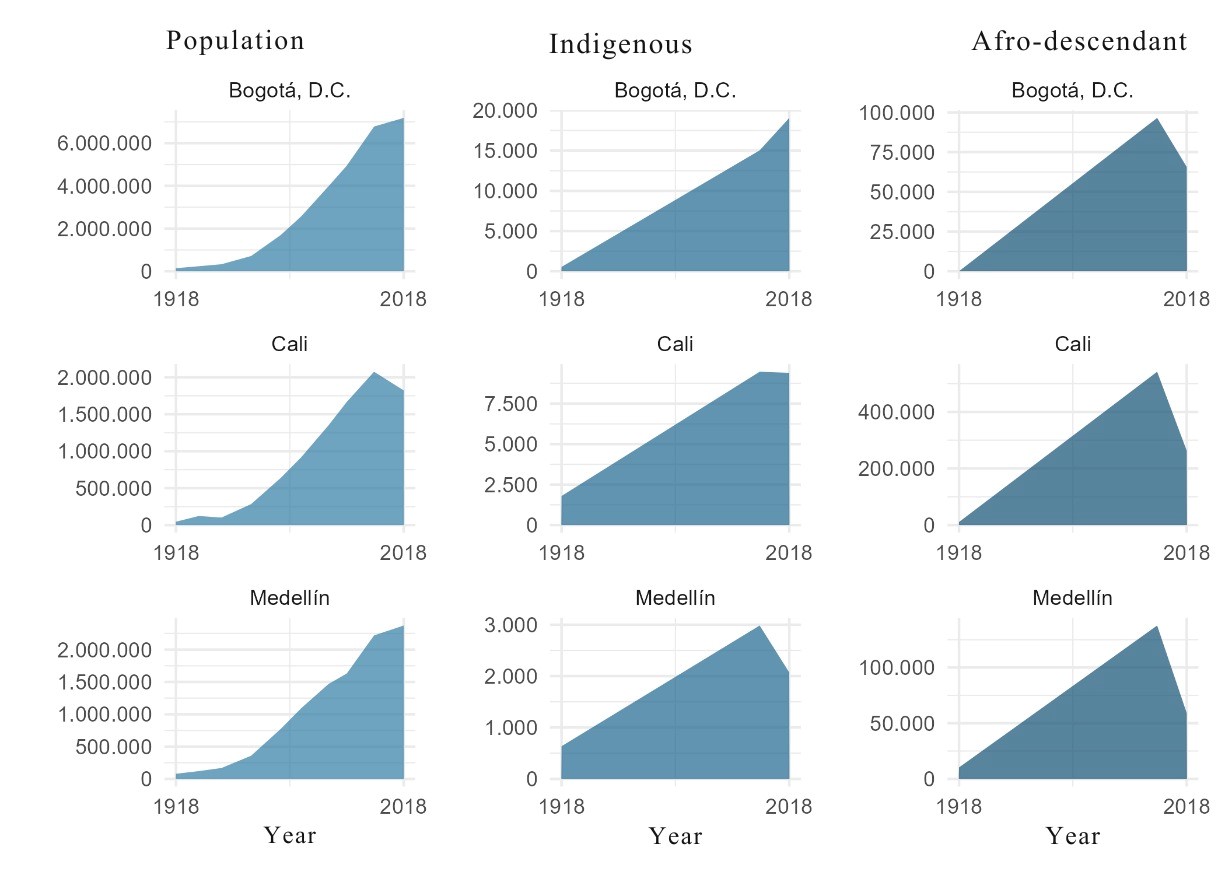
Figure 1 illustrates the evolution of the total population, indigenous, and Afro-descendant of the three main Colombian cities in a period of one hundred years, 1918-2018. It is notable that the range of population changes in Bogotá is much wider than in Medellín and Cali, since the former grew by more than 7 million inhabitants, while the latter increased about 2.3 million in Medellin and fewer than 2 million in Cali. In the period between 1918 and 2005, the indicators of population volume, number of Afro-descendants and indigenous people, increased markedly; and in the intercensal period 2005-2018, the decline in the number of Afro-descendants stands out, an issue that raised concerns among social movements and Afro-Colombian organizations and prompted research into the causes of this decrease (DANE, 2024c).
On the other hand, although the number of Indigenous people increased between 1918 and 2018 in the three cities, their growth rate was consistently lower than the one on the general population, so the participation rate of this group decreased and in no case exceeded one percentage point in 2018. Meanwhile, the Afro-descendant population increased in all three cities, but its share of the total population increased only in Bogota, from 0.03% to 0.91%; while in Cali it fell from 24% to 14% and in Medellín from 13% to 2%, although it should be noted that there are problems with the quality of information in 2018
Figure 1
Bogotá, Cali, and Medellín: total population and presence of afro-descendants and indigenous populations recorded in censuses (1918–2018)
Source: Authors' own elaboration based on publications of the 1918, 1928, 1938, 1951, 1964, 1973, 1985 and 1993 censuses, and processing of the 2005 and 2018 censuses (Republica de Colombia, 1923; Contraloría General de la República, 1930; 1942; and DANE, 1954; 1967; 1980; 1986; 1994; 2024a).
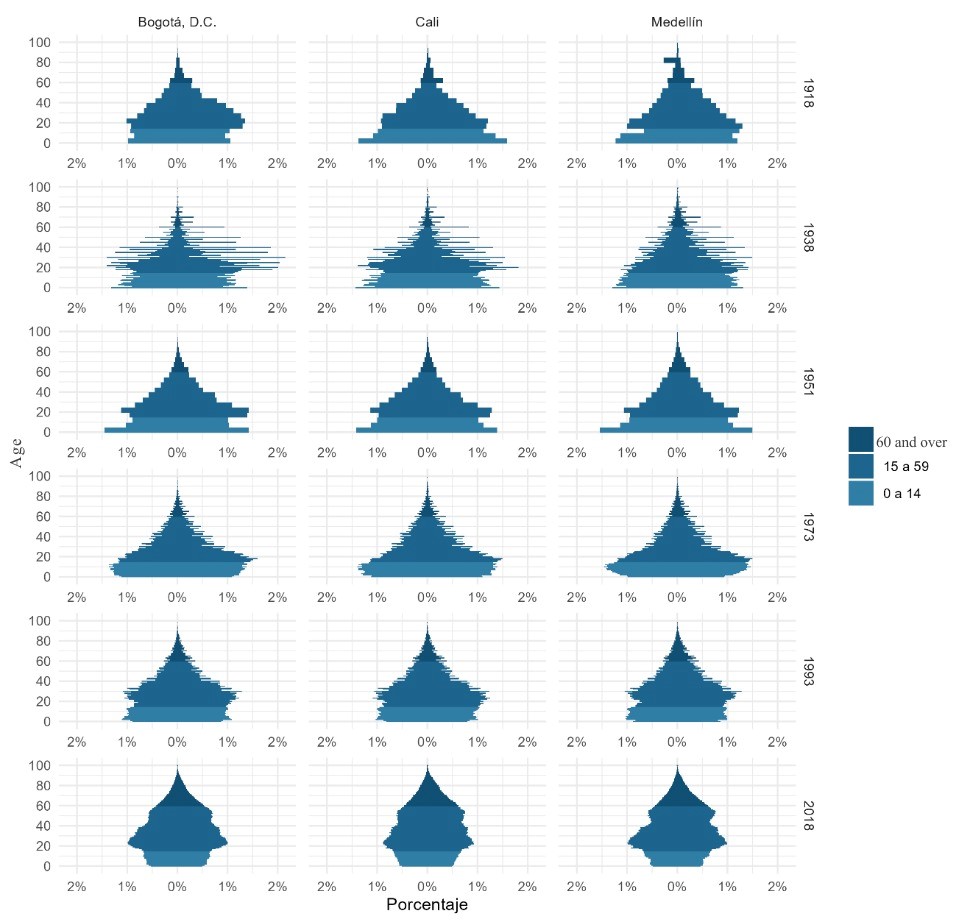
Figure 2 shows the evolution of differences and similarities in the population structures by age and sex of the three cities analyzed between 1918 and 2018, although in the years 1918 and 1951 it was only possible to reconstruct the data by five-year age groups, creating a proportional representation for each group with visualization purposes. Likewise, an aspect to highlight is the improvement in the quality of the declaration of age, since in the 1938 census there is a tendency to report ages ending in zero and five, while later, with the educational expansion of the population and improvements in measurement instruments, this pattern is no longer observed in the 2018 census.
On the other hand, in the graphical representation, the population segments corresponding to those under 15 years of age and those 60 years and older were marked in different colors, which more clearly illustrates the reduction of the bases and the widening of the tops of the population pyramids over time in the three cities analyzed. In the population pyramids, a high proportion of women in middle age groups is observed, particularly in the censuses of the first half of the twentieth century. In Bogotá, Cali and Medellín, women between 15 and 59 years of age represented more than 30% of the total population in all the censuses analyzed. This aspect may be simultaneously influenced by multiple factors; firstly, with migratory patterns in which capital cities are more attractive to migrant women; secondly, with the existence of differential mortality by sex in favor of women, even in periods of high maternal mortality; and, finally, with the higher census omission of men in this age group. Similarly, the longer survival of women induces a feminization process in older age groups, due to their greater survival at these ages.
In this context, it has been identified that urban environments provide access to education, social services, productive employment and medical and care services. Some of these aspects have consequences in the increase in number of women in the population, in the decrease in the number of children per woman, and the delay of the reproductive stage (Universidad Externado de Colombia, 2007, p. 50).
Figure 2
Bogotá, Cali and Medellín: population structures by age and sex (1918-2018)
Note: Results by age were used as published; in some cases, age groups were tabulated, but not simple ages.
Source: Authors' elaboration based on the censuses of 1918, 1938, 1951, 1973, 1993 and 2018 (República de Colombia, 1923; Contraloría General de la República, 1942; DANE, 1954; 1980; 1994; 2024a).
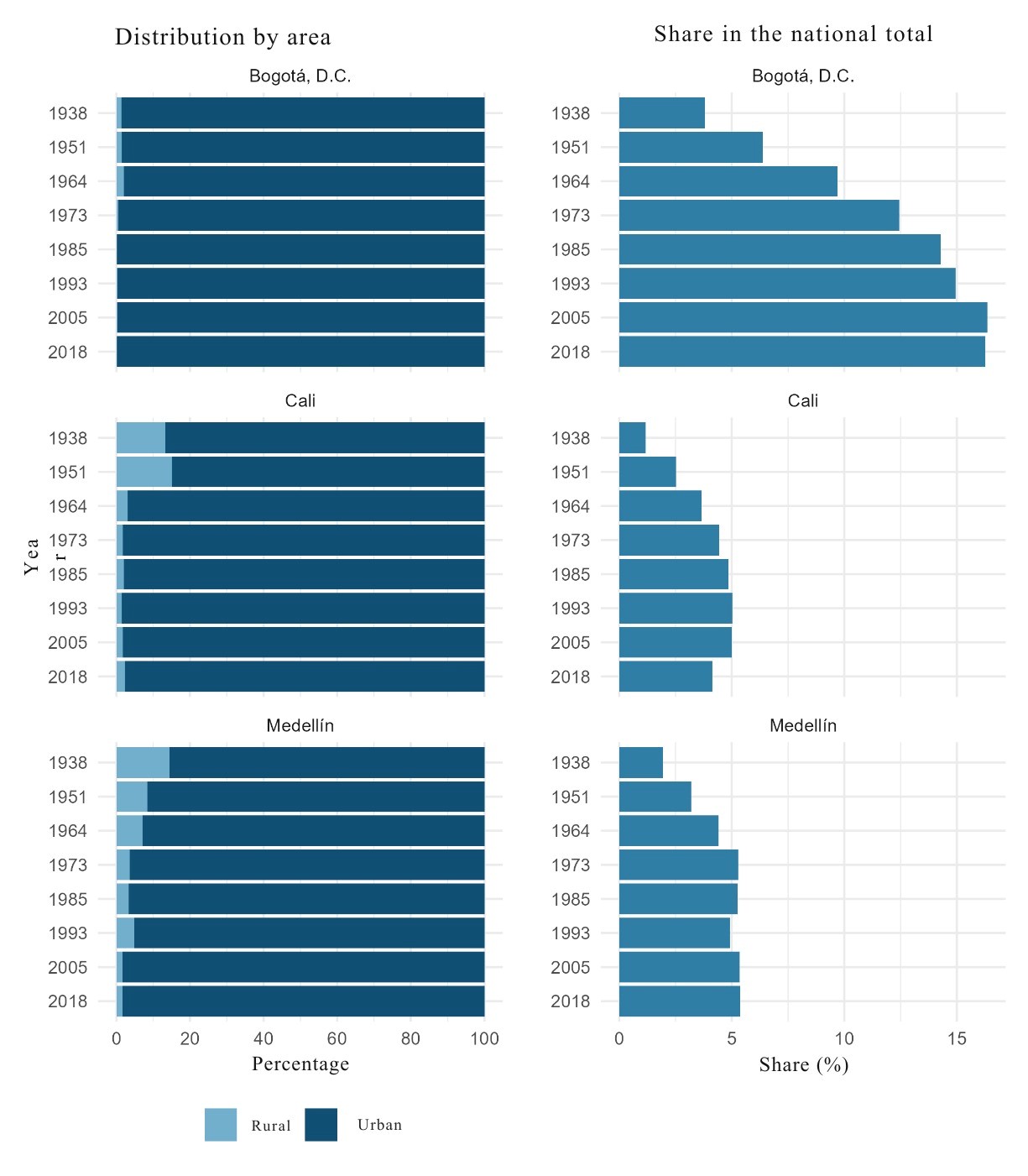
Figure 3 illustrates the evolution of the urban-rural composition of Bogotá, Cali and Medellín, as well as the participation of these cities within the national total. Over the one-hundred-year period analyzed, rural areas only represented a significant share in Cali in 1938 and 1951, and in Medellín between 1938 and 1964; subsequently, it showed an evident decrease, linked to the urbanization process in these two cities. In contrast, in Bogotá the percentage share of rural areas in the total population was always low. In addition, it is noted that, in each of these three cities, where millions of inhabitants reside, the rural population has never exceeded 50,000 inhabitants. At this point, it can be identified that the presence of rural population in large cities is strongly influenced by the definition of the head area of each municipality. In fact, this population can benefit from its proximity to large urban centers, which facilitates access to health services, education and the labor market in the capitals.
Although Bogotá, Cali and Medellín continue to be the main nodes of the Colombian city system, all three exhibit a trend to stagnation or even decline in their population participation on a national scale. The long-term trend, between 1918 and 2018, shows an increase in the participation of Bogotá from 3.8% to 16.2%, Medellín from 1.9% to 5.4% and Cali from 1.1% to 4.1%. However, Bogotá's share of the total national population increased significantly between 1938 and 2005, but subsequently experienced a decline between 2005 and 2018. In Cali, this indicator showed steady growth until 1993, after which it declined, and in Medellín this trend was only evident until 1973. Since then, it has fluctuated around the same values.
Figure 3
Bogotá, Cali and Medellín: population distribution by geographical area and participation in the national total (1938-2018)
Source: Elaboration by the authors based on the censuses of 1918, 1938, 1951, 1964, 1973, 1985, 1993, 2005 and 2018 (República de Colombia, 1923; Contraloría General de la República, 1942; DANE, 1954; 1967; 1980; 1986; 1994; 2024a).
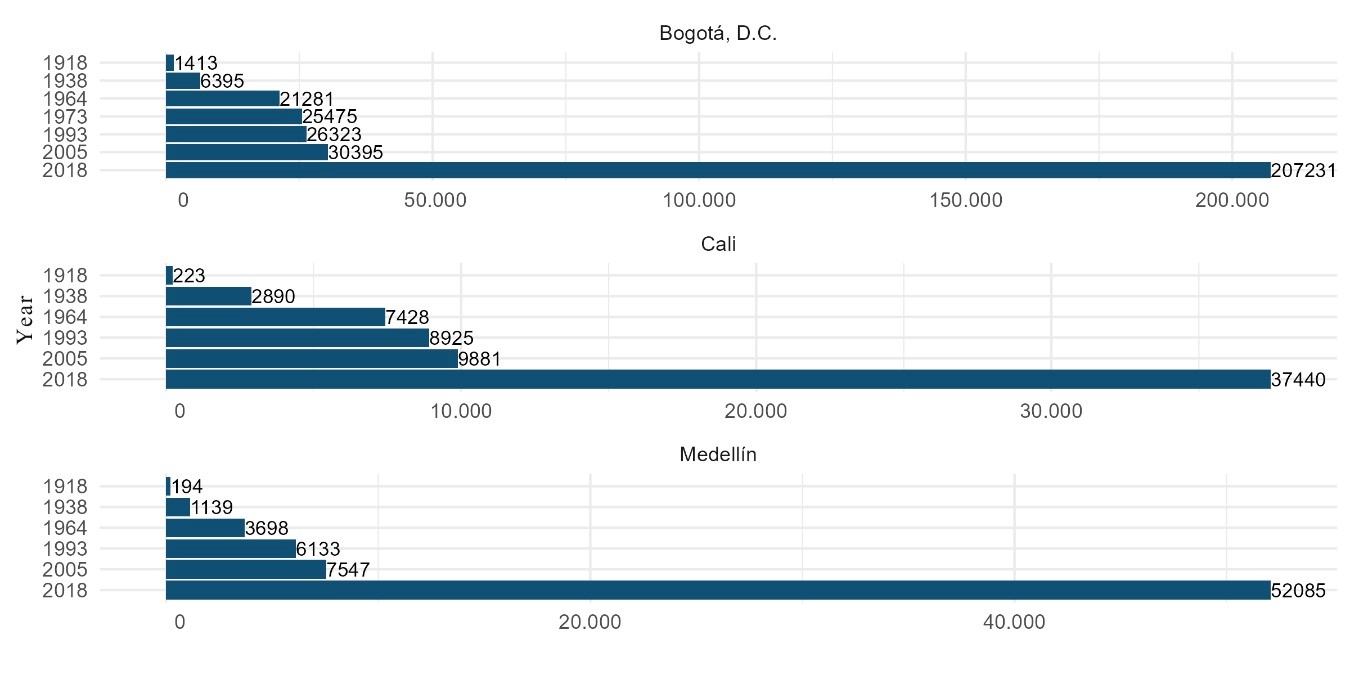
Figure 4 shows the number of foreigners registered in Bogotá, Cali and Medellín in the censuses carried out in Colombia between 1918 and 2018. In all three cities, this indicator increased significantly. Bogotá went from 1,413 foreigners in 1918 to 207,231 in 2018; Cali, in the same period, from 223 to 37,440; and Medellín, from 194 to 52,085.
During the intercensal period between 2005 and 2018, the indicator increased rapidly, with an estimate of close to 15% per year in Bogotá and Medellín and more than 10% per year in Cali. This increase is mainly explained by massive immigration from Venezuela, both of nationals of that country and of the returned Colombian population.
Figure 4
Bogotá, Cali y Medellín: number of registered foreigners (1918-2018)
Source: Prepared by the authors based on the censuses of 1918, 1938, 1964, 1993, 2005 and 2018 (República de Colombia, 1923; Contraloría General de la República, 1942; DANE, 1967; 1994; 2024a).
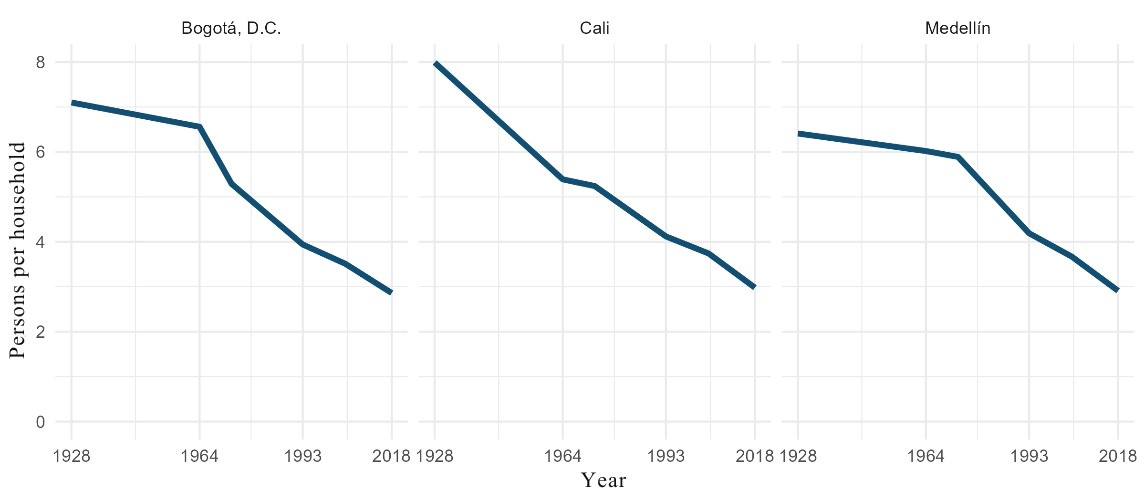
Figure 5 shows the average household size between 1928 and 2018, and a downward trend can be identified over time, decreasing from more than six people per household at the beginning of the analysis period to almost three people at the end, in the three cities analyzed. By 2018, the data indicate a convergence in this indicator for the three main cities, although the most notable difference is the starting level in 1928. In that year, it is estimated that the average household size was seven people in Bogotá, eight in Cali and six in Medellín. These differences reflect the impact of other variables, such as birth rates and marriages, in a general framework that includes the processes of modernization and urbanization that were taking place in parallel in the country's main cities. The average household size, being a synthetic measure, does not capture the differences in distribution, including the rise in single-person households, which has played a key role in the transformation of Colombian society.
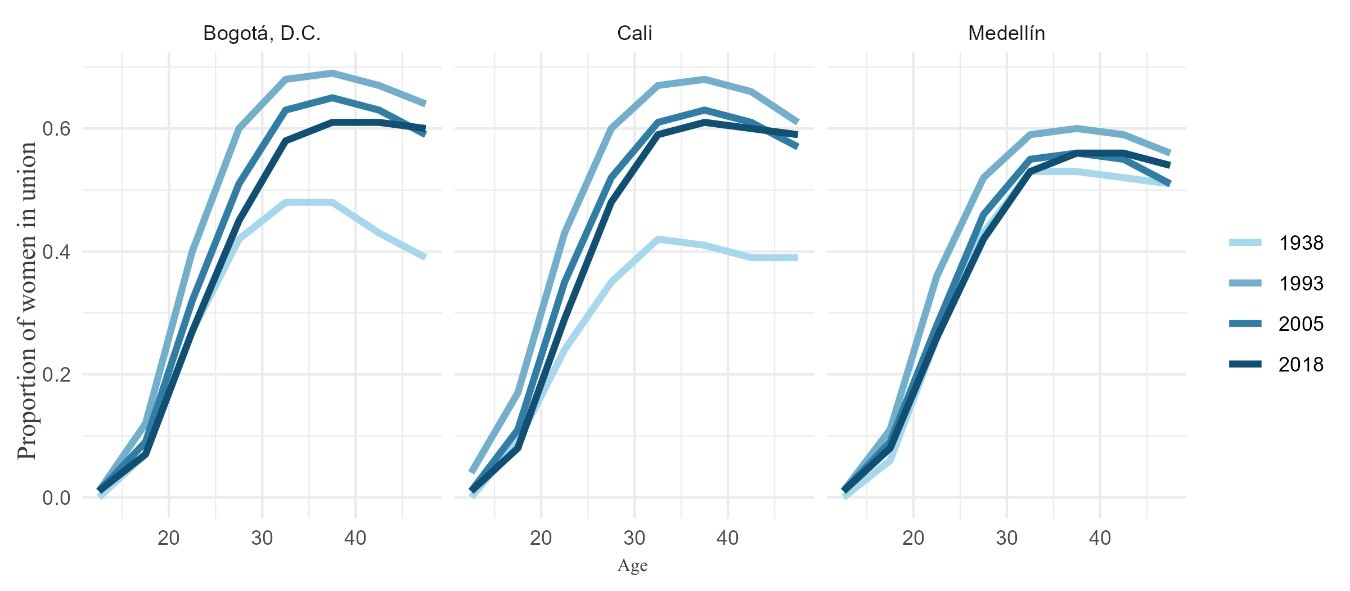
Figure 6 shows the proportion of women in union, aged 15 to 49. In the censuses from 1993 to 2018, the estimated patterns for Medellín tend to be below those observed in Bogotá and Cali, which can be interpreted as a lower level of unions in that city. However, it is also striking that in 1938 the indicators of Medellín did not differ substantially from those estimated in the most recent censuses, while in Bogotá and Cali there is a difference in the age pattern of 1938 with respect to the censuses of 1993, 2005 and 2018. Finally, it is worth noting that in 2018 there is a greater prominence of unions after the age of 40, which suggests a postponement of this phenomenon, at least for a significant segment of women in these three cities.
Figure 5
Bogotá, Cali and Medellín; average number of people per household (1928-2018)
Source: Prepared by the authors based on the censuses of 1928, 1964, 1973, 1993, 2005 and 2018 (Contraloría General de la República, 1930; DANE, 1967; 1980; 1994; 2024a).
Figure 6
Bogotá, Cali y Medellín: proportion of women in unions of reproductive age. (1938-2018)
Note: Only these census years are included to facilitate the identification of trends in the graph.
Source: Prepared by the authors based on the censuses of 1938, 1993, 2005 and 2018 (Contraloría General de la República, 1942; DANE, 1994; 2024a).
Discussion
The demographic analysis of the three main Colombian cities over the course of a century reveals not only changes in the population size, but also profound reconfigurations in the social, territorial and cultural structure of the country. This section discusses the most relevant findings of the study, articulating the census results with historical processes, urban dynamics, and migratory phenomena that have shaped the current configuration of Bogotá, Cali, and Medellín. Based on a critical reading of the data, the implications of these changes in terms of urban planning, territorial equity, ethnic diversity and population aging are addressed, aiming to contribute to a more comprehensive understanding of demographic transitions in complex urban contexts.
Firstly, it is clear that modernization in Colombia has been closely shaped and driven by the development of urbanization and the growth of urban centers. This transformation, which involved the transition from a predominantly rural society to complex urban structures, has had profound demographic, social, economic and cultural implications. The cities of Bogotá, Cali and Medellín not only concentrate a significant proportion of the national population, but also serve as epicenters of structural change, attracting rural and foreign populations, generating new dynamics of coexistence, mobility and territorial reorganization.
The analysis of these cities helps to understand how urban growth has reconfigured social relations, settlement patterns and forms of collective identity. Transformations in land use, the expansion of urban boundaries and the pressure on the surrounding rural areas have altered not only the physical landscape, but also cultural and economic practices, especially those of the peasantry. In this context, the inclusion of ethnic and migratory variables in censuses is especially relevant, as it sheds light on the inequalities and exclusionary processes that affect historically marginalized populations.
Therefore, it is important to highlight additional aspects that emerge from the analysis presented in this study. Urbanization in Colombia has not been a homogeneous or equitable process. Although the three cities share characteristics of demographic and economic centrality, they have followed different trajectories in their territorial expansion, regional integration and capacity to absorb the migrant population. This heterogeneity reveals the persistence of territorial inequalities that are manifested in access to services, infrastructure and job opportunities. In this sense, demographic analysis must be articulated with spatial justice approaches, which make it possible to understand how urban dynamics reproduce or transform conditions of exclusion at urban and rural margins.
It is also important to highlight the transformation of households and the impact of this process on urban planning. The reduction in average household size, as evidenced by censuses, reflects not only changes in fertility and marriage patterns, but also in forms of social and economic organization. This phenomenon has direct implications for urban planning, especially in terms of the demand for housing, public services and collective infrastructure. The rise of single-person households and the diversification of family arrangements challenge traditional models of urban development, calling for more flexible policies and sensitive to new demographic realities.
Alongside transformations in the sphere of private life, it is important to highlight the increasingly clear awareness that the Colombian State has acquired about the ethnic and racial diversity of its population. Despite the difficulties in its operational implementation, the last three censuses (1993, 2005, 2018) have shown a growing interest in including under conditions of equity, the historically underrepresented population. The inclusion of ethnic variables in censuses represents a significant advance in the recognition of the country's population diversity. However, this statistical visibility must be accompanied by a critical reflection on the measurement instruments, the criteria for self-identification and the political implications of the data generated. Statistics are not neutral, they construct realities and can contribute both to the inclusion and to the reproduction of inequalities and stigmas. Therefore, it is essential that census processes adopt intercultural and participatory approaches that guarantee representativeness and respect for collective identities.
International migration also plays an undeniable role the reconfiguration of urban identity. The accelerated growth of the foreign population in Colombia's main cities, especially in the last decade, has transformed urban dynamics in multiple dimensions. Bogotá, Cali and Medellín have become in spaces of cultural encounter, migratory trajectories and diverse ways of inhabiting the territory. This plurality, although enriching, also generates tensions around belonging, access to rights and symbolic representation. Cities are scenarios of integration, but also of permanent tensions, where identities, resources, forms of belonging and collective interaction are negotiated. In this context, demographic analysis must engage with migratory, cultural, sociological and urban anthropology studies to understand how international mobility transforms the social and cultural landscapes of Colombian metropolises.
It is also necessary to consider the intersection between the population aging and the urban structure, since this phenomenon, evidenced in official data, presents structural challenges that extend beyond the health field. Cities must adapt to a new demographic configuration that requires redesigning urban space to ensure accessibility, mobility and adequate services for the older adults. This transformation involves rethinking the city model from a gerontological perspective, incorporating criteria of inclusion, safety and well-being. In addition, ageing is linked to the feminization of older ages, which requires public policies with a gender sensitive approach that recognize the work and care trajectories of older women. The inclusion of ethnic and gender variables is essential, as demonstrated throughout this analysis.
The demographic transformations observed in the three cities have direct implications for urban governance. Spatial planning, the provision of public services and the formulation of social policies must adapt to an increasingly diverse, ageing and mobile population. This requires the development of more flexible, participatory and evidence-based governance models that recognize local particularities and promote territorial equity. In this framework, statistics become a strategic tool for informed decision-making and designing more equitable and sustainable cities.
Finally, it is essential to acknowledge the methodological limitations in the census measurement of sensitive variables. Although censuses have made progress in incorporating ethnic, gender, and migratory variables, challenges persist that affect the quality and representativeness of the data. Ethnic self-identification, for example, is influenced by contextual, political, and symbolic factors that can vary between censuses. It is a process full of methodological difficulties that requires permanent studies. Similarly, the measurement of international migration through place of birth or primary residence five years prior to a survey is limited. These indicators fail to capture the complexity of migratory trajectories or the conditions of integration in the country. Consequently, it is crucial to complement census data with specialized surveys and qualitative studies that allow a deeper understanding of these phenomena.
Conclusions
The demographic, social, cultural, and political transitions observed in Colombia have occurred earlier in the three cities analyzed in this study. Bogotá, Cali and Medellín not only concentrate a large proportion of the population, a figure that significantly affects national totals, but have also became centers of economic development, which is why their diverse labor market continues to attract rural and foreign populations, leading to the sociocultural transformations derived from that interaction. These cities bear the social costs of urbanization, particularly the demographic, socioeconomic, and environmental impacts of population change. In addition, the spatial expansion patterns developed over time along their urban perimeters have generated new territorial forms, modifications in land use and, in general, a spatial structure qualitatively different from that of the early twentieth century.
Consequently, it can be stated that the advancement of the urbanization process directly affects the traditional uses of the surrounding rural areas, altering the economic dynamics of the peasantry, its cultural practices, and, consequently, the food supply. Among the three cities, Bogotá is the one that has most evidently reduced its rural area. This process parallels the way in which successive Planes de ordenamiento territorial [Land Use Plan, POT] have been progressively transforming the western savannah, an ancient source of food for Bogotá, into a territory shaped by the dynamics imposed by the world market. Cultivation and grazing areas have given way to free zones, industrial parks, wineries and large stores. These transformations in the occupation and vocation of the territory have direct impacts on key aspects such as housing, commuting times and food provision. Similar processes can be observed in the other cities, although to a lesser extent than in the capital.
Similarly, the increase in the number of older adults exerts considerable on health care systems, requiring greater investment in long-term care services and an adaptation of health models toward the management of chronic diseases. Moreover, the so-called feminization of aging may have specific effects on older women, as this group has had fewer opportunities to access the labor market and, given their role in caring for dependent family members, they face greater risks of vulnerability, loneliness, and social isolation.
International migration to the main cities of Colombia, such as Bogotá, Cali and Medellín, has become an increasingly significant phenomenon in recent years. Although Colombia was historically a country of emigration, this situation has changed dramatically, largely due to the socioeconomic crisis in Venezuela, which has generated a massive influx of people into Colombian territory. The massive arrival of migrants has increased the demand for basic services such as health care, education, housing and public utilities. Both people who previously migrated and have come back and foreigners who reside in these cities express that they have encountered "another city" different from the one they imagined. The changes are evident, and the data presented explain and support them. Demographic transformations transcend the social, economic, territorial, political, and environmental spheres. Major cities, particularly those of the scale analyzed, constitute complex systems of human relations that affect biotic environments and require, for their maintenance, a growing flow of resources that, in turn, shape the productive dynamics and transformations in the world of work.
It was also found that the postponement of the age at which couples form unions in Colombia was influenced by a positive factor: the protection of children and adolescents. The reduction in the number and proportion of child marriages is encouraging, although there is still progress to be made toward eradicating these practices. It is expected that recent regulatory advances and the rulings by the Constitutional Court will contribute to an accelerated reduction of these indicators.
On the other hand, the use of demographic and historical perspectives of analysis was fundamental to the development of this research, as it made it possible to examine an extensive period of social change in Colombian society. Similarly, the results serve as a reference point for future studies that aim to provide a more detailed understanding of the transformations experienced in these cities. In this regard, this research is crucial not only to understand the country's demographic transitions, but also to support the formulation of evidence-based public policies. In addition, they offer a valuable analytical framework for subsequent research that seeks to deepen the relationship between urbanization, ethnic diversity, and migratory dynamics. In sum, studying cities as complex systems allows for the articulation of multiple dimensions of social change and positions statistics as a key instrument for social justice and the recognition of diversity.
Ethical considerations
The present study did not require ethical approval because it worked with official information available on the web.
Conflicto of interest
All authors made significant contributions to the manuscript and declare that there is no conflict of interest related to this article
Author contribution statement
César Andrés Cristancho Fajardo: Conceptualization, Methodology, Software, Data Curation, Writing, Research. Omar Jeronimo Prieto Ruiz: Conceptualization, Methodology, Writing, Investigation. Astrid Guiovanna Rojas Vargas: Conceptualization, Methodology, Writing, Investigation. Javier Sebastian Ruiz Santacruz: Conceptualaization, Methodology, Writing, Supervision.
Source of funding
This article was funded with the authors own resources
References
(33)Notestein, F. (1945). Population: the long view. University of Chicago Press. https://es.scribd.com/document/691346282/notestein-1945-pop-long-view-1?utm