
Proposal to create a Technological Career in Forensic Medicine to optimize justice in Ecuador

Proposal to create a Technological Career in Forensic Medicine to optimize justice in Ecuador

Propuesta de creación de Carrera Tecnológica en Medicina Legal para optimizar la justicia en Ecuador

Proposta de criação de uma Carreira Tecnológica em Medicina Legal para otimizar a justiça no Equador

Citation: Balcázar F. Propuesta de creación de Carrera Tecnológica en Medicina Legal para optimizar la justicia en Ecuador. Univ Salud [Internet]. 2025; 27(3):e9084. DOI: 10.22267/rus.252703.348.


# ABSTRACT

Introduction: Forensic medicine has evolved significantly in Ecuador since the creation of the Institute of Criminology in 1936 and the establishment of the National Service of Legal Medicine and Forensic Sciences in 2015. In a context of increasing violence, it is essential to strengthen technical training in this field. Objective: To analyze the feasibility of implementing a technological degree in Forensic Medicine in Ecuador, with emphasis on improving evidence management and providing comprehensive care to victims of violent acts. Materials and methods: A mixed-method, cross-sectional observational study was conducted using quantitative instruments (structured surveys) and qualitative instruments (content analysis) applied to high school students from four educational institutions in the city of Tena (Ecuador). Results: A high level of interest and acceptance toward the academic proposal was evidenced, highlighting the need to strengthen technical and professional competencies in the forensic field, despite certain methodological limitations such as unequal access to technology. Conclusion: The creation of this program will contribute to improving the administration of justice, optimizing the chain of custody, and ensuring more specialized care for victims.

Keywords: Forensic medicine; Deontological ethics; Medical ethics (Source: DeCS, Bireme).

Sustainable development goals: Good health and well-being; Quality education; Gender equality; Reduced inequalities; Peace, justice and strong institutions. (Source: SDG, WHO).


# RESUMEN

Introducción: La medicina legal ha evolucionado significativamente en Ecuador desde la creación del Instituto de Criminología en 1936 y el establecimiento del Servicio Nacional de Medicina Legal y Ciencias Forenses en 2015. En un contexto de creciente violencia, es fundamental fortalecer la formación técnica en este campo. Objetivo: Analizar la viabilidad de implementar una carrera tecnológica en Medicina Legal en Ecuador, con énfasis en la mejora de la gestión de evidencias y la atención integral a víctimas de actos violentos. Materiales y métodos: Estudio mixto, de tipo observacional transversal, se aplicaron instrumentos cuantitativos (encuestas estructuradas) y cualitativos (análisis de contenido) a estudiantes de bachillerato de cuatro instituciones educativas de la ciudad de Tena (Ecuador). Resultados: Se evidenció un alto nivel de interés y aceptación hacia la propuesta académica, destacando la necesidad de fortalecer las competencias técnicas y profesionales en el ámbito forense. Pese a ciertas limitaciones metodológicas, como el acceso desigual a tecnologías. Conclusión: La creación de esta carrera contribuirá a mejorar la administración de justicia, optimizar la cadena de custodia y garantizar una atención más especializada a las víctimas.

Palabras clave: Medicina forense; Deontología; Ética médica (Fuente: DeCS, Bireme).

Objetivos de desarrollo sostenible: Salud y bienestar; Educación de calidad; Igualdad de género; Reducción de las desigualdades; Paz, justicia e instituciones sólidas. (Fuente: ODS, OMS).


# RESUMO

Introdução: A medicina legal evoluiu significativamente no Equador desde a criação do Instituto de Criminologia em 1936 e a criação do Serviço Nacional de Medicina Legal e Ciências Forenses em 2015. Em um contexto de aumento da violência, é essencial fortalecer a formação técnica nesta área. Objetivo: Analisar a viabilidade de im-plementar um programa tecnológico em Medicina Legal no Equa-dor, com ênfase na melhoria da gestão de evidências e na prestação de atendimento integral às vítimas de atos violentos. Materiais e métodos: Estudo misto, do tipo observacional transversal, com instrumentos quantitativos (questionários estruturados) e qualitativos (análise de conteúdo) aplicados a estudantes do ensino médio de quatro instituições educacionais da cidade de Tena (Equador). Resultados: Houve alto nível de interesse e aceitação da proposta acadêmica, evidenciando a necessidade de fortalecimento das competências técnicas e profissionais na área forense, apesar de certas limitações metodológicas, como o acesso desigual às tecnologias. Conclusões: A criação deste programa contribuirá para o aprimoramento da administração da justiça, agilizando a cadeia de custódia e garantindo um atendimento mais especializado às vítimas.

Palavras-chave: Medicina forense; Deodontologia; Ética médica (Fonte: DeCS, Bireme).

Metas de desenvolvimento sustentável: Saúde e bem-estar; Educação de qualidade; Igualdade de gênero; Redução das desigualdades; Paz, justiça e instituições eficazes. (Fonte: MDS, OMS).
# INTRODUCTION

Legal medicine has established itself as an important part of justice systems globally, its contribution to investigations helps to clarify responsibilities in the commission of crimes. Currently, it is defined as a medical specialty whose purpose is to apply theoretical and practical knowledge of medicine, jurisprudence, ethics and administrative criteria for the evaluation of injuries and causes of death, until completing its judicial process through a resolution1. In Ecuador, the concept of forensic medicine has evolved over time; in 1936 the Institute of Criminology of the Central University of Ecuador was created, years later due to the lack of doctors specialized in this discipline the Institute of Forensic Sciences belonging to the University of Guayaquil was founded.

Subsequently, in 2015, the National Service of Legal Medicine and Forensic Sciences was created, with the aim of guaranteeing the chain of custody, collecting evidence and carrying out the corresponding expertise in judicial investigations2,3. The role of forensic medicine in Ecuador encompasses multiple responsibilities, such as investigating crime scenes and collecting evidence to carry out analyses that allow us to know the causes of violent deaths. In this sense, the autopsies carried out by the forensic medical staff include a detailed examination of the body to identify injuries and trauma4. In the first quarter of 2025, the country registered 2,361 homicides, this figure represents an increase of 65% compared to the same period in 2024; an increase that suggests a worrying trend in violence in the country5. This situation has highlighted the importance of proper evidence management to determine the causes of this abrupt increase6.

The chain of custody is a judicial procedure that guarantees the authenticity of the evidence collected during a technical-judicial inspection7. The National Assembly of Ecuador8 points out that this procedure is essential because it allows all parties to a criminal proceeding to present evidence that supports or refutes participation in the facts, directly influencing the judge's sentence depending on the degree of guilt9. In addition, the evidence must be based on the procedural principles that ensure its legal and constitutional validity10. However, Cárdenas et al.11 warn that, in Ecuador, due to cases of corruption in the judicial system, the transparency and validity of evidence may be compromised, affecting institutional credibility.

On a daily basis, there are cases of violence that violate people's rights in various ways, altering their quality of life and their interpersonal relationships12,13. In 2022, Ecuador recorded its highest number of violent deaths, with a total of 4,603 cases, mostly linked to drug trafficking and organized crime14. In addition, Álvarez argues that violence deteriorates the social fabric and causes economic losses, since resources are allocated to the judicial prosecution of cases that often go unpunished15.

In Ecuador, eight out of ten women between 15 and 17 years of age have been victims of violence in different areas: 35.5% social, 18.4% educational, 21.4% family, 7.8% work and 7.5% by their partners16. In 2023, the country reported a homicide rate of 47.25 per 100,000 inhabitants, ranking as the second most dangerous in Latin America, with an increase of 65.92% compared to 2022. Most of these deaths were caused by firearms and mainly affected young people between 15 and 19 years old, who accounted for 60.78% of the victims17. Faced with this situation, the State has implemented comprehensive care measures for victims, such as psychological interventions and protocols such as the "purple code", which mobilizes specialized personnel in order to guarantee justice, protection and avoid revictimization18.

To document and follow up on cases of violence, it is essential to adopt a comprehensive and ethical approach that ensures justice and the well-being of victims. This process begins with the taking of samples and the monitoring of the chain of custody, which prevents the revictimization of people who have already been violated. This procedure is carried out through expert reports carried out in health institutions to which the victims are referred, under the accompaniment of the Prosecutor's Office19,20. On the other hand, the National Assembly of Ecuador21 mentions that if there is no control by this authority, samples are taken based on the regulations of the Comprehensive Organic Criminal Code in article 465.

Once this procedure is completed, the cases are documented using detailed files or forms that allow all the information collected to be recorded, always with the prior consent of the victim. This practice contributes to compliance with international standards such as the Universal Declaration of Human Rights, the Constitution of the Republic of Ecuador and the ethical norms established by the World Health Organization19,20.

Alcívar et al.22 They indicate that forensic science is a discipline that, through scientific practices, clarifies violent acts within the framework of a legal process. Through argumentation, the presentation of evidence and the evaluation of the actions of those involved, the aim is to solve cases accurately. According to Vernimmen23, Article 2 of Resolution 9 of May 3, 2017, establishes the Organic Statute of the Legal Medicine and Forensic Sciences Service, and defines that this public institution must provide standardized technical-scientific services in support of the administration of justice, with strict respect for the rights of victims and human dignity.

Currently, the National Service of Legal Medicine and Forensic Sciences operates in the provinces of Pichincha, Guayas, El Oro, Loja and Sucumbíos, where it provides medical-legal, psychiatric and psychological services in judicial processes. Areas of expertise include clinical forensics (examination of living persons), forensic pathology (tissue and cell analysis), histopathology (examination of organs in autopsies), toxicology (substance analysis), and anthropology (reconstruction of cadaver profiles)1. In forensic sciences, specialized techniques such as forensic ballistics, electron microscopy and morphological identification are used, with the collaboration of technologists in Legal Medicine, who are responsible for assisting autopsies, managing biological samples and analyzing evidence1,24.

Pachar25 and Iglesias26 agree that forensic professionals face multiple limitations due to the shortage of human and technological resources, such as personal protective equipment and specialized tools for the analysis of crime scenes. This situation has a negative impact on the quality of research. Likewise, the lack of clear protocols and the overlapping of functions between experts generates confusion in the coordination of activities, a situation that can lead to errors in the collection of evidence. Added to this is the insecurity at crime scenes, marked by the presence of criminal groups and insufficient police collaboration, compromising the integrity of scientific procedures.

This research is based on a triple justification that encompasses the theoretical, methodological and social dimensions, responding to the emerging needs of the Ecuadorian context in terms of forensic medicine, structural violence and specialized technical training in forensic sciences. Theoretically, the study contributes to the development of a conceptual framework that underscores the importance of professional training in forensic medicine as a strategic component of the judicial system, seeking to systematize curricular proposals that integrate a technological and operational approach, lacking in the current literature. Methodologically, the research takes a mixed approach, combining quantitative and qualitative data to strengthen the validity of the findings and capture both general trends and subjective perceptions, thus setting a precedent for future research. Finally, from a social perspective, the research is aligned with the urgent problem of the increase in violence in Ecuador and the limited state capacity to guarantee effective justice, proposing the creation of a technological career in forensic medicine as a strategic measure to strengthen the chain of custody, improve the quality of forensic expertise and optimize assistance to victims.

For the above reasons, the objective of this research is to evaluate the feasibility of implementing a technological career in Legal Medicine in Ecuador, aimed at strengthening evidence management and comprehensive care for victims of violent acts.


# MATERIALS AND METHODS

# Methodological approach

The present study is framed in a cross-sectional observational design with a quantitative approach, of a descriptive and explanatory type, which allows a broad and deep approach to the object of study. From the quantitative approach, it seeks to identify general patterns of acceptance and interest by students in the academic proposal.

# Population and sample

The study population included 388 high school seniors from four educational units in the city of Tena, Napo province, Ecuador. These institutions are: "Juan XXIII" Educational Unit, "Ciudad de Tena" Educational Unit, "Maximiliano Spiller" National Educational Unit, and "San José" Educational Unit, which were selected because they accepted and granted permission for the collection of data in the stipulated time.

Non-probabilistic sampling was used for convenience, depending on the logistical and technological conditions imposed by the COVID-19 pandemic. This type of sampling allowed access to all the students available at the time of the study, without requiring the calculation of a representative sample. The possibility of selection biases is recognized, especially towards students from urban areas with greater access to technology, which can limit the generalization of the results.

# Instruments

The main data collection instrument was structured in 12 questions designed specifically for this study. The questionnaire was organized into two analytical dimensions:

Dimension 1 (P1 to P6): Linked to the academic interest of students towards the opening of a technological career in Legal Medicine, including items on training, professional accreditation and vocational guidance.

Dimension 2 (P7 to P12): Related to the perception of the structure and modality of the educational proposal, addressing criteria such as inclusion, flexibility and study format.

The instrument was electronically socialized through institutional emails. A response rate of 50% was identified, reflecting limitations in technological access and connectivity for some students, especially in rural areas.

To evaluate the validity of the instrument, statistical tests of sampling adequacy and inter-item correlation were applied. The Kaiser-Meyer-Olkin coefficient (KMO) was used, which obtained a value of 0.500, and the Bartlett sphericity test, whose value was not significant (p = 0.713). These results indicate a limited correlation between the variables, although an exploratory analysis of principal components was carried out for interpretative purposes.

# Data collection

A structured quantitative survey, applied to students in the last year of high school from four educational institutions, through the Google Forms platform, was socialized to students, prior to the application.

# Data analysis

Quantitative data were analyzed using descriptive statistics (frequencies, means, and standard deviations) and non-parametric inferential statistics, mainly the Chi-square test, in order to explore the association between the two main dimensions of the questionnaire.

To facilitate the analysis, the continuous variables were recoded into categorical scales: low (0.00-0.40), medium (0.41-0.70), and high (0.71-1.00). This allowed tabular crosses to be made and associations to be identified between academic interest and the perception of the educational structure. In addition, Cramer's Phi and V coefficients were calculated, which indicated a weak association between the variables (0.095 and 0.067 respectively), suggesting statistical independence between the dimensions analyzed.

# Ethical considerations

The study was developed in accordance with the ethical principles established by the Declaration of Helsinki and national regulations for research with human beings. All participants were informed in advance about the purposes of the research and gave their informed consent voluntarily. No sensitive data was collected, identification data of the participants, nor was the privacy of the students compromised. The study had the ethical endorsement and approval by the directors of the institutions. Likewise, respect for the autonomy, confidentiality, integrity and non-maleficence of the participants was guaranteed in all phases of the research.


# RESULTS

This section presents the findings obtained from the statistical analysis of the data collected through the structured instrument applied to 388 high school students. The questionnaire was divided into two analytical dimensions as mentioned above.

# Evaluation of the validity of the instrument

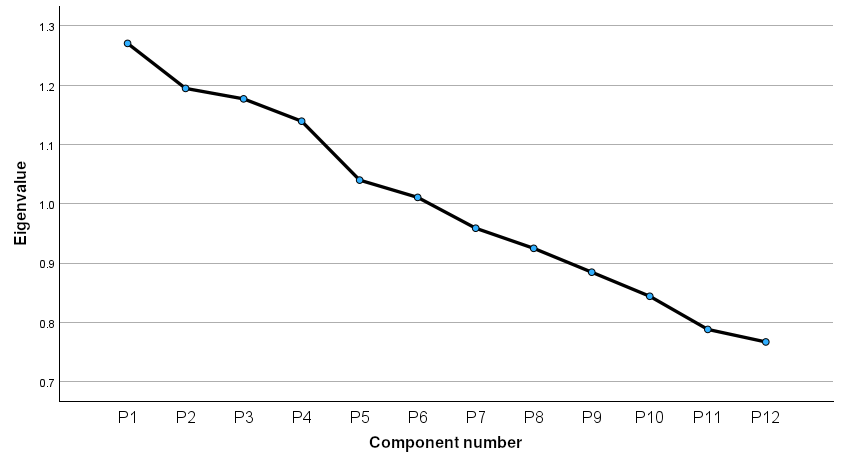
Exploratory factor analysis was applied in order to explore the structural validity of the instrument. However, the results showed a Kaiser-Meyer-Olkin sampling adequacy index (KMO) of 0.500 and a Bartlett sphericity test with a non-significant value (p = 0.713). These results indicate that the correlations between the items are not strong enough to warrant rigorous factor analysis. Despite this, principal component analysis was performed in an exploratory manner, which showed a possible two- or three-factor structure. However, the low communalities and the dispersion of factor loads did not allow a clear interpretation, so the analysis was considered preliminary and limited in structural validity.

Despite these limitations, a principal component analysis was carried out, whose sedimentation graph suggested the possible extraction of two or three factors. However, the commonalities showed that many of the items did not share enough with the extracted factors, and the factor loads rotated using the Varimax method did not show clear or coherent clusters that would facilitate a robust interpretation (Figure 1).

# Figure 1. Sedimentation plot for determining the number of principal components
<fig>Figure 1</fig>. Sedimentation plot for determining the number of principal components

# Dimension 1: Academic interest in the proposed career

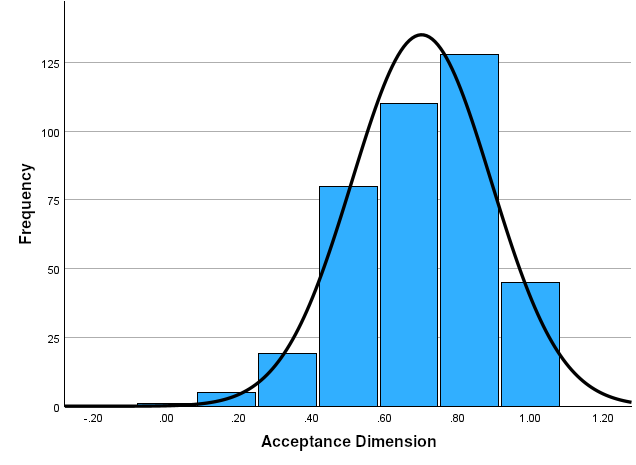
Items P1 to P6 evaluated the students' interest in the opening of a technological career in Legal Medicine. A high level of acceptance was obtained, with 70.15% of the respondents expressing high acceptance, with a mean of 0.7015 and standard deviation of 0.19097. This suggests a broadly positive attitude towards the creation of the proposed programme. Figure 2 shows the frequency distribution, where responses at the medium and high levels predominate.

# Figure 2. Frequency distribution of the Acceptance Dimension (P1 - P6)
<fig>Figure 2</fig>. Frequency distribution of the Acceptance Dimension (P1 - P6)
  1. Mean: 0.70.
  2. Standard deviation: 0.191.
  3. N: 388.

Figure 2 shows the frequency distribution of the responses associated with this dimension, where the category "high acceptance" predominates. This result shows a positive perception on the part of the students towards the possibility of professionalization in the forensic field through technological training.

# Dimension 2: Perception of the educational structure and modality

Items P7 to P12 evaluated students' perception of structural elements of the career, such as flexibility in the modality of studies, inclusivity of age, and curricular relevance. 67.61% of the students indicated that they would enroll in the program, revealing a good acceptance of the proposed format. However, 32.39% showed no interest in enrolling, highlighting the need for adaptations to increase the accessibility and attractiveness of the program.

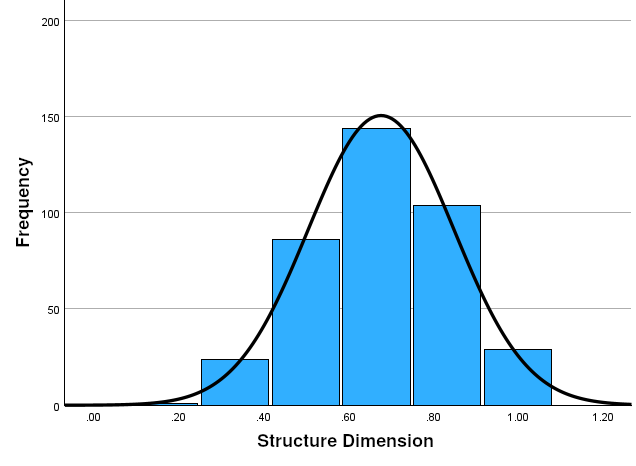
The statistical values for this dimension show a mean of 0.6774 with a standard deviation of 0.17142, with an asymmetry of -0.115, indicating a moderately positive acceptance but with opportunities for optimization.

Figure 3 represents the distribution of responses on this dimension, highlighting a trend towards medium and high levels of favorable perception, although with slightly greater dispersion compared to the previous dimension.

# Figure 3. Frequency Distribution of the Dimension Structure (P7 - P12)
<fig>Figure 3</fig>. Frequency Distribution of the Dimension Structure (P7 - P12)
  1. Mean: 0.68.
  2. Standard deviation: 0.171.
  3. N: 388.

# Dimension association analysis

The relationship between the two dimensions was investigated using the Chi-square test, previously recoding the responses into three categories: low (0.00-0.40), medium (0.41-0.70) and high (0.71-1.00). The result of the analysis was χ2 = 3.511 with p = 0.476, which indicates the absence of a statistically significant association between academic interest and perception of the curricular structure. The coefficients Phi (0.095) and Cramer's V (0.067) confirmed a weak correlation between both variables, suggesting that each dimension operates independently. In other words, interest in the career is not conditioned by the perception of its organization or educational modality (Table 1).

# Table 1. Analysis of the association between program acceptance and perception of structure
Category Acceptance Low Structure Medium Structure High Structure χ2 p Φ V
Casualty 3 (12,0 %) 15 (60,0 %) 7 (28,0 %) 3,511 0,476 0,095 0,067
Stocking 9 (4,7 %) 118 (62,1 %) 63 (33,2 %)
Loud 13 (7,5 %) 97 (56,1 %) 63 (36,4 %)
  1. Χ²: Chi-Square.
  2. p: Value of p, Chi-square test.
  3. Φ: Phi coefficient.
  4. V: Cramer's V.

# DISCUSSION

The results reveal a high interest on the part of the students, highlighting the need to strengthen competencies in this forensic field. However, some aspects of the methodological design and curricular structure need to be reviewed to improve their impact.

Violence in Ecuador has increased alarmingly, Luna and Vallejo27 point out that, despite the existing regulations, problems persist due to the lack of training of personnel and lack of resources. Almache and Hernando28 agree that improving technical processes in forensic medicine is essential to confront criminal violence, pointing out the need to train professionals to guarantee the integrity of evidence. These points align with the results obtained in this study, which show that the lack of technical training and adequate handling of evidence is a critical challenge in the Ecuadorian judicial system.

González Eraso et al.29 They highlight the relevance of having specialized tools in forensic analysis, especially to address cases of femicide. For his part, Esquivel Yucra30 underlines how the pandemic exacerbated violence, particularly in young men. These findings are consistent with the results of this study, which identified a notable interest among students in issues related to gender-based violence. This suggests that students are fully aware of the need for technical training to effectively address these problems in the forensic field.

This study coincides with the observations of Eche Salvatierra et al.31 in Ecuador, who highlight the need for a robust legal medicine system. The results obtained in this study show that, although there is a demand for training, the acceptance of the proposed program could be limited by the lack of clarity in the curricular structure and teaching modality, which highlights the need to adjust these aspects to align them with the expectations of the students and the demands of the judicial system.

Ovalle13 analyzes the relationship between economic growth and violence in Guayaquil, finding a direct and significant correlation (r = 0.803) between the Gross Domestic Product (GDP) and the increase in violent deaths. This finding highlights the importance of strengthening forensic medicine in urban contexts, as suggested by this study, where the implementation of a career in forensic medicine could help to address the effects of criminality, especially in contexts with a high correlation between economic factors and violence.

Marchal7 emphasizes that the chain of custody is vital for the validity of the evidence, a need that coincides with what Pachar25 pointed out about the early intervention of forensic doctors to guarantee the integrity of the evidence. In this study, the results also show that students greatly value the practical component and training in the chain of custody, which underscores the relevance of incorporating these skills into the curricular structure.

For his part, Ruiz1 highlights the need to coordinate efforts between the Ministry of Public Health and the Judicial System to provide comprehensive care to victims. The results of this study also point to the importance of interdisciplinarity in the proposed model, where technical competencies are combined with knowledge in psychology and other fields to improve care for victims.

Regarding the curricular structure, it was observed that, despite the fact that the proposed academic mesh is in demand, problems related to the acceptance and accessibility of the program persist. This coincides with the observations of Peña and Rentería32, who mention that in other countries such as Mexico, forensic medicine programs still face difficulties in acceptance and adequate integration into the curricula. The results of this study suggest that improving curriculum design and teaching modality is crucial to ensure accessibility and attract more students.

Finally, in comparison with Flores study33, which analyzes the perception of students in Costa Rica, it is observed that, although there is a positive perception of the level of education, there are still deficiencies in technical and professional training. This study found that a lack of textbooks and insufficient information affect student formation, an observation that also aligns with the findings of this study, which underscores the need for adequate teaching resources and greater clarity in the curriculum.

In contrast, the model of specialization in forensic medicine in Spain, highlighted by Arimany-Manso et al.34, could serve as a reference to improve training in Ecuador, responding to the growing demands for specialization in areas such as gender-based violence.

# Curriculum proposal

Based on the findings obtained in this study, a curriculum for the technological career in Legal Medicine is proposed as a response to the needs of the Ecuadorian judicial system, as well as to the expectations and demands detected among students. This curricular proposal considers both academic interests and practical skills necessary to perform effectively in the forensic field.

Next, a structure is presented that integrates theoretical subjects, assisted practices and the possibility of subspecialization in key areas such as forensic pathology and thanatology, in line with the high acceptance shown by students towards these areas of training (Table 2).

# Table 2. Proposed curriculum for the Technology Program in Legal Medicine
Period Category Subject Code Credits Total hours
I Basic Unit English I DII-UB-04 2 112
Forensic Biology DII-UB-02 2 96
ICTs applied to forensic investigation DII-UB-03 2 96
Morphophysiology DII-UB-01 2 112
Professional unit Histology DII-UP-01 3 144
Human rights and constitutional guarantees DII-UP-02 2 96
Microbiology DII-UP-03 3 160
II Basic Unit English II DII-UB-05 2 112
Professional unit Biochemistry DII-UP-04 2 112
Forensic sexology DII-UP-08 2 112
Evidence Management or EMP DII-UP-06 3 128
Forensic Thanatology DII-UP-07 3 160
Fundamentals of criminal law DII-UP-05 2 96
III Basic Unit Criminology and victimology DII-UB-06 2 96
Project administration and management DII-UB-07 2 96
Professional unit Forensic toxicology techniques DII-UP-09 3 128
Forensic techniques DII-UP-10 3 128
Forensic Pathology I DII-UP-11 3 128
Curricular Integration Unit Research methods DII-UIC-01 2 104
IV Professional unit Forensic anthropology DII-UP-12 2 96
Forensic genetics DII-UP-13 2 112
Fundamentals of Forensic Psychology DII-UP-14 2 96
Photography and video DII-UP-15 2 96
Forensic Pathology II DII-UP-16 2 96
Curricular Integration Unit Project Formulation DII-UIC-02 4 184

# CONCLUSIONS

The present study has shown a high level of interest and acceptance by students towards the proposal of a technological career in Legal Medicine in Ecuador. This interest reflects a growing need to strengthen technical and professional skills in the forensic field, especially in evidence management and care for victims of violent acts.

However, the results also show that, despite the academic demand, there are challenges related to the curricular structure and the teaching modality, which require adjustments to increase their accessibility and effectiveness. The need for a more practical approach is identified, with emphasis on training in evidence management and interdisciplinarity with other areas of knowledge.

The proposed curriculum integrates both basic and specialized competencies, adapting to the needs of the labor market in the forensic field. The training ranges from theoretical subjects to specific practices in the handling of evidence and assistance in expert reports. The pre-professional internships provided for in the programme reinforce the application of knowledge in real contexts, facilitating the employment of future technologists.

The findings of this study are consistent with the existing literature, which highlights the lack of specialized training in forensic medicine in the country, reinforcing the urgency of creating an academic program that covers these deficiencies and responds to the needs of the Ecuadorian judicial system.

Finally, the specialization model used in other countries, such as Spain, can serve as a reference to improve forensic medicine training in Ecuador, adapting to local needs and contributing to the effective resolution of violent crimes.


# Acknowledgements

We thank the students who participated.


# REFERENCES

  1. Eche-Salvatierra RA, Martinez-Chavez RE, Cedeño-Cedeño MA. Importance of Legal and Forensic Medicine in the Investigation of Violent Events. RECIAMUC [Internet]. 2023 Apr 13; 7(2):544-556. DOI: https://doi.org/10.26820/reciamuc/7.(2).April.2023.544-556
  2. Chóez-Chilquinga EN. Historical evolution of Legal and Forensic Medicine in Ecuador. RECIMUNDO [Internet]. 2020 Nov 10; 4(4):81-91. Available from: https://recimundo.com/index.php/es/article/view/928
  3. Pulgar-Haro HD, Baculima-Cumbe MA. Burns from a medico-legal approach in Ecuador. Dom Cien [Internet]. 2022; 8(2):1181-1194. Available from: https://dialnet.unirioja.es/descarga/articulo/8638022.pdf
  4. Ceballos-Toala LA, García-Marín VV, Cortez-Jalca GA, Espinoza-Barreiro SG. General and legal medicinal medicine. RECIMUNDO [Internet]. 2023 Feb 23; 7(1):629-639. DOI: https://doi.org/10.26820/recimundo/7.(1).January.2023.629-639
  5. Carrasco-Freitas M. Neither Venezuela nor Peru: find out which country in Latin America had the highest homicide rate in 2024, according to Insight Crime [Internet]. 2025 [cited 2025 Jun 9]. Available from: https://www.infobae.com/peru/2025/03/29/ni-venezuela-ni-peru-conoce-que-pais-de-latinoamerica-tuvo-la-mayor-tasa-de-homicidios-en-2024-segun-insight-crime/?utm_source=chatgpt.com
  6. Pozo-Peralta JX. The increase in violence in Ecuador: Analysis of socioeconomic variables and their relationship with the homicide rate. RevCul Paz [Internet]. 2024; 7:99-122. DOI: https://doi.org/10.58508/cultpaz.v7.182
  7. Marchal-González AA. The chain of custody and its impact on the judicial process. Via Iuris [Internet]. 2023 Jul 20; (35):214-251. DOI: https://doi.org/10.37511/viaiuris.n35a6
  8. National Assembly of Ecuador. Integral Organic Criminal Code, COIP [Internet]. Quito (ECU); 2021 [cited 2024 Jul 29]. Available from: https://www.defensa.gob.ec/wp-content/uploads/downloads/2021/03/COIP_act_feb-2021.pdf
  9. Manosalvas CG. The chain of custody in the Ecuadorian criminal process [Undergraduate Thesis]. Otavalo (ECU): University of Otavalo; 2019. Available from: https://repositorio.uotavalo.edu.ec/items/c5e8433d-09b6-448e-a76e-cd95aae1a00a
  10. Ruiz-Jarabmillo LB. Assessment of the validity and effectiveness of the evidence. Epistemological and philosophical-political aspects. Scientia [Internet]. 2008; (146):165-197. Available from: https://www.redalyc.org/pdf/6517/651769534008.pdf
  11. Cárdenas-Villacrés SE, Pita-Moreira MM, Chavarrea-Sela HH, Cárdenas-Villacrés IA. Lights and shadows in Ecuadorian justice. Exploring corruption today. Science and Education [Internet]. 2023; 4(9):15-29. DOI: https://doi.org/10.5281/zenode.8325905
  12. Díaz-Burgos RC, Ávila-Granda LE, Díaz-Burgos NC, Lema-Latorre AG. Male violence in Latin America: Psychological repercussions and emotional dependence. Ciencia Latina [Internet]. 2023 Jul 3; 7(3):6754-6774. DOI: https://doi.org/10.37811/cl_rcm.v7i3.6669
  13. Ovalle-Correa BH. Analysis of the causality of violent deaths and their relationship with GDP: Guayaquil case. Spirals [Internet]. 2019 [cited 2024 Jul 30]; 3(26). Available from: https://www.redalyc.org/articulo.oa?id=573263325001
  14. González MA. Ecuador leads the increase in criminal violence in Latin America [Internet]. Mechala (ECU): FIRSTS; 2024 Jan 14 [cited 2024 Jul 30]. Available from: https://www.primicias.ec/noticias/en-exclusiva/ecuador-incremento-muertes-violentas-latinoamerica
  15. Álvarez-Velasco AC. Citizen Security and Violence [Internet]. Quito (ECU): Ecuador decides; 2023 [cited 2024 Jul 30]. Available from: https://ecuador-decide.org/wp-content/uploads/2023/08/Seguridad-y-violencia-ciudadana.pdf
  16. Cevallos M. Women between the ages of 15 and 17 are the ones who suffer the most violence in Ecuador. (ECU): FIRSTS; 2024 Mar 13. Available from: https://www.primicias.ec/noticias/sociedad/mujeres-victimas-violencia-ecuador
  17. Ecuadorian Observatory of Organized Crime. Annual Bulletin of Intentional Homicides in Ecuador [Internet]. Quito (ECU): PADF; 2023 [cited 2024 Jul 30]. Available from: https://oeco.padf.org/wp-content/uploads/2024/04/OECO.-BOLETIN-ANUAL-DE-HOMICIDIOS-2023.pdf
  18. Ministry of Public Health. Comprehensive care for victims of gender-based violence and serious human rights violations. Technical standard. Quito (ECU): National Directorate of Standardization; 2019. Available from: https://esquel.org.ec/es/repositorio-mesavigilanciaepidemiologica/detallerepositorio/item/1984-atencion-integral-a-victimas-de-violencia-basada-en-genero-y-graves-violaciones-a-los-derechos-humanos.html
  19. Ministry of Public Health. Standards and protocols for comprehensive care of gender, intra-family and sexual violence by life cycles. Quito (ECU): PH EDICIONES; 2009. Available from: https://www.mites.gob.es/mundo/consejerias/ecuador/ficheros/NormasAtencionIntegral_EC.pdf
  20. National Commission for Reparation and Reconciliation (CNRR). Manual of case documentation and guidance for women victims of gender violence in the context of the armed conflict [Internet]. Colombia; 2011 [cited 2024 Jul 30]. Available from: http://www.mdgfund.org/sites/default/files/GEN_MANUAL%20_Colombia_Documentacion%20de%20casos%20VBG%20conflicto%20armado.pdf
  21. National Assembly of Ecuador. Integral Organic Criminal Code, Art. -465 [Internet]. Quito (ECU); 2021 [cited 2024 Jul 30]. p 169-170. Available from: https://www.defensa.gob.ec/wp-content/uploads/downloads/2021/03/COIP_act_feb-2021.pdf
  22. Alcívar-Trejo C, Blanc-Pihave G, Calderón-Cisneros J. Application of forensic science in computer crimes in Ecuador and its punishability. Spaces [Internet]. 2018; 39(42):15. Available from: https://www.revistaespacios.com/a18v39n42/a18v39n42p15.pdf
  23. Vernimmen-Aguirre PV. Legal Medicine and Forensic Sciences Service, Organic Statute of Organizational Management by Processes. Quito (ECU): Official Magazine Special Edition N 1013; 2017 May. Available from: https://esacc.corteconstitucional.gob.ec/storage/api/v1/10_DWL_FL/eyJjYXJwZXRhIjoicm8iLCJ1dWlkIjoiYTEzNDQ5OWMtODc4MC00OWI2LWExYzUtYTQ0ZGE1NmRiMTUxLnBkZiJ9
  24. García-Garduza I. Importance of Legal Medicine in Medical Practice. Rev Fac Med (Mexico) [Internet]. 2014 [cited 2024 Aug 13]; 57(5):20-31. Available from: https://www.scielo.org.mx/scielo.php?script=sci_arttext&pid=S0026-17422014000500020
  25. Pachar-Lucio JV. The involvement of the forensic doctor at the crime scene. Med Leg Costa Rica [Internet]. 2018 [cited 2024 Aug 13]; 35(1). Available from: https://www.scielo.sa.cr/pdf/mlcr/v35n1/1409-0015-mlcr-35-01-102.pdf
  26. Iglesias-Quintana JX, Chango-Guamán CB, Delgado-Paredes JL, Mora-Quitio LP. Systematic analysis of the increase in insecurity in Ecuador. Contemp Dilemmas [Internet]. 2023; 10(2):57. DOI: https://doi.org/10.46377/dilemmas.v2i10.3528
  27. Luna-Peñaranda KL, Vallejo-Cardenas PP. Evaluation of the comprehensive system of victims of gender violence as a mechanism for the prevention and eradication of violence. LATAM [Internet]. 2023 Oct 10; 4(4):451-468. DOI: https://doi.org/10.56712/latam.v4i4.1230
  28. Almache-Paredes VC, Hernando-Castillo S. The comprehensive care system for victims of gender violence. IUSTITIA SOCIALIS [Internet]. 2021 Dec 1; 6(1):490-514. DOI: https://doi.org/10.35381/racji.v6i1.1486
  29. Gonzalez-Eraso MV, Araujo Navas MV, Rodríguez-Morales Y, Herrera-Cano GS, Plaza-Patiño ÓA. Patterns of injury suspected of femicide described in autopsies of violent deaths of women carried out in the Southwest Regional of the Basic Unit of Cali of the National Institute of Legal Medicine and Forensic Sciences between the years 2018-2020. Rev Mex de Med Forense [Internet]. 2024; 9(2):1-16. Available from: https://www.medigraphic.com/pdfs/forense/mmf-2024/mmf242a.pdf
  30. Milagros-Verónica EY. Factors related to violent deaths according to autopsies of the Institute of Legal Medicine of Arequipa in the context of the Covid-19 pandemic [Degree thesis]. (PER): National University of San Agustín; 2021. Available from: http://hdl.handle.net/20.500.12773/12509
  31. Eche-Salvatierra RA, Martinez-Chavez RE, Cedeño-Cedeño MA. Importance of Legal and Forensic Medicine in the Investigation of Violent Events. RECIAMUC [Internet]. 2023 Jun 9; 7(2):544-556. Available from: https://www.reciamuc.com/index.php/RECIAMUC/article/view/1140
  32. Peña JA, Rentería-Castillo A. The teaching of legal medicine in higher education in Mexico. GICcFf [Internet]. 2020; (37):35-40. Available from: https://www.uv.es/gicf/4A1_Penya_GICF_37.pdf
  33. Flores-Sandi G. Perception of the educational environment in the Specialty in Legal Medicine of the University of Costa Rica. Rev Clín Esc med UCR-HSJD [Internet]. 2020 Oct 23; 10(3). Available from: https://archivo.revistas.ucr.ac.cr//index.php/clinica/article/view/41468
  34. Arimany-Manso JJ, Grijalba-Mazo M, Garrido-Lestache E, Perea-Pérez B, Galtés I, Baena-Pinilla S, et al. Legal and Forensic Medicine Specialty in Spain: The consolidation by the medical residency system. Span J Leg Med [Internet]. 2020; 46(4):159-161. Available from: https://www.sciencedirect.com/science/article/pii/S2445424920300364