Helicobacter pylori resistome analysis in Colombia

Helicobacter pylori resistome analysis in Colombia

Análisis del resistoma de Helicobacter pylori en Colombia

Análise do resistoma de Helicobacter pylori na Colômbia

Citation: Guzmán-Bastidas KA, López-Daza SF. Análisis del resistoma de Helicobacter pylori en Colombia. Univ Salud [Internet]. 2026; 28(1):e9569. DOI: 10.22267/rus.262801.352.


# ABSTRACT

Introduction: Helicobacter pylori is a bacterium closely associated with chronic gastritis and gastric cancer. In Colombia, its high prevalence, along with marked geographical differences in gastric cancer incidence, has prompted studies focused on the antimicrobial resistance of this bacterium. Objective: To characterize the resistome of Helicobacter pylori in Colombia through the analysis of phenotypic and genotypic studies, in order to evaluate resistance pa erns. Materials and Methods: A systematic review was conducted in scientific databases, selecting 21 original studies. Mutations in resistance-associated genes were evaluated, and a descriptive statistical analysis was performed using R software. Results: High resistance to metronidazole was identified, along with variable resistance to clarithromycin and tetracycline, moderate resistance to amoxicillin and levofloxacin, and low resistance to furazolidone and rifampicin. Conclusion: The high resistance to metronidazole excludes it as a reliable first-line option. The variable resistance to clarithromycin and tetracycline requires regional susceptibility testing. Amoxicillin and levofloxacin retain moderate efficacy, while furazolidone and rifampicin stand out as promising alternatives. It is essential to implement phenotypic or genotypic susceptibility testing prior to treatment and to update empirical guidelines based on local resistance surveillance.

Keywords: Antibiotic resistance; Helicobacter pylori; Gastric cancer; Colombia (Source: DeCS, Bireme).

Sustainable development goals: Good health and well-being. (Source: SDG, WHO).


# RESUMEN

Introducción: Helicobacter pylori es una bacteria estrechamente relacionada con la gastritis crónica y el cáncer gástrico. En Colombia, su alta prevalencia, junto con las marcadas diferencias geográficas en la incidencia del cáncer gástrico, han motivado estudios centrados en la resistencia antimicrobiana de esta bacteria. Objetivo: Caracterizar el resistoma de Helicobacter pylori en Colombia a través del análisis de estudios fenotípicos y genotípicos, con el fin de evaluar los patrones de resistencia. Materiales y métodos: Se realizó una revisión de tema en bases de datos científicas, seleccionando 21 estudios originales. Se evaluaron mutaciones en genes asociados a resistencia y se llevó a cabo un análisis estadístico descriptivo utilizando el software R. Resultados: Se identificó una alta resistencia a metronidazol, resistencia variable a claritromicina y tetraciclina, resistencia moderada a amoxicilina y levofloxacina y baja resistencia a furazolidona y rifampicina. Conclusión: La alta resistencia al metronidazol lo descarta como opción fiable de primera línea. La resistencia variable a claritromicina y tetraciclina demanda pruebas de susceptibilidad regionales. La amoxicilina y levofloxacina mantienen eficacia moderada, mientras que furazolidona y rifampicina destacan como alternativas prometedoras. Es fundamental implementar pruebas fenotípicas o genotípicas antes del tratamiento y actualizar guías empíricas basadas en vigilancia local.

Palabras clave: Resistencia a antibióticos; Helicobacter pylori; Cáncer gástrico; Colombia (Fuente: DeCS, Bireme).

Objetivo de desarrollo sostenible: Salud y bienestar. (Fuente: ODS, OMS).


# RESUMO

Introdução: Helicobacter pylori é uma bactéria intimamente associada à gastrite crônica e ao câncer gástrico. Na Colômbia, sua alta prevalência, juntamente com marcantes diferenças geográficas na incidência de câncer gástrico, motivou estudos focados na resistência antimicrobiana dessa bactéria. Objetivo: Caracterizar o resistoma do Helicobacter pylori na Colômbia por meio da análise de estudos fenotípicos e genotípicos, a fim de avaliar os padrões de resistência. Materiais e métodos: Foi realizada uma revisão da literatura em bases de dados científicas, selecionando-se 21 estudos originais. Foram avaliadas mutações em genes associados à resistência e realizada uma análise estatística descritiva utilizando o software R. Resultados: Foram identificadas alta resistência ao metronidazol, resistência variável à claritromicina e tetraciclina, resistência moderada à amoxicilina e levofloxacina e baixa resistência à furazolidona e rifampicina. Conclusão: A alta resistência ao metronidazol o descarta como uma opção confiável de primeira linha. A resistência variável à claritromicina e à tetraciclina exige testes de suscetibilidade regionais. A amoxicilina e a levofloxacina mantêm eficácia moderada, enquanto a furazolidona e a rifampicina se destacam como alternativas promissoras. É essencial implementar testes fenotípicos ou genotípicos antes do tratamento e atualizar as diretrizes empíricas com base na vigilância local.

Palavras-chave: Resistência a antibióticos; Helicobacter pylori; Câncer Gástrico; Colômbia (Fonte: DeCS, Bireme).

Metas de desenvolvimiento sustentavel: Saúde e bem-estar. (Fonte: MDS, OMS).


# INTRODUCTION

Helicobacter pylori (H. pylori) is a Gram-negative bacterium that colonizes the gastric mucosa of approximately half of the global population1, 2. Its infection is strongly associated with gastric lesions such as chronic gastritis, atrophic gastritis, metaplasia, dysplasia, and ultimately gastric cancer3, 4. In 1994, the International Agency for Research on Cancer (IARC) classified H. pylori as a Group I carcinogen5.

H. pylori is one of the microorganisms that has infected Homo sapiens since its origin in the African savannas approximately 130,000 years ago and has accompanied human migrations outside East Africa for around 60,000 years6 - 9. Due to different allopatric processes, distinct populations and subpopulations of H. pylori emerged, each with unique genetic characteristics associated with environmental conditions and those of its host9. The bacterium possesses two oncogenes, cagA and vacA, which encode proteins that trigger a pro-inflammatory immune response, ultimately leading to genetic and physiological alterations in gastric cells and inducing carcinoma in gastric tissue10, 11.

Each year, approximately 1.1 million people are diagnosed with gastric cancer worldwide, of whom around 768,793 die12. Gastric cancer is the third most common cancer and the second leading cause of cancer-related death12 - 14. In 42 countries, gastric cancer ranks among the top three causes of cancer mortality, and in 13 countries it is the leading cause15. The annual burden of gastric cancer is projected to increase to approximately 1.8 million new cases and 1.3 million deaths by 204015.

In Colombia gastric cancer is the main cause of death by cancer16. However, the country's high geographic diversity has led to notable disparities in incidence and mortality among regions. For instance, in the Andean region, incidence is significantly high at around 150 cases per 100,000 inhabitants8, 9. In contrast, in the Pacific coast region, incidence is considerably lower, with approximately 6 cases per 100,000 inhabitants; this marked difference has given rise to the "Colombian Enigma," which seeks to understand the reasons behind these geographic variations in disease incidence8, 9.

It has been described that the only known valid strategy for preventing the development of gastric cancer is the eradication of H. pylori through the use of antimicrobials9, 17. The most widely used eradication therapy worldwide is recommended by the Maastricht VI/Florence Consensus, which includes quadruple therapy consisting of a proton pump inhibitor (PPI), clarithromycin, amoxicillin, and metronidazole for 10 to 14 days18, 19. However, the efficacy of these treatments is compromised by the growing problem of antibiotic resistance, highlighting the importance of epidemiological surveillance of H. pylori18, 19.

In Colombia, H. pylori eradication has been challenging due to increasing resistance and multidrug resistance to antimicrobials used in conventional therapies, such as metronidazole (99.3%), amoxicillin (25.9%), and levofloxacin (12.4%)20. In this context, the term resistome refers to the complete set of antimicrobial resistance genes present in a microorganism or microbial community, enabling the analysis of genetic mechanisms involved in resistance and their evolution in response to selective antibiotic pressure20 - 22.

Although the existing literature has extensively documented the biology, evolution, and epidemiology of H. pylori, there is a need to strengthen the understanding of the genetic mechanisms that confer resistance to commonly used antibiotics, as well as the clinical relevance of the bacterial resistome. In Colombia, heterogeneity in resistance pa erns particularly to antibiotics recommended by the Maastricht Consensus has compromised eradication therapy efficacy, making a systematic characterization of associated mutations and their geographic distribution essential. Therefore, the objective of this review is to analyze the available evidence on antimicrobial resistance of H. pylori in Colombia, describing the genetic mutations involved in the main resistance-associated genes and their relationship with reported phenotypic pa erns, in order to provide a foundation for optimizing therapeutic strategies and genomic surveillance in the country.


# MATERIALS AND METHODS

# Literature Search

This work corresponds to a review focused on the antimicrobial resistance of H. pylori in Colombia. Its purpose was to analyze and synthesize the available scientific evidence on the genetic mutations associated with the H. pylori resistome and the phenotypic resistance pa erns reported in the country between 2000 and 2025, to provide elements that guide the selection of more effective therapies and strengthen national genomic surveillance.

# Information search and selection

An exhaustive bibliographic search was conducted in the PubMed and Google Scholar databases, using the MeSH and DeCS descriptors "Helicobacter pylori", "Colombia", and "resistance", combined with Boolean operators (AND, OR). The search included articles published in English and Spanish between January 2000 and June 2025 (Figure 1).

# Figure 1. General diagram of the article review strategy for the literature search on Helicobacter pylori antibiotic resistance in Colombia.
Figure 1. General diagram of the article review strategy for the literature search on Helicobacter pylori antibiotic resistance in Colombia.

Original studies reporting information on antimicrobial resistance rates, genetic mutations, or genomic analyses of Colombian H. pylori isolates (Table 1). Publications were included if they met at least one of the following criteria:

  1. Reporting data on antimicrobial resistance or associated genes in Colombian H. pylori strains, published in English or Spanish, with no age restriction.
  2. Analyzing genomic or molecular aspects related to the bacterial resistome.

Studies no related to the Colombian context, duplicates, and case reports were excluded.

# Table 1. Phenotypic and genotypic studies with registered antibiotic resistance, location, and study methods in Colombia.
Antibiotic Resistance % Location Method Reference
Clarithromycin 2,20 Pereira y Armenia E-test 23
8,20 Pereira E-test 24
13,60 Bogotá Phenotypic 25
15 Bogotá Phenotypic 26
17,20 Bogotá Phenotypic 27
38,1 Bogotá Phenotypic 28
63,10 Bogotá Phenotypic 29
4 Popayán Sanger sequencing 30
18,8 Medellín Genotyping 31
19,8 Tumaco Agar dilution 32
3,62  Colombia WGS 9
3,61 Colombia WGS 33
0 Nariño MIC and WGS 34
Tetracycline 85,70 Bogotá Disk diffusion in culture 29
1,7 Nariño CMI y WGS 34
3,6 Colombia WGS 33
7,23 Bogotá y Nariño WGS 20
Amoxicillin 3,8 Bogotá E-test 27
9,5 Bogotá Disk diffusion in culture 29
19,8 Tumaco MIC 32
7,21 Colombia WGS 33
25,9 Bogotá y Nariño WGS 20
5,4 Túquerres MIC and Genotyping 34
Metronidazole 81,01 Bogotá E-test 27
77,3 Pereira y Armenia E-test 23
72 Bogotá E-test 39
97,6 Bogotá Disk diffusion in culture 29
78 Popayán Sanger sequencing 40
78,60 Pereira E-test 24
100 Tumaco MIC and WGS 34
99,3 Bogotá y Nariño WGS 20
86 Túquerres MIC and WGS 34
75,75 Colombia WGS 33
Levofloxacin 20,3 Nariño MIC and WGS 34
10,35 Colombia WGS 33
12,04 Colombia WGS 20
27,3 Bogotá Agar dilution and sequencing 35
Furazolidone 0,84 Colombia WGS 42
1,7 Medellín Phenotypic and sequencing 43
Rifampicin 0 Colombia WGS 42

# Illustration of Resistance Mechanisms and Mutations

Resistance mechanisms of H. pylori to the main antibiotics recommended in the Maastricht VI/Florence Consensus were illustrated using the BioRender tool (h ps://www.biorender.com/), focusing on the genes implicated in antibiotic resistance: metronidazole (rdxA and frxA), clarithromycin (23S), tetracycline (16S), amoxicillin (pbp1A, pbp3), levofloxacin (gyrA), and furazolidone (porD).

# Statistical Analysis

A statistical analysis was conducted on antimicrobial resistance data for various antibiotics commonly used in the treatment of H. pylori in Colombia. Percentage resistance data for each antibiotic (amoxicillin, metronidazole, tetracycline, levofloxacin, clarithromycin, furazolidone, and rifampicin) were compiled from the existing scientific literature and organized into a data frame for analysis. The variable Resistance was treated as numerical and expressed as a percentage.

All analyses were conducted using R software (version 4.4.1). First, a descriptive analysis was carried out by grouping resistance values by antibiotic, calculating the number of observations (n), mean, median, minimum value, maximum value, and standard deviation (SD). Normality was then assessed using the Shapiro-Wilk test, which indicated that most distributions did not follow a normal distribution (p < 0.05 in several groups).

Given the violation of the normality assumption, the non-parametric Kruskal-Wallis test was applied to compare median resistance across antibiotics, revealing statistically significant differences (χ² = 22.0; p = 0.000198). Finally, boxplot-type graphical representations were generated to visualize antimicrobial resistance distributions for each antibiotic.


# RESULTS

# Treatment regimens for Helicobacter pylori in Colombia

In Colombia, the treatment H. pylori is based on triple and quadruple therapies, which combine a proton pump inhibitor (PPI) with antibiotics targeting different physiological processes of the bacterium. These treatments act by inhibiting DNA transcription, protein synthesis, and the integrity of the bacterial cell membrane. The most commonly used antibiotics include clarithromycin, amoxicillin, metronidazole, tetracycline, levofloxacin, furazolidone, and rifampicin, depending on the therapeutic regimen and local antibiotic resistance pa erns18 (Table 2).

# Table 2. Eradication treatment of Helicobacter pylori recommended by the Maastricht Consensus.
Treatment Regimen Antibiotics Duration
First-line therapy PPI + clarithromycin + amoxicillin + metronidazole 14 days
First-line therapy (second option) PPI + bismuth + tetracycline (doxycycline) + metronidazole 14 days
Second-line therapy PPI + bismuth + amoxicillin + levofloxacin 14 days
Rescue therapy with furazolidone PPI + bismuth + furazolidone + tetracycline 14 days
Rescue therapy with rifampicin PPI + bismuth + amoxicillin + rifampicin 14 days

# Clarithromycin

Clarithromycin is a macrolide antibiotic derived from erythromycin A, used for the eradication of H. pylori in the treatment of peptic ulcer disease. Its mechanism of action is based on the inhibition of bacterial protein synthesis through its binding to the 50S ribosomal subunit, blocking tRNA translocation during peptide chain elongation. This interruption in translation prevents the growth and proliferation of H. pylori, leading to its elimination. However, resistance to clarithromycin in H. pylori has increased due to mutations in the 23S rRNA gene, which reduce the affinity of the antibiotic for its binding site, compromising treatment effectiveness9.

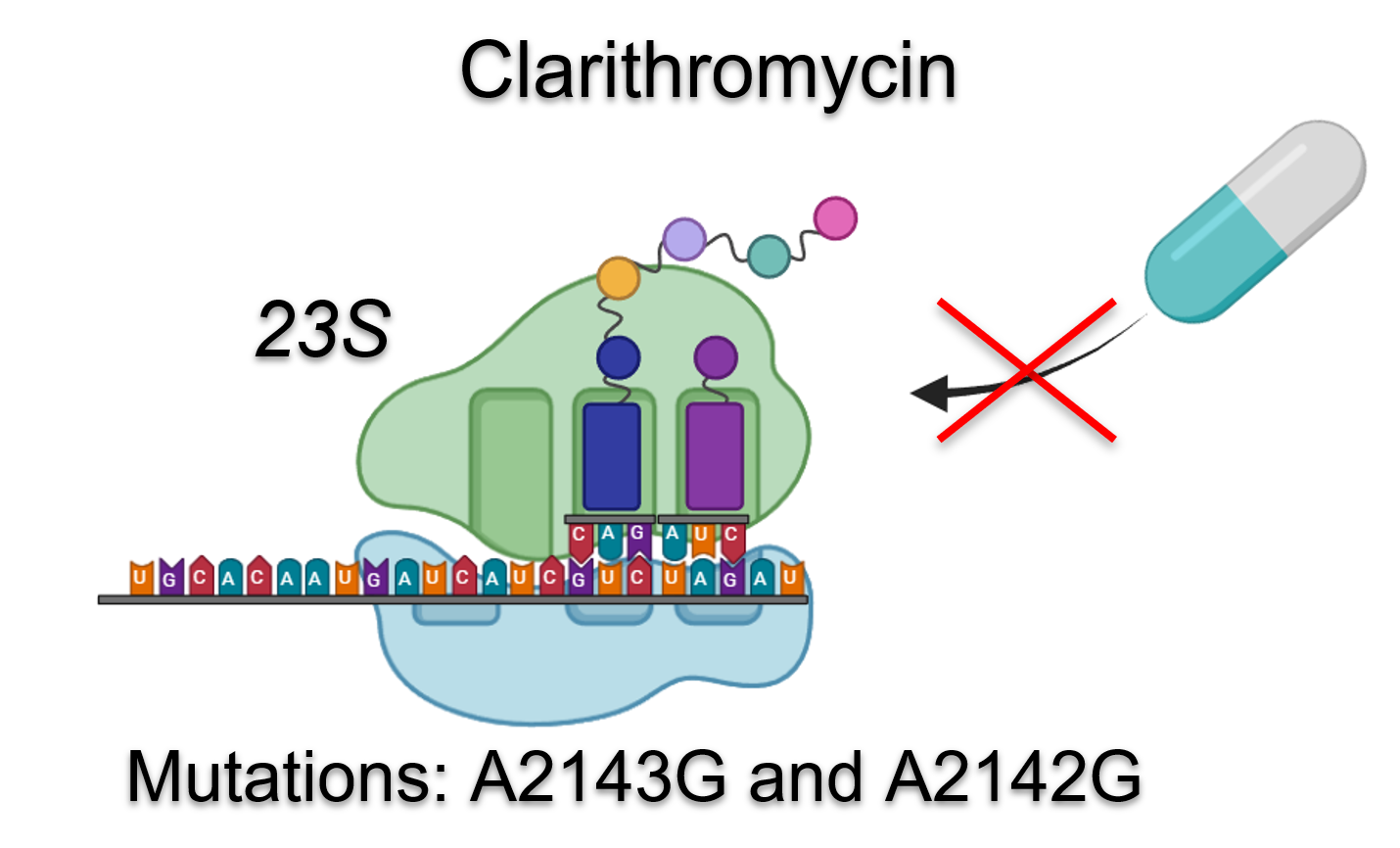
In Colombia, a study conducted in 2009 using E-test assays and PCR-RFLP genotyping in the cities of Pereira and Armenia reported a low clarithromycin resistance rate of 2.2%23. In a more recent study, a resistance rate of 8.20% was found in Pereira24. In contrast, significantly higher resistance rates have been reported in Bogotá, with values of 13.6%, 15%, 17.2%, 38.1%, and up to 63.1%, according to different studies based on phenotypic tests25 - 29. In the city of Popayán (Cauca), an analysis using Sanger sequencing identified a 4% resistance rate in the 23S gene30. Similarly, a study conducted in Medellín, also using 23S gene sequencing, showed a resistance rate of 18.8%, with the A2143G mutation being the most frequent among the isolates, followed by A2142G31. Finally, in a population from the Pacific coast of Nariño, an agar dilution study reported a clarithromycin resistance rate of 19.8%32.

Studies employing whole-genome sequencing (WGS) methods for H. pylori have identified point mutations in the 23S rRNA gene associated with clarithromycin resistance. In the analysis of 166 Colombian genomes, a resistance rate of 3.62% was reported9. In another study, resistance-related mutations were detected in 3.61% (8/221) of the genomes analyzed; among these, six (2.7%) carried the A2143G mutation and two (0.9%) the A2142G mutation33. Conversely, a study conducted in the department of Nariño, specifically in the municipalities of Túquerres and Tumaco, did not identify clarithromycin-resistant isolates34 (Figure 2).

# Figure 2. Mutations in the 23S gene associated with clarithromycin resistance in Helicobacter pylori in Colombia
Figure 2. Mutations in the 23S gene associated with clarithromycin resistance in Helicobacter pylori in Colombia

# Tetracycline

Tetracycline is a broad-spectrum antibiotic used in the eradication of H. pylori, particularly in bismuth-based quadruple therapies. Its mechanism of action is bacteriostatic, meaning that it inhibits bacterial growth. It acts by binding to the 30S ribosomal subunit, blocking the a achment of aminoacyl-tRNA to the A site of the ribosome and thereby preventing the synthesis of bacterial proteins essential for survival35. Resistance to tetracycline in H. pylori is primarily associated with mutations in the 16S rRNA operon, particularly in the antibiotic-binding region, which decreases drug affinity and compromises treatment efficacy.

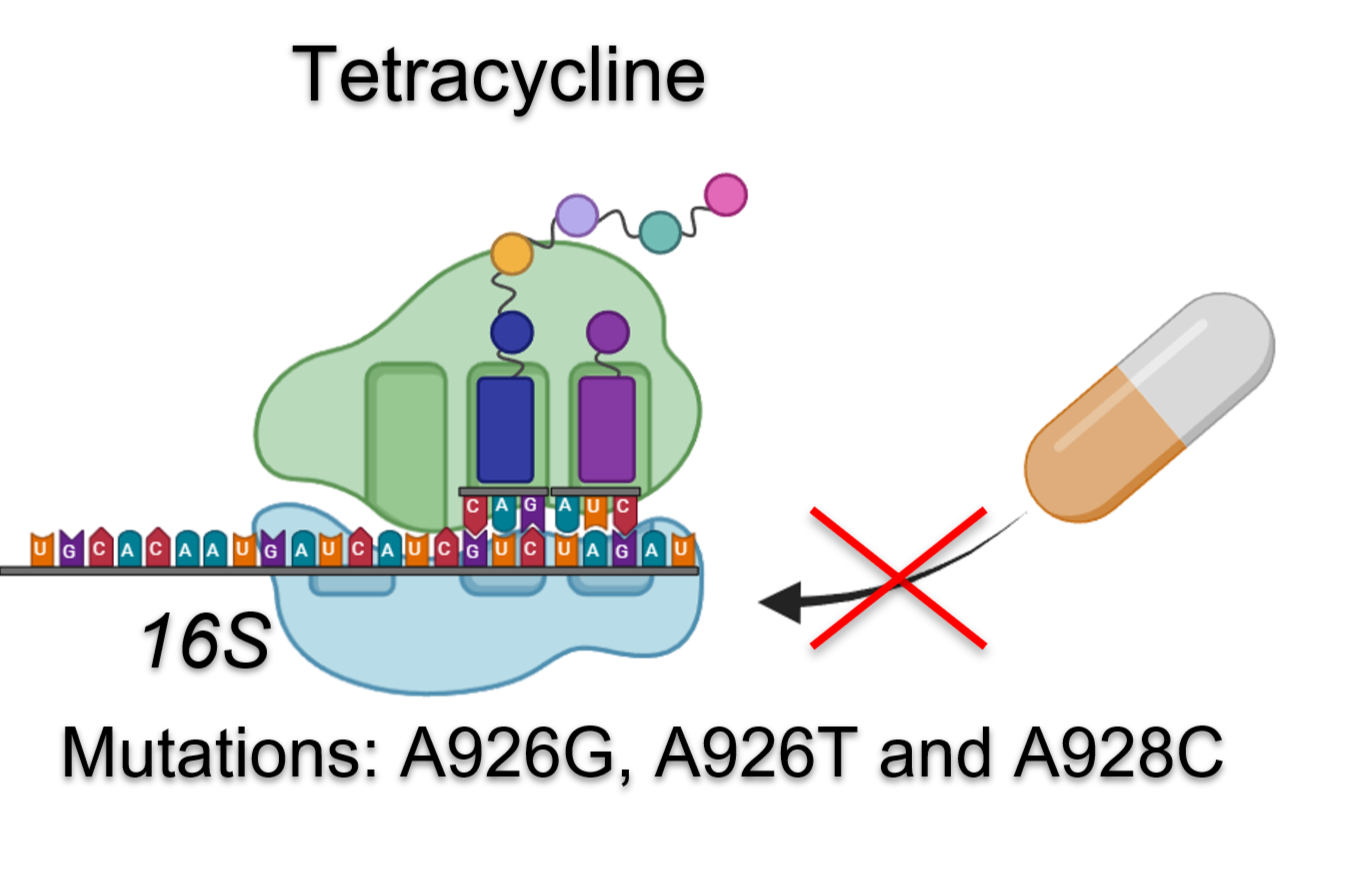
A study conducted in Bogotá reported an unusually high resistance rate of 85.7%, determined using disk diffusion assays29. However, more recent investigations using molecular methods have revealed significantly lower frequencies. In the department of Nariño, resistance was found to be 1.7% and was associated with the A926G mutation in the 16S rRNA gene34. At the national level, a resistance frequency of 3.6% was also confirmed, likewise linked to the A926G mutation33. In another recent study, a resistance rate of 7.23% was detected in strains from Bogotá and Nariño, identifying the A926G, A926T, and A928C mutations in the 16S rRNA, which have been implicated in reduced tetracycline affinity for the bacterial ribosome20 (Figure 3).

# Figure 3. Mutations in the 16S gene associated with tetracycline resistance in Helicobacter pylori in Colombia
Figure 3. Mutations in the 16S gene associated with tetracycline resistance in Helicobacter pylori in Colombia

# Amoxicillin

Amoxicillin is a broad-spectrum semisynthetic aminopenicillin with bactericidal activity against H. pylori. Its mechanism of action is based on the inhibition of bacterial cell wall synthesis through irreversible binding to penicillin-binding proteins (PBPs), specifically PBP1A, PBP2, and PBP3, which are located in the inner membrane of H. pylori18. Inactivation of these PBPs interferes with the cross-linking of peptidoglycan chains, a process essential for the stability and rigidity of the bacterial cell wall. As a consequence, the structural integrity of the bacterium is compromised, weakening the cell wall and leading to bacterial lysis36.

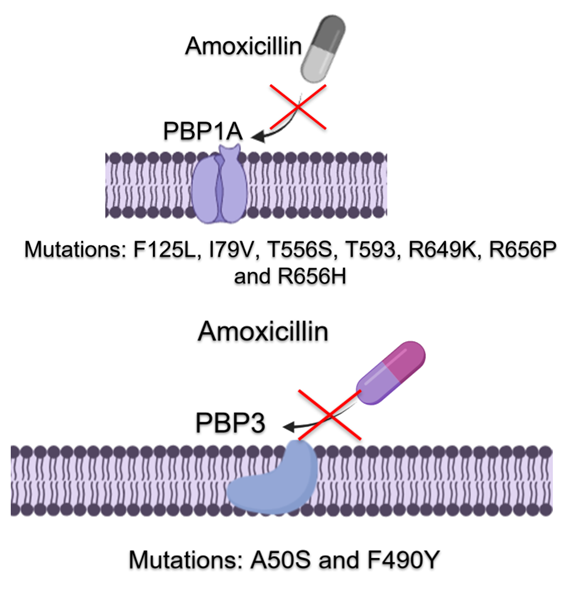
In Colombia, H. pylori resistance to amoxicillin has shown considerable variability across regions and detection methods. In Bogotá, a resistance rate of 3.8% was reported using E-test assays in a study involving Colombian patients27. Another study in the same city, using disk diffusion tests in culture, found a higher resistance rate of 9.5%29. In the Tumaco region of Nariño, considered a low-risk area for gastric cancer, a resistance rate of 19.8% was observed using minimum inhibitory concentration (MIC) phenotypic tests32. Nationally, a recent whole-genome sequencing (WGS) study identified mutations in the pbp3 gene specifically A50S and F490Y with an estimated resistance rate of 7.21%33. Likewise, another genomic analysis identified mutations in the pbp1A gene, including T556S, T593, R649K, R656P, and R656H, with a resistance frequency of 25.9% in isolates from Bogotá and Nariño20. More recently, a study conducted in Túquerres reported a resistance rate of 5.4%, associated with F125L and I79V mutations in the transglycosylase domain of the pbp1A gene, confirmed through MIC testing and genotyping37 (Figure 4).

# Figure 4. Mutations in the PBP1A and PBP3 proteins associated with amoxicillin resistance in Helicobacter pylori in Colombia.
Figure 4. Mutations in the PBP1A and PBP3 proteins associated with amoxicillin resistance in Helicobacter pylori in Colombia.

# Metronidazole

Metronidazole is a prodrug with selective bactericidal activity against H. pylori and other anaerobic bacteria. Its action is mediated by the intracellular reduction of the nitro group by bacterial enzymes, generating reactive intermediates capable of covalently binding to bacterial DNA38, 39. This process disrupts the helical structure of DNA, induces strand breaks, and blocks nucleic acid synthesis, ultimately resulting in the death of H. pylori cells. Resistance to metronidazole is associated with the inactivation of genes encoding reductase enzymes, reducing the conversion of the drug into its active metabolites and diminishing its effectiveness in eradicating the microorganism40.

H. pylori resistance to metronidazole in Colombia has consistently been high across various regions of the country. In Bogotá, resistance rates of 81.01%, 72%, and up to 97.6% have been reported using E-test and disk diffusion assays27, 29, 39. In Pereira and Armenia, similar studies documented resistance rates of 77.3% and 78.6%, respectively23, 24, whereas in Popayán a rate of 78% was observed, associated with mutations in the rdxA gene, which is involved in drug activation40.

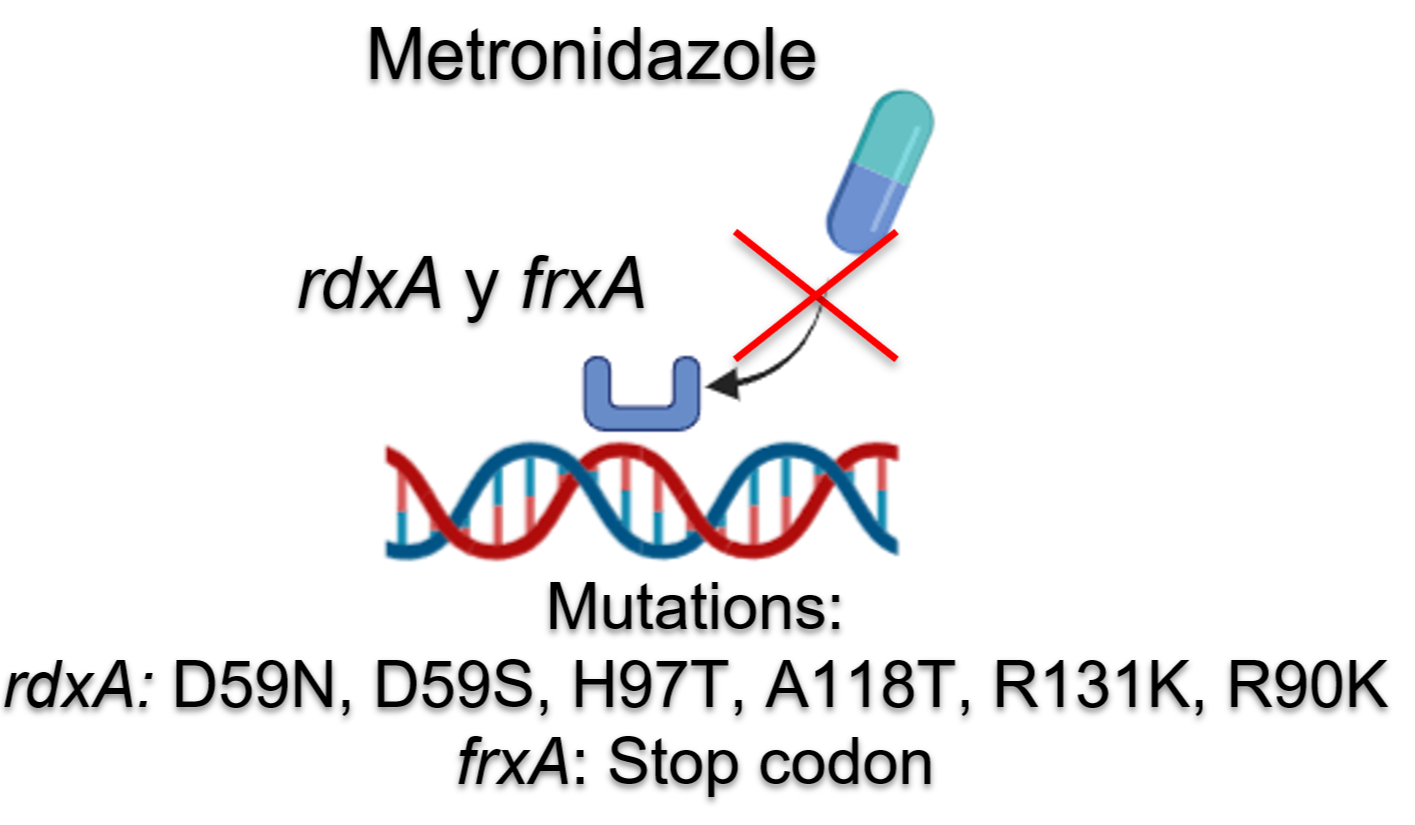
In regions with different gastric cancer risk levels, such as Tumaco, studies based on MIC and WGS reported a resistance rate of 100%, with truncations identified in the rdxA and frxA genes34. In Túquerres, a resistance rate of 86% was recorded, with similar mutations34. In Bogotá and Nariño, D59N and D59S mutations in the rdxA gene were identified, associated with a resistance rate of 99.3%20. Nationally, a resistance rate of 75.75% was reported, also linked to mutations and truncations in rdxA (D59N, D59S, H97T, A118T, R131K, R90K) and frxA (stop codon), according to genomic sequencing analyses33 (Figure 5).

# Figure 5. Mutations in the rdxA and frxA genes associated with metronidazole resistance in Helicobacter pylori in Colombia.
Figure 5. Mutations in the rdxA and frxA genes associated with metronidazole resistance in Helicobacter pylori in Colombia.

# Levofloxacin

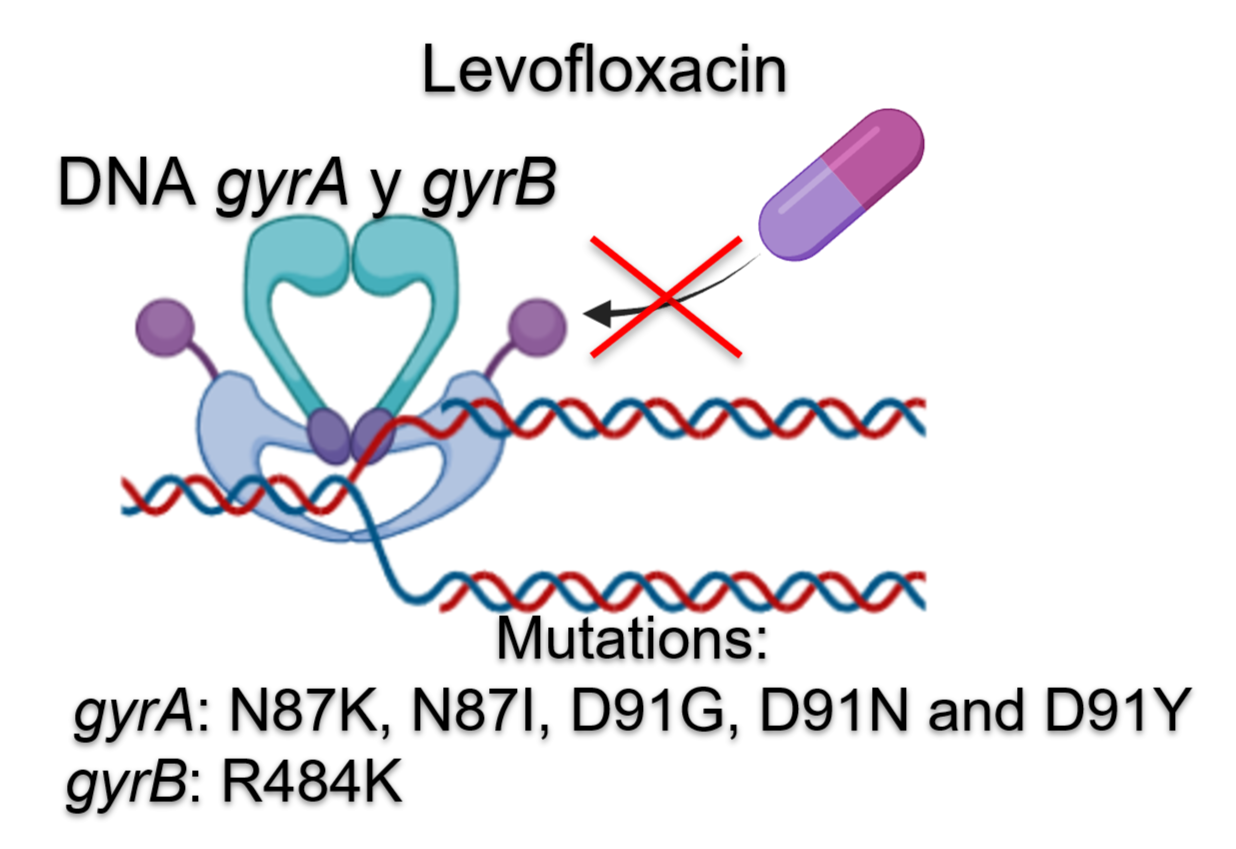
Levofloxacin is a broad-spectrum fluoroquinolone used in the treatment of H. pylori, particularly as part of rescue therapies when standard regimens have failed. Its mechanism of action is based on the inhibition of DNA gyrase and topoisomerase IV, two essential enzymes for bacterial DNA replication, transcription, and repair. By blocking the activity of these enzymes, levofloxacin interferes with the supercoiling and stability of H. pylori DNA, leading to the interruption of DNA synthesis and ultimately to bacterial cell death41.

In Colombia, H. pylori resistance to levofloxacin has been reported at moderate levels, with clear evidence of specific mutations in the gyrA gene, which encodes the A subunit of DNA gyrase. In the department of Nariño, a resistance rate of 20.3% was observed using MIC testing and WGS analysis, associated with N87I/K and D91G/Y mutations in gyrA34. At the national level, resistance frequencies of 10.35% and 27.3% were identified, with mutations such as D91G, D91Y, D91N, as well as N87K and N87I in gyrA, and R484K in gyrB33, 35. Complementary data reported a resistance rate of 12.04%, confirming the presence of mutations N87K, N87I, D91G, D91N, and D91Y in the gyrA gene20. These substitutions at codons 87 and 91 widely described in the literature alter the affinity of levofloxacin for its molecular target, reducing its clinical efficacy (Figure 6).

# Figure 6. Mutations in the GyrA and GyrB proteins associated with levofloxacin resistance in Helicobacter pylori in Colombia.
Figure 6. Mutations in the GyrA and GyrB proteins associated with levofloxacin resistance in Helicobacter pylori in Colombia.

# Furazolidone

Furazolidone is a nitrofuran antibiotic with bactericidal activity against H. pylori. Its mechanism of action is based on the intracellular reduction of the nitro group by bacterial flavoproteins, generating reactive oxygen species and toxic metabolites that damage bacterial DNA. This interaction induces DNA fragmentation, interferes with replication and transcription, and ultimately leads to bacterial cell death41.

Furazolidone has shown a low resistance rate among H. pylori isolates, positioning it as a promising therapeutic alternative, particularly in se ings with high levels of multidrug resistance. At the national level, a whole-genome sequencing (WGS) study reported a resistance frequency of 0.84%, associated with a point mutation (C357T) in the porD gene involved in drug activation42. In Medellín, another study combining phenotypic and genotypic methods documented a resistance rate of 1.7%43.

# Rifampicin

Rifampicin acts by binding to the β-subunit of DNA-dependent RNA polymerase in H. pylori, encoded by the rpoB gene. This interaction forms a stable complex that blocks RNA chain elongation during transcription, effectively inhibiting RNA synthesis and thus bacterial proliferation. However, point mutations at codons V149F, Q527R, D530, and H540 in the rpoB gene can reduce rifampicin's affinity for its target, conferring antibiotic resistance43. In Colombia, rifampicin resistance in H. pylori isolates is virtually nonexistent. A whole-genome sequencing (WGS) study reported no resistant isolates among the strains analyzed nationwide (0%)43.

# Statistical analysis of antibiotic resistance in Colombia

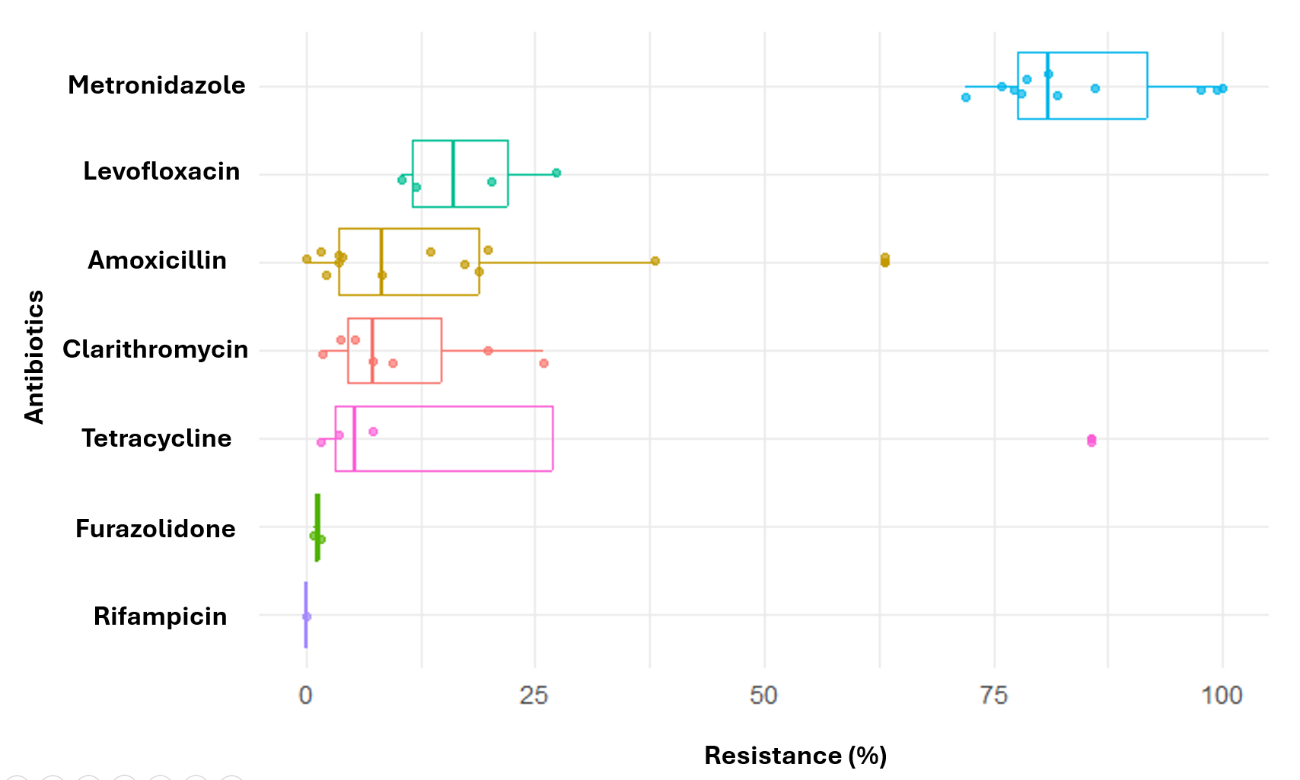
The statistical analysis of antimicrobial resistance in H. pylori revealed marked heterogeneity among the seven antibiotics evaluated. Metronidazole showed the highest and most consistent resistance levels, with a mean of 84.3% and a median of 81.0%, confirming significantly compromised clinical efficacy in most isolates. At an intermediate level, tetracycline and levofloxacin exhibited mean resistance rates of 24.6% and 17.5%, respectively, with medians of 5.4% and 16.2%. These values reflect strong positive skewness, associated with highly resistant subpopulations within predominantly susceptible groups.

Clarithromycin showed a similar pa ern, with a mean of 14.9% and a median of 8.2%, indicating the coexistence of susceptible isolates and others with high-level resistance. Amoxicillin presented a mean resistance of 10.5% and a median of 7.2%, suggesting a moderate level of preserved therapeutic efficacy in most clinical se ings. In contrast, furazolidone and rifampicin recorded the lowest resistance values, with means of 1.27% and 0%, respectively, highlighting their superior sensitivity profiles among the antibiotics assessed (Figure 7).

# Figure 7. Distribution of antimicrobial resistance by antibiotic among Helicobacter pylori isolates in Colombia. Analysis of resistance pa erns reported by multiple phenotypic and genotypic studies for the seven most frequently used antibiotics in Colombia for H. pylori eradication therapy.
Figure 7. Distribution of antimicrobial resistance by antibiotic among Helicobacter pylori isolates in Colombia. Analysis of resistance pa erns reported by multiple phenotypic and genotypic studies for the seven most frequently used antibiotics in Colombia for H. pylori eradication therapy.

The nonparametric Kruskal-Wallis analysis revealed statistically significant differences in resistance levels among the different antibiotics evaluated (H = 22.0; df = 4; p = 0.000198). This result indicates that the distribution of resistance values is not homogeneous across the groups, confirming the existence of substantial variations in antimicrobial efficacy against H. pylori in Colombia. In particular, metronidazole showed the highest resistance values, in contrast with the low levels observed for furazolidone and rifampicin. This suggests the presence of differentiated antimicrobial resistance pa erns, likely related to differences in genetic mechanisms, clinical use, or regional antibiotic pressure, and supports the need to adjust therapeutic guidelines based on local bacterial susceptibility profiles.


# DISCUSSION

H. pylori is one of the oldest microorganisms to have colonized humans. Its presence dates back approximately 130,000 years, having migrated from East Africa alongside H. sapiens6, 7. It is estimated that half of the global population is infected with H. pylori. In developing countries such as Colombia, this figure rises to 90 %, making eradication extremely challenging8, 9.

Due to its long period of coevolution with humans, H. pylori has developed multiple mechanisms to persist in the gastric environment. Although its main niche is the gastric mucosa, it can also colonize beneath the mucosa and even within gastric epithelial cells41. Furthermore, the bacterium forms biofilms and coccoid structures that enable it to withstand antibiotic treatment41. Mutations in resistance-related genes further contribute to its ability to survive in the gastric environment.

The results of this study confirm marked heterogeneity in antimicrobial resistance pa erns of H. pylori in Colombia. Metronidazole exhibited the highest resistance rate (mean: 84.3%; median: 81.0%). However, despite its high in vitro resistance, international evidence suggests that metronidazole may retain therapeutic utility within bismuth-based quadruple regimens. Recent studies report that bismuth-based quadruple therapy combined with PPIs achieves eradication rates close to 85% even against resistant strains, due to the synergistic effect of bismuth42. Nevertheless, the Maastricht consensus recommends excluding antibiotics with resistance rates above 15%, highlighting the need for more empirical therapeutic studies in Colombia to evaluate the effectiveness of this antibiotic in treatment regimens18.

With regard to clarithromycin, its mean resistance of 14.9% and median of 8.2%, along with the marked dispersion among studies, reflects geographical heterogeneity in Colombia, a phenomenon also observed in Asia43. This variability suggests the coexistence of bacterial subpopulations with high resistance levels in specific regions. In Asia and Europe, clarithromycin resistance rates above 15% have reduced the efficacy of H. pylori therapies to below 80%18, 43. Global evidence emphasizes that genotypic detection of mutations in the 23S rRNA gene (A2142G, A2143G) is essential for guiding personalized treatments18, which should be implemented within the Colombian context.

Tetracycline showed a similar pa ern, with a mean resistance of 24.5% and median of 5.4%. Although mutations in the 16S rRNA gene associated with resistance are infrequent, its use in combination with bismuth and other antibiotics has proven particularly effective in rescue therapies, achieving eradication rates > 90%44. Resistance to tetracycline remains low in many countries, and bismuth-based quadruple regimens containing tetracycline, combined with metronidazole, furazolidone, amoxicillin, or levofloxacin, can achieve higher eradication rates44. However, current studies on tetracycline have been conducted mainly in Asia and Europe and are largely retrospective. Efficacy and safety must therefore be further evaluated through large-scale prospective multicenter studies, considering regional antibiotic resistance rates and generating more data within Colombia.

Amoxicillin and levofloxacin exhibited moderate resistance (10.5% and 17.5%, respectively). In the case of amoxicillin, resistance mechanisms are associated with alterations in penicillin-binding proteins (PBP1A)34, while levofloxacin resistance is linked to mutations in the gyrA and gyrB genes33. Nevertheless, international literature supports their efficacy within second- or third-line combination regimens. Clinical trials and meta-analyses have shown that levofloxacin-based therapies achieve eradication rates above 85% when administered for 14 days and combined with bismuth and tetracycline45. However, some regions report resistance rates exceeding 15%, underscoring the need for continuous surveillance and pre-treatment susceptibility testing to optimize therapeutic decisions and avoid eradication failures.

By contrast, furazolidone and rifampicin exhibited the lowest resistance rates (1.27% and 0%, respectively). Recent national studies confirm the high susceptibility of H. pylori to furazolidone46 - 48, although its clinical use is limited by regulatory restrictions and potential adverse effects, which in Colombia hinder its availability for H. pylori treatment. Conversely, the use of rifampicin is not recommended as first-line therapy due to its essential role in tuberculosis management and the risk of inducing cross-resistance with Mycobacterium tuberculosis49.

Currently, treatments against H. pylori are based on empirical studies regarding the efficacy of therapeutic regimens, with those exceeding a 90% eradication rate considered effective50. However, increasing bacterial resistance challenges the effectiveness of traditional regimens such as standard triple therapy. In this context, the integration of advanced molecular technologies, such as second- and third-generation sequencing and real-time PCR diagnostics, could facilitate the implementation of personalized medicine as recommended by the Maastricht consensus17. This strategy would enable more targeted and effective treatments, particularly in populations with high incidence and mortality from gastric cancer in Colombia, contributing to reduced therapeutic failure.

Additionally, it is relevant to evaluate the potential of complementary therapies alongside conventional antibiotic regimens, such as the use of probiotics. A study conducted in the department of Nariño reported that Lactobacillus casei subsp. rhamnosus exerts an inhibitory effect in vitro against H. pylori51. Similarly, the consumption of kefir and probiotics such as Saccharomyces boulardii, Lactobacillus reuteri, and Lactobacillus johnsonii has demonstrated the ability to reduce gastric colonization by H. pylori and mitigate adverse effects of antibiotic treatment. However, their isolated use does not guarantee full eradication of the pathogen; therefore, their implementation should be considered as an adjuvant strategy within standard antimicrobial therapy51.

Regarding phytotherapies, a recent study conducted in the department of Nariño reported that sulforaphane, a molecule found in broccoli sprouts (Brassica oleracea var. italica), exhibits in vitro inhibitory activity against H. pylori, particularly against strains isolated from the Andean region, where gastric cancer mortality is highest52, 53. Likewise, Indigenous communities of the Amazon region in Brazil, Peru, Ecuador, and Colombia, especially in the departments of Amazonas, Putumayo, Cauca, and Nariño, have used Croton lechleri ("dragon's blood") for centuries as part of their traditional medicine for its wound-healing properties in treating gastric lesions and as a natural remedy against H. pylori54 - 58. These findings highlight the value of local ethnomedical practices as potential sources of bioactive compounds for developing novel complementary therapeutic strategies.

Among the main strengths of this study is the integration of data from multiple published studies conducted in different regions of the country, which provides a representative overview of the national landscape of antimicrobial resistance. Additionally, classifying antibiotics by resistance level offers a useful tool for therapeutic decision-making. However, limitations include methodological heterogeneity across studies and variable sample sizes. Moreover, genotypic information regarding specific mutations remains limited in several regions.


# CONCLUSIONS

The high and consistent resistance to metronidazole makes it an unreliable first-line option. Clarithromycin and tetracycline exhibit variable and heterogeneous resistance, requiring a deeper understanding of regional resistance pa erns, ideally through individualized susceptibility testing. Amoxicillin and levofloxacin show moderate resistance levels, while furazolidone and rifampicin emerge as highly promising alternatives due to their currently low resistance.

These results underscore the need to strengthen epidemiological surveillance and implement phenotypic or genotypic susceptibility testing prior to treatment, in order to optimize therapeutic decisions and reduce eradication failures. Furthermore, the complementary use of probiotics and phytotherapies with inhibitory activity against H. pylori represents a promising alternative that requires clinical validation. Overall, the findings reinforce the importance of integrating advanced molecular tools and personalized approaches for the rational management of antimicrobial resistance, contributing to improved eradication rates and reduced gastric cancer burden in the Colombian population.


# REFERENCES

  1. Malfertheiner P, Camargo MC, El-Omar E, Liou JM, Peek R, Schulz C, et al. Helicobacter pylori infection. Nat Rev Dis Primers [Internet]. 2023; 9:19. DOI: https://doi.org/10.1038/s41572-023-00431-8
  2. Crowe SE. Helicobacter pylori infection. N Engl J Med [Internet]. 2019; 380(12):1158-1165. DOI: https://doi.org/10.1056/nejmcp1710945
  3. Correa P, Piazuelo MB. The gastric precancerous cascade. J Dig Dis [Internet]. 2012; 13(1):2-9. DOI: https://doi.org/10.1111/j.1751-2980.2011.00550.x
  4. Cheng HC, Yang YJ, Yang HB, Tsai YC, Chang WL, Wu CT, et al. Evolution of the Correa's cascade steps: A long-term endoscopic surveillance among non-ulcer dyspepsia and gastric ulcer after H. pylori eradication. J Formos Med Assoc [Internet]. 2023; 122(5):400-410. DOI: https://doi.org/10.1016/j.jfma.2022.11.008
  5. IARC Working Group on the Evaluation of Carcinogenic Risks to Humans. Infection with Helicobacter pylori. In: Schistosomes, liver flukes and Helicobacter pylori. Lyon (FRA): IARC; 1994. Disponible en: h ps://www.ncbi.nlm.nih.gov/books/NBK487782
  6. Moodley Y, Linz B, Bond RP, Nieuwoudt M, Soodyall H, Schlebusch CM, et al. Age of the association between Helicobacter pylori and man. PLoS Pathog [Internet]. 2012; 8(5):e1002693. DOI: https://doi.org/10.1371/journal.ppat.1002693
  7. Linz B, Balloux F, Moodley Y, Manica A, Liu H, Roumagnac P, et al. An African origin for the intimate association between humans and Helicobacter pylori. Nature [Internet]. 2007; 445(7130):915-918. DOI: https://doi.org/10.1038/nature05562
  8. Guzman KA, Daza AP, Gomez RV, Montenegro LM, Pazos A. Whole-genome sequences of Helicobacter pylori isolated from patients with high risk of gastric cancer in the Andes of Nariño, Colombia. Microbiol Resour Announc [Internet]. 2024; 13(8):e01232-23. DOI: https://doi.org/10.1128/mra.01232-23
  9. Guzmán KA, Pazos A. Helicobacter pylori: Microorganismo patógeno o mutualista en poblaciones colombianas. Univ Salud [Internet]. 2023; 25(1):1-6. DOI: https://doi.org/10.22267/rus.232501.292
  10. Wang H, Zhao M, Shi F, Zheng S, Xiong L, Zheng L. A review of signal pathway induced by virulent protein CagA of Helicobacter pylori. Front Cell Infect Microbiol [Internet]. 2023; 13:1062803. DOI: https://doi.org/10.3389/fcimb.2023.1062803
  11. Al-Ouqaili MTS, Hussein RA, Majeed YH, Al-Marzooq F. Study of vacuolating cytotoxin A (vacA) genotypes of ulcerogenic and non-ulcerogenic strains of Helicobacter pylori and its association with gastric disease. Saudi J Biol Sci [Internet]. 2023; 30(12):103867. DOI: https://doi.org/10.1016/j.sjbs.2023.103867
  12. Yang L, Ying X, Liu S, Lyu G, Xu Z, Zhang X, et al. Gastric cancer: Epidemiology, risk factors and prevention strategies. Chin J Cancer Res [Internet]. 2020; 32(6):695-704. DOI: https://doi.org/10.21147/j.issn.1000-9604.2020.06.03
  13. Machlowska J, Baj J, Sitarz M, Maciejewski R, Sitarz R. Gastric cancer: Epidemiology, risk factors, classification, genomic characteristics and treatment strategies. Int J Mol Sci [Internet]. 2020; 21(11):4012. DOI: https://doi.org/10.3390/ijms21114012
  14. Bray F, Laversanne M, Sung H, Ferlay J, Siegel RL, Soerjomataram I, et al. Global cancer statistics 2022: GLOBOCAN estimates of incidence and mortality worldwide for 36 cancers in 185 countries. CA Cancer J Clin [Internet]. 2024; 74(3):229-263. DOI: https://doi.org/10.3322/caac.21834
  15. Morgan E, Arnold M, Camargo MC, Gini A, Kunzmann AT, Matsuda T, et al. The current and future incidence and mortality of gastric cancer in 185 countries, 2020-40: A population-based modelling study. EClinicalMedicine [Internet]. 2022; 47:101404. DOI: https://doi.org/10.1016/j.eclinm.2022.101404
  16. GBD 2017 Stomach Cancer Collaborators. The global, regional, and national burden of stomach cancer in 195 countries, 1990-2017: A systematic analysis for the Global Burden of Disease study 2017. Lancet Gastroenterol Hepatol [Internet]. 2020; 5(1):42-54. DOI: https://doi.org/10.1016/S2468-1253(19)30328-0
  17. Li Y, Choi H, Leung K, Jiang F, Graham DY, Leung WK. Global prevalence of Helicobacter pylori infection between 1980 and 2022: a systematic review and meta-analysis. Lancet Gastroenterol Hepatol [Internet]. 2023; 8(6):553-564. DOI: h ps://doi.org/10.1016/s2468-1253(23)00070-5
  18. Malfertheiner P, Megraud F, Rokkas T, Gisbert JP, Liou JM, Schulz C, et al. Management of Helicobacter pylori infection: the Maastricht VI/Florence consensus report. Gut [Internet]. 2022. DOI: https://doi.org/10.1136/gutjnl-2022-327745
  19. Malfertheiner P, Megraud F, O'Morain CA, Gisbert JP, Kuipers EJ, Axon AT, et al. Management of Helicobacter pylori infection-the Maastricht V/Florence Consensus Report. Gut [Internet]. 2017; 66(1):6-30. DOI: https://doi.org/10.1136/gutjnl-2016-312288
  20. Guzman K, Montenegro L, Pazos A. The Helicobacter pylori single nucleotide polymorphisms SNPs associated with multiple therapy resistance in Colombia. Front Microbiol [Internet]. 2023; 14:1198325.
  21. Tshibangu-Kabamba E, Yamaoka Y. Helicobacter pylori infection and antibiotic resistance - from biology to clinical implications. Nat Rev Gastroenterol Hepatol [Internet]. 2021; 18(9):613-629. DOI: https://doi.org/10.1038/s41575-021-00449-x
  22. Liou JM, Jiang XT, Chen CC, Luo JC, Bair MJ, Chen PY, et al. Second-line levofloxacin-based quadruple therapy versus bismuth-based quadruple therapy for Helicobacter pylori eradication: and long-term changes to the gut microbiota and antibiotic resistome: A multicentre, open-label, randomised controlled trial. Lancet Gastroenterol Hepatol [Internet]. 2023; 8(3):228-241. DOI: https://doi.org/10.1016/S2468-1253(22)00384-3
  23. Álvarez A, Moncayo JI, Santacruz JJ, Corredor LF, Reinosa E, Martínez JW, et al. Resistencia a metronidazol y claritromicina en aislamientos de Helicobacter pylori de pacientes dispépticos en Colombia. Rev Med Chile [Internet]. 2009; 137(10):1309-1314. DOI: https://doi.org/10.4067/S0034-98872009001000005
  24. Bedoya-Gómez IJ, Alvarez-Aldana A, Moncayo-Ortiz JI, Guaca-González YM, Santacruz-Ibarra JJ, Arturo-Arias BL, et al. Surveillance of the antimicrobial resistance rates of Helicobacter pylori ten years later in the Western Central Region, Colombia. Dig Dis [Internet]. 2020; 38(3):196-203. DOI: https://doi.org/10.1159/000503381
  25. Trespalacios AA, Otero W, Caminos JE, Mercado MM, Ávila J, Rosero LE, et al. Phenotypic and genotypic analysis of clarithromycin-resistant Helicobacter pylori from Bogotá DC, Colombia. J Microbiol [Internet]. 2013; 51(4):448-452. DOI: https://doi.org/10.1007/s12275-013-2465-6
  26. Henao-Riveros SC, Quiroga A, Martínez-Marín JD, Otero-Regino W. Resistencia primaria a la claritromicina en aislamientos de Helicobacter pylori. Rev Colomb Gastroenterol [Internet]. 2009; 24(2):110-114. Disponible en: h p://www.scielo.org.co/scielo.php?script=sci_ar ext&pid=S0120-99572009000200004
  27. Trespalacios AA, Otero Regino W, Mercado Reyes M. Resistencia de Helicobacter pylori a metronidazol, claritromicina y amoxicilina en pacientes colombianos. Rev Colomb Gastroenterol [Internet]. 2010; 25(1):31-38. Disponible en: h p://www.scielo.org.co/scielo.php?script=sci_ar ext&pid=S0120-99572010000100009
  28. Arévalo-Jaimes BV, Rojas-Rengifo DF, Jaramillo CA, de Molano BM, Vera-Chamorro JF, Delgado MP. Genotypic determination of resistance and heteroresistance to clarithromycin in Helicobacter pylori isolates. BMC Infect Dis [Internet]. 2019; 19(1):546. DOI: https://doi.org/10.1186/s12879-019-4178-x
  29. Yepes CA, Rodríguez-Varón A, Ruiz-Morales Á, Ariza B. Resistencia antibiótica del Helicobacter pylori en el Hospital Universitario San Ignacio de Bogotá. Acta Med Colomb [Internet]. 2008; 33(1):11-14. Disponible en: h ps://www.actamedicacolombiana.com/ojs/index.php/actamed/article/view/1746
  30. Acosta CP, Hurtado FA, Trespalacios AA. Determinación de mutaciones de un solo nucleótido en el gen 23S rRNA de Helicobacter pylori relacionadas con resistencia a la claritromicina en una población del departamento del Cauca, Colombia. Biomédica [Internet]. 2014; 34:156-162. DOI: https://doi.org/10.7705/biomedica.v34i0.1649
  31. Roldán IJ, Castaño R, Navas MC. Mutaciones del gen ARN ribosómico 23S de Helicobacter pylori asociadas con resistencia a claritromicina en pacientes atendidos en una unidad de endoscopia de Medellín, Colombia. Biomédica [Internet]. 2019; 39:117-129. DOI: https://doi.org/10.7705/biomedica.v39i4.4377
  32. Figueroa M, Cortés A, Pazos Á, Bravo LE. Sensibilidad in vitro a amoxicilina y claritromicina de Helicobacter pylori obtenido de biopsias gástricas de pacientes en zona de bajo riesgo para cáncer gástrico. Biomédica [Internet]. 2012; 32(1):32-42. DOI: https://doi.org/10.7705/biomedica.v32i1.454
  33. Muñoz AB, Stepanian J, Solano-Gutierrez JS, Vale FF, Trespalacios-Rangel AA. Helicobacter pylori infection in Colombia: Phylogeny, resistome, and virulome. APMIS [Internet]. 2025; 133(2):e70003. DOI: https://doi.org/10.1111/apm.70003
  34. Mannion A, Dzink-Fox J, Shen Z, Piazuelo MB, Wilson KT, Correa P, et al. Helicobacter pylori antimicrobial resistance and gene variants in high- and low-gastric-cancer-risk populations. J Clin Microbiol [Internet]. 2021; 59(5):e03203-20. DOI: https://doi.org/10.1128/JCM.03203-20
  35. Trespalacios-Rangél AA, Otero W, Arévalo-Galvis A, Poutou-Piñales RA, Rimbara E, Graham DY. Surveillance of Levofloxacin Resistance in Helicobacter pylori Isolates in Bogotá-Colombia (2009-2014). PLoS One [Internet]. 2016 Jul 25; 11(7):e0160007. DOI: https://doi.org/10.1371/journal.pone.0160007
  36. Roberts LT, Issa PP, Sinnathamby ES, Granier M, Mayeux H, Eubanks TN, et al. Helicobacter pylori: A review of current treatment options in clinical practice. Life (Basel) [Internet]. 2022; 12(12):2038. DOI: https://doi.org/10.3390/life12122038
  37. Ma a AJ, Zambrano DC, Martínez YC, Fernández FF. Mutaciones puntuales en el dominio transglicosilasa del gen pbp1a en aislados de Helicobacter pylori resistentes a amoxisilina. Rev Gastroenterol Méx [Internet]. 2023; 88(2):100-106. DOI: https://doi.org/10.1016/j.rgmx.2021.05.008
  38. Hernández-Ceruelos A, Romero-Quezada LC, Ruvalcaba-Ledezma JC, López-Contreras L. Therapeutic uses of metronidazole and its side effects: An update. Eur Rev Med Pharmacol Sci [Internet]. 2019; 23:397-401. DOI: https://doi.org/10.26355/eurrev_201901_16788
  39. Henao SC, Otero W, Ángel LA, Martínez JD. Resistencia primaria a metronidazol en pacientes adultos de Bogotá. Rev Colomb Gastroenterol [Internet]. 2009; 24(1):10-15. Disponible en: h p://www.scielo.org.co/scielo.php?script=sci_ar ext&pid=S0120-99572009000100005
  40. Acosta CP, Quiroga AJ, Sierra-Torres CH, Trespalacios AA. Frecuencia de mutaciones de la nitrorreductasa RdxA en Helicobacter pylori para la activación del metronidazol en una población del departamento del Cauca, Colombia. Biomédica [Internet]. 2017; 37(2):191-199. DOI: https://doi.org/10.7705/biomedica.v37i2.3007
  41. Elbaiomy RG, Luo X, Guo R, Deng S, Du M, El-Sappah AH, et al. Antibiotic resistance in Helicobacter pylori: A genetic and physiological perspective. Gut Pathog [Internet]. 2025; 17(1):35. DOI: https://doi.org/10.1186/s13099-025-00704-5
  42. Graham DY, Lee SY. How to Effectively Use Bismuth Quadruple Therapy: The good, the bad, and the ugly. Gastroenterol Clin North Am [Internet]. 2015 Sep; 44(3):537-563. DOI: https://doi.org/10.1016/j.gtc.2015.05.003
  43. Cho JH, Jin SY. Current guidelines for Helicobacter pylori treatment in East Asia 2022: Differences among China, Japan, and South Korea. World J Clin Cases [Internet]. 2022 Jul 6; 10(19):6349-6359. DOI: https://doi.org/10.12998/wjcc.v10.i19.6349
  44. Sun Y, Zhu M, Yue L, Hu W. Multiple Bismuth Quadruple Therapy Containing Tetracyclines Combined with Other Antibiotics and Helicobacter pylori Eradication Therapy. J Clin Med [Internet]. 2022 Nov 28; 11(23):7040. DOI: https://doi.org/10.3390/jcm11237040
  45. Alavinejad P, Nayebi M, Parsi A, Abdelsameea E, Ahmed MH, Hormati A, et al. Levofloxacin+Tetracycline Quadruple Regimen for Eradication of Helicobacter pylori: A Multicenter Multinational Randomized Controlled Trial. Middle East J Dig Dis [Internet]. 2023 Jan; 15(1):12-18. DOI: https://doi.org/10.34172/mejdd.2023.314
  46. Guzman KA, Hidalgo A, Pazos AJ. Point mutations in furazolidone and rifampicin resistance genes in Helicobacter pylori strains from Colombia. Antibiotics (Basel) [Internet]. 2024; 13(7):643. DOI: https://doi.org/10.3390/antibiotics13070643
  47. Lopera B, Lemos K, Atehortúa JD, Valencia-Cárdenas J, Vélez-Gómez D, Martinez A, et al. Furazolidone susceptibility of Helicobacter pylori isolated from patients with gastroduodenal diseases in Colombia. Rev Inst Med Trop Sao Paulo [Internet]. 2025; 67:e20. DOI: https://doi.org/10.1590/S1678-9946202567020
  48. Barreda-Costa CS, Piccini-Larco JR, Chu-Revollar LD, Salazar-Muente F, Barriga-Briceño JA, Herrera-Alzamora MA. Tratamiento cuádruple con doxiciclina, furazolidona, bismuto e inhibidor de bomba de protones sigue siendo efectivo frente al Helicobacter pylori en nuestra población. Rev Gastroenterol Perú [Internet]. 2023; 43(2):116-119. DOI: https://doi.org/10.47892/rgp.2023.432.1458
  49. Prasad R, Gupta N, Banka A. Multidrug-resistant tuberculosis/rifampicin-resistant tuberculosis: Principles of management. Lung India [Internet]. 2018; 35(1):78-81. DOI: https://doi.org/10.4103/lungindia.lungindia_98_17
  50. Zuluaga-Arbeláez N, Sierra EC, Guevara LG, Pérez-Viana S. Estrategias terapéuticas para Helicobacter pylori en Colombia. CES medicina [Internet]. 2021; 35(3):244-256. DOI: https://doi.org/10.21615/cesmedicina.6224
  51. Montes A, Santacruz A, Sañudo J, Pazos A. Efecto in vitro de Lactobacillus casei subsp rhamnosus sobre el crecimiento de un aislado de Helicobacter pylori. Universidad y Salud [Internet]. 2003; 1(4):5-12. Disponible en: h ps://revistas.udenar.edu.co/index.php/usalud/article/view/302
  52. Homan M, Orel R. Are probiotics useful in Helicobacter pylori eradication? World J Gastroenterol [Internet]. 2015 Oct 7; 21(37):10644-10653. DOI: https://doi.org/10.3748/wjg.v21.i37.10644
  53. Burbano-Vasquez DM, López-Miramag CD, Maigual-Enríquez LC, Legarda-Nastul YB, Arango-Bedoya O, Hurtado-Benavides AMH, et al. Estudio de biomoléculas con actividad inhibitoria sobre helicobacter pylori en pacientes colombianos con alto riesgo de cáncer gástrico. NOVA [Internet]. 2025; 23(44):35-49. DOI: https://doi.org/10.22490/24629448.9981
  54. Pazos AJ, Guzman K. Sa1194: Evolution of Helicobacter pylori and its relationship with mortality in colombian popul+ations with different risk of gastric cancer. Gastroenterology [Internet]. 2025; 169(Suppl 1):S-393. DOI: https://doi.org/10.1016/S0016-5085(25)01844-X
  55. Tamariz-Ortiz JH, Capcha-Mendoza R, Palomino-Cadenas EJ, Aguilar-Olano J. Actividad antibacteriana de la Sangre de Grado (Croton lechleri) frente al Helicobacter pylori. Rev Med Hered [Internet]. 2003; 14(2):81-88. Disponible en: h p://www.scielo.org.pe/scielo.php?script=sci_ar ext&pid=S1018-130X2003000200008
  56. Ramírez G. Sangre de drago (Croton lechleri Muell. Arg). Natura Medicatrix [Internet]. 2003; 21(4):213-217. Disponible en: h ps://dialnet.unirioja.es/servlet/articulo?codigo=4956317
  57. Tian YY, Yang AL, Chen XN, Li JQ, Tang LM, Huang HM, et al. Research progress on anti-tumor effect of Chinese Dragon's blood. Zhongguo Zhong Yao Za Zhi [Internet]. 2021; 46(8):2037-2044. Disponible en: h ps://pubmed.ncbi.nlm.nih.gov/33982517
  58. Gupta D, Gupta RK. Bioprotective properties of Dragon's blood resin: In vitro evaluation of antioxidant activity and antimicrobial activity. BMC Complement Altern Med [Internet]. 2011; 11:13. DOI: https://doi.org/10.1186/1472-6882-11-13